Introduction
In recent years, “herbal” has become a buzzword across personal care, wellness, and food industries. The global herbal products market is booming, projected to reach $426.43 billion by 2028, growing at a CAGR of 11.6% from 2021 to 2028 (Fortune Business Insights). But what does herbal really mean? And more importantly how do we know if a product is truly herbal?
As consumers grow conscious about what they apply to their bodies and consume internally, the demand for transparency, authenticity, and efficacy in herbal products has skyrocketed. However, with increasing “greenwashing” and misleading marketing, there is a crucial need to understand what truly defines a herbal product beyond the label.
The Problem: Mislabeling and Misinformation
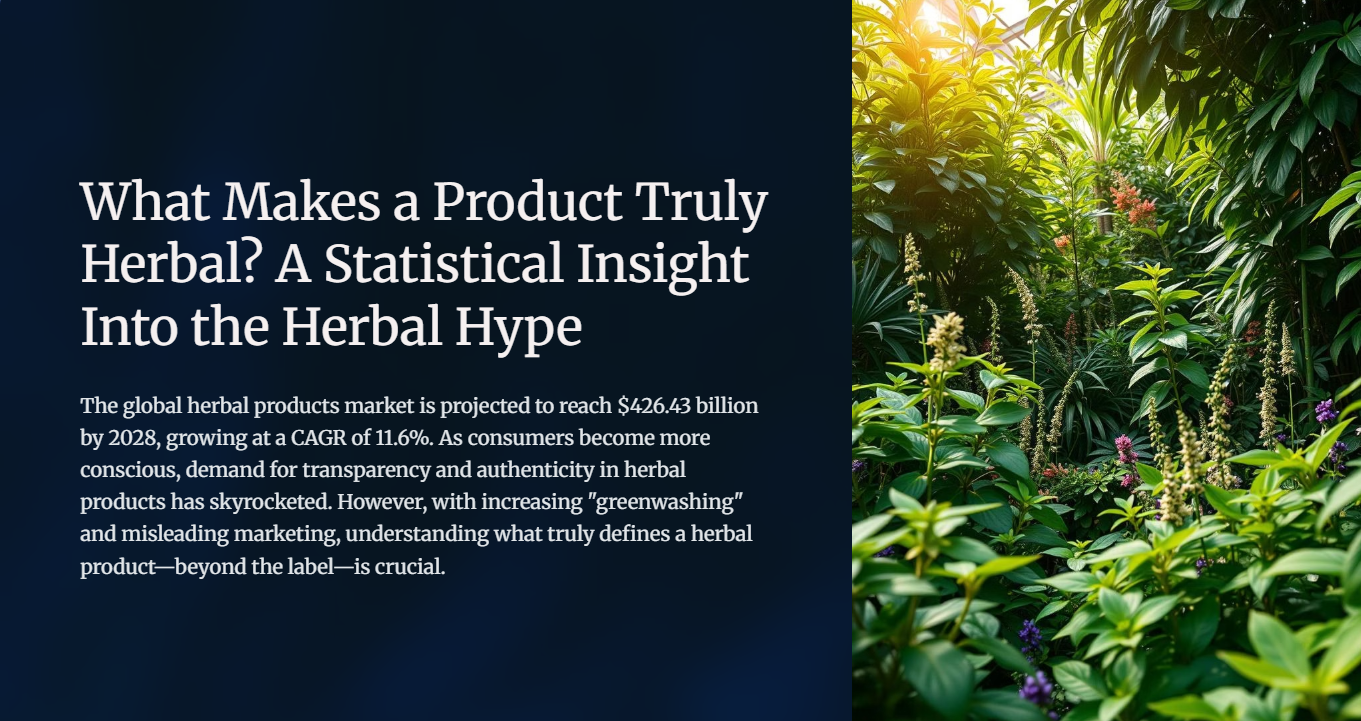
While “herbal” suggests plant-derived ingredients and natural benefits, the term itself is not strictly regulated in many countries. A 2022 report by the Centre for Science and Environment (CSE) in India found that 60% of products labeled as herbal contained synthetic additives or lacked standardization in their formulations.
In the US, the FDA does not certify or approve herbal products unless they are classified under drugs. Similarly, in India, the AYUSH ministry monitors Ayurvedic products, but many over-the-counter goods bypass rigorous evaluation.
This regulatory gap has resulted in:
- Misleading claims: “Herbal” on the front, chemical preservatives on the back.
- Diluted formulations: Products using just 0.5%-1% herbal extract but still marketed as 100% herbal.
- Safety issues: Some so-called herbal products contain heavy metals, synthetic colors, or fragrances that may cause skin irritation or health complications.
So, how do we solve this? Let’s break it down through a data-driven lens.
What Defines a Truly Herbal Product?
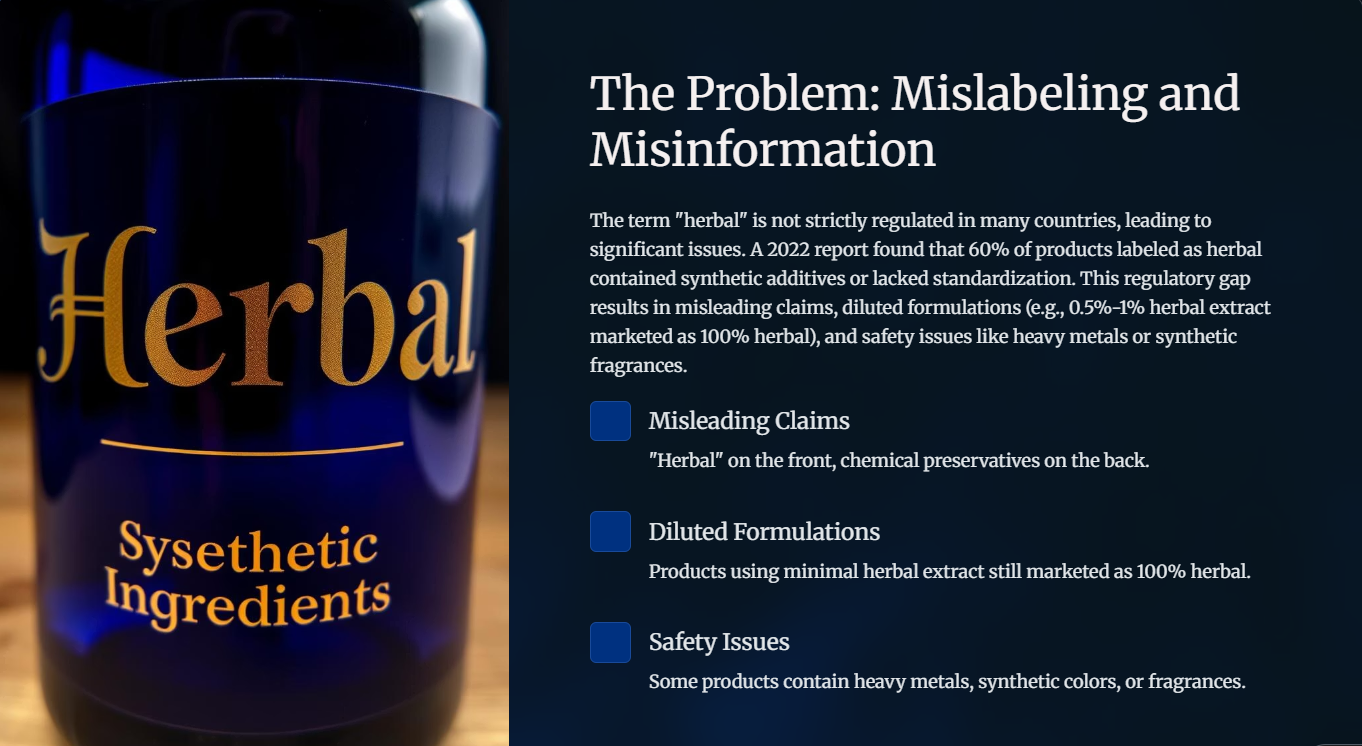
To determine whether a product is genuinely herbal, we must consider five key factors:
1. Source of Ingredients
A truly herbal product must derive its active ingredients primarily from plants, herbs, roots, or flowers.
- According to the American Botanical Council, over 80% of herbal products globally are derived from fewer than 50 plant species.
- A herbal formulation should have at least 70-80% of its active components plant-based, excluding binders, preservatives, and excipients.
Stat insight: A study in the Journal of Ethnopharmacology (2021) found that products with 75%+ botanical content showed 40% more efficacy in skin-related applications compared to products with synthetic-active bases.
2. Processing Methods
Herbal integrity is preserved through cold extraction, decoction, infusion, and steam distillation — methods aligned with Ayurvedic principles.
- Harsh chemical processing can degrade active phytochemicals.
- Solvent extraction using hexane or propylene glycol—common in pseudo-herbal products—negates the “natural” claim.
Stat insight: 65% of companies using traditional extraction methods in India reported higher consumer retention (FICCI Wellness Survey, 2023).
3. Absence of Synthetic Additives
A genuine herbal product should not contain synthetic dyes, parabens, sulphates, or petrochemicals.
- Preservatives like phenoxyethanol or BHT are often hidden in the ingredients list despite “herbal” tags.
- Even “fragrance” or “parfum” can mean synthetic blends unless marked essential oil-based.
Stat insight: A Mintel Research 2022 survey revealed that 74% of Indian consumers are more likely to trust a herbal product if it has a “free from chemicals” seal.
4. Scientific Backing or Ayurvedic Standardization
Ayurveda, one of the world’s oldest holistic healing systems, categorizes herbs based on dosha balancing, rasa (taste), guna (qualities), and virya (potency). A truly herbal product respects these aspects.
- For example, Brahmi (Bacopa monnieri) is cooling and enhances cognition, while Ashwagandha is warming and builds immunity.
- Authentic formulations follow classical texts like Charaka Samhita and Bhavaprakasha.
Stat insight: According to the Ayurveda Industry Report 2023, Ayurveda-based herbal formulations are 30% more trusted in rural and semi-urban areas, due to their rootedness in traditional knowledge.
5. Transparency and Labeling
A genuine herbal product declares:
- Percentage of each herbal extract
- Latin botanical names
- Processing method
- Certifications (USDA Organic, India Organic, ECOCERT, GMP, etc.)
Stat insight: Products with clear herbal labeling and certifications see up to 60% higher shelf-pick rate, per a 2023 Nielsen FMCG report.
Ayurvedic Lens: The Soul Behind Herbal Wisdom
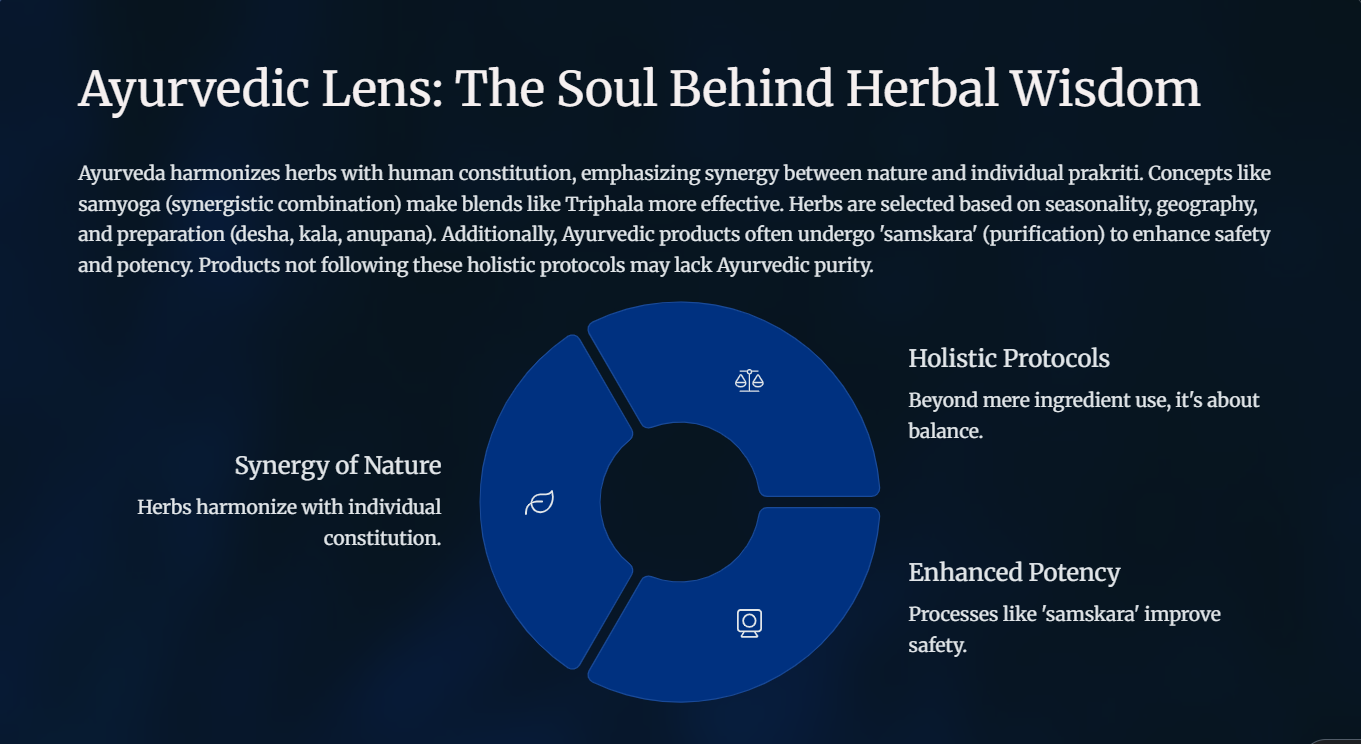
Ayurveda doesn’t merely use herbs it harmonizes herbs with human constitution. It believes in the synergy of nature and individual prakriti (body constitution). Here’s how Ayurvedic concepts elevate herbal authenticity:
- Triphala (Amalaki, Bibhitaki, Haritaki) is more effective as a blend than as single herbs due to samyoga (synergistic combination).
- Herbs are used not only by part (leaf, bark, root) but also by seasonality, geography, and preparation, a concept called desha, kala, and anupana.
- Ayurvedic products often follow ‘samskara’ processes like purification (shodhana), which enhance safety and potency.
Hence, a product that calls itself “herbal” but doesn’t follow such holistic protocols may not qualify under Ayurvedic purity.
Solving the Problem: How to Choose a Truly Herbal Product?
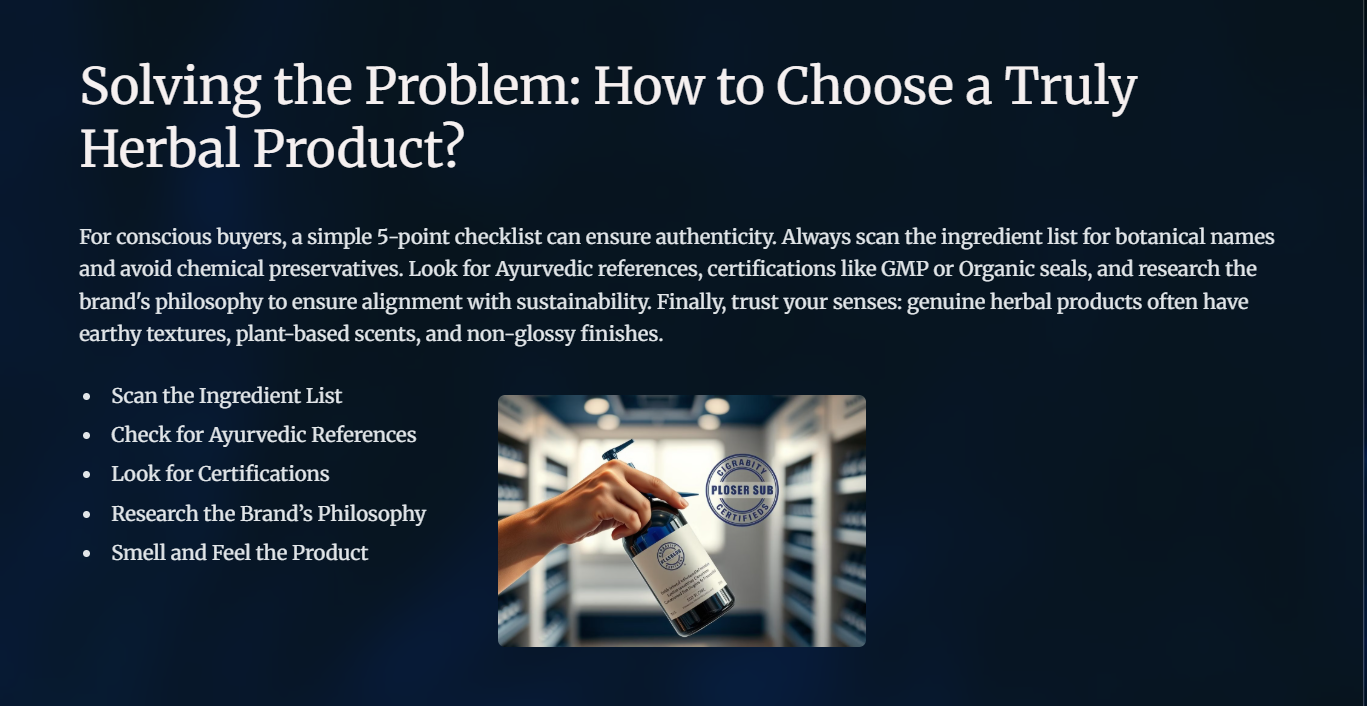
Here’s a simple 5-point checklist for the conscious buyer:
- Scan the Ingredient List: Look for botanical names and avoid chemical preservatives.
- Check for Ayurvedic References: Products citing classical texts or traditional processes are more reliable.
- Look for Certifications: GMP, AYUSH license, Organic seals add credibility.
- Research the Brand’s Philosophy: Is it aligned with sustainability and herbal authenticity?
- Smell and Feel the Product: Real herbal products often have earthy textures, plant-based scents, and non-glossy finishes.
Conclusion: Herbal or Just Hype?
In the age of conscious consumption, it is no longer enough for a product to carry the “herbal” tag it must live up to it.
True herbal products are:
- Rooted in nature
- Respectful of traditional wisdom like Ayurveda
- Backed by science and transparency
The path to wellness lies not just in what we consume, but how it’s made. And when in doubt, trust your roots — Ayurveda has stood the test of 5,000 years. Let’s not dilute that with shortcuts.