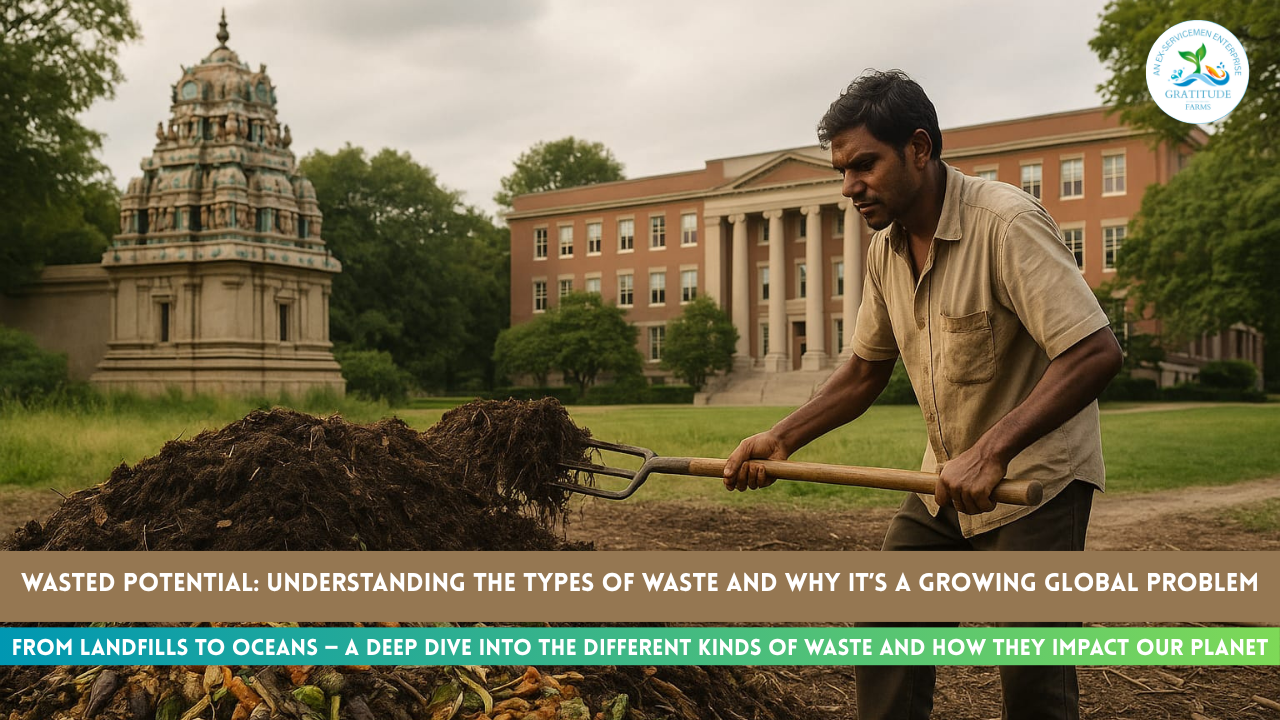
From Landfills to Oceans — A Deep Dive into the Different Kinds of Waste and How They Impact Our Planet
Introduction
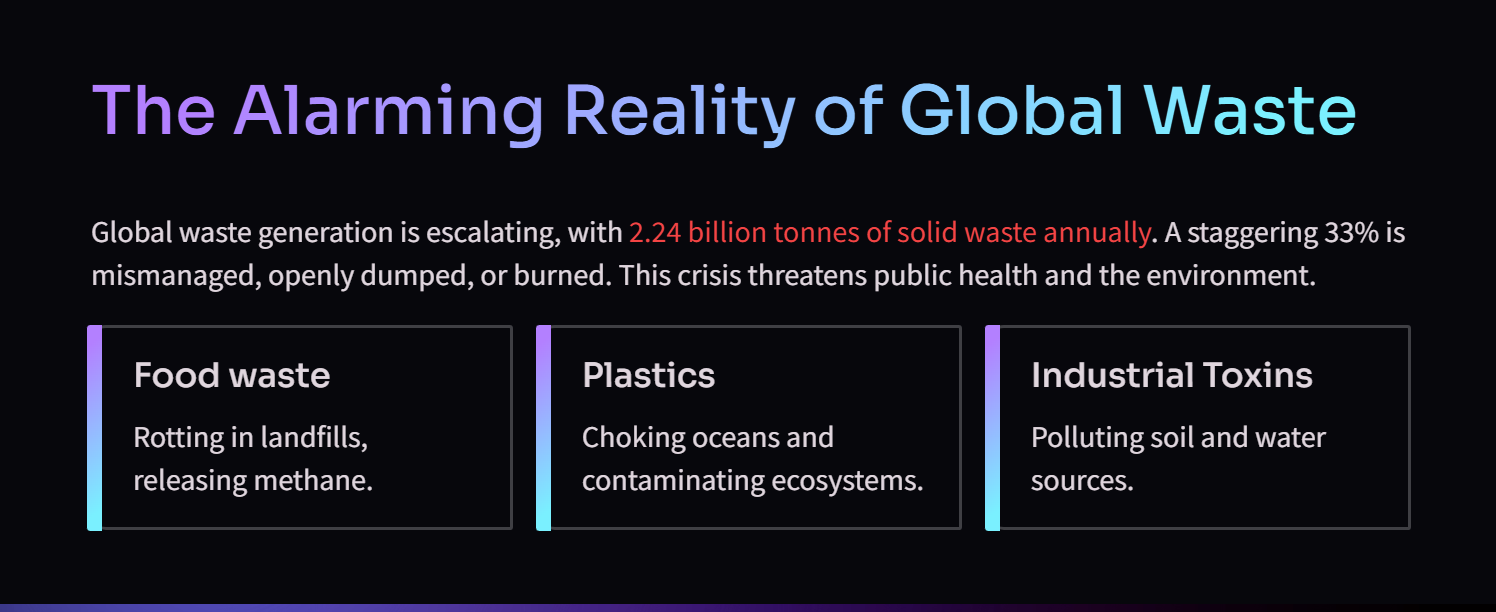
Waste is not just a by-product of consumption it is a reflection of our values, systems, and future choices. Every year, the world generates over 2.24 billion tonnes of solid waste, according to the World Bank’s “What a Waste 2.0” report. Shockingly, more than 33% of this waste is mismanaged, either dumped openly or burned without environmental controls.
Whether it’s food scraps rotting in a landfill, plastics choking oceans, or industrial toxins contaminating soil and water, our waste footprint is fast becoming one of the greatest threats to public health and the environment.
This blog unpacks the different types of waste organic, plastic, industrial, hazardous, and e-waste and how poor management is impacting ecosystems, climate, and human well-being. We’ll also explore what governments, institutions, and individuals can do to solve this mounting global crisis.
Understanding the Main Types of Waste
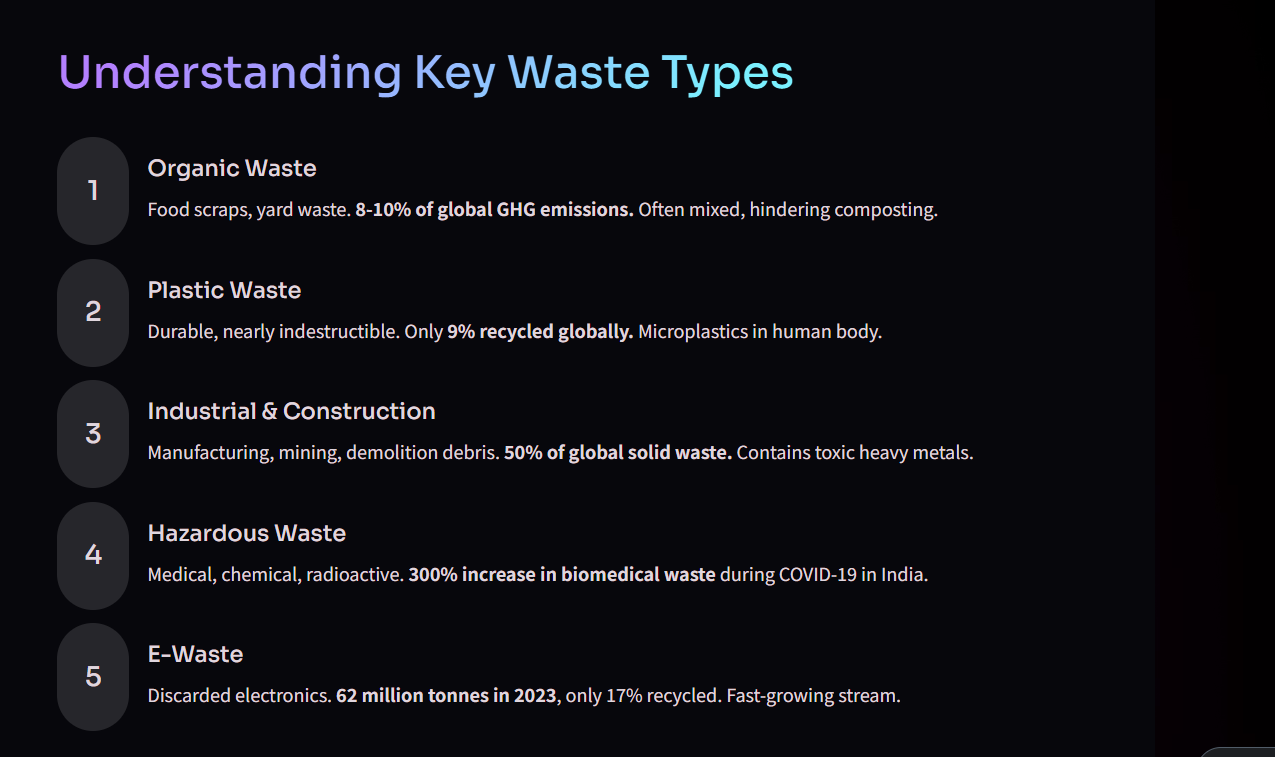
1. Organic Waste
Organic waste includes food scraps, yard waste, and other biodegradable materials. According to the United Nations Environment Programme (UNEP), food waste alone accounts for 8–10% of global greenhouse gas emissions.
- India generates over 60 million tonnes of municipal solid waste (MSW) annually, of which more than 50% is organic.
- However, only a fraction is composted—the rest rots in landfills, releasing methane, a potent greenhouse gas.
Problem: Organic waste is often mixed with plastics and other non-biodegradables, making composting or biogas production difficult.
2. Plastic Waste
Plastics are lightweight, durable and nearly indestructible. Over 400 million tonnes of plastic waste is produced globally each year, with only 9% recycled.
- India generates nearly 3.5 million tonnes of plastic waste annually, with uncollected plastic clogging rivers, roads, and drains.
- Microplastics have now been found in human blood, placentas, and breast milk, raising serious health concerns.
Problem: Single-use plastic continues to dominate packaging, and most recycling systems are inefficient or informal.
3. Industrial and Construction Waste
This includes debris from manufacturing, mining, construction, and demolition.
- Globally, industrial waste accounts for over 50% of total solid waste generation, but it receives less public attention due to its localized visibility.
- In India, construction and demolition (C&D) waste alone contributes around 150 million tonnes annually, with less than 1% scientifically processed.
Problem: Industrial waste often contains toxic heavy metals, asbestos, and chemicals, contaminating groundwater and soil.
4. Hazardous Waste
This includes medical, chemical, and radioactive waste, which poses direct health risks.
- During COVID-19, India saw a 300% increase in biomedical waste, including PPEs, syringes, and testing kits.
- Poor segregation and incineration have led to toxic air pollution and needlestick injuries among waste pickers.
Problem: Hazardous waste often ends up in common landfills due to inadequate infrastructure for segregation and disposal.
5. Electronic Waste (E-Waste)
Discarded electronics phones, laptops, appliances are one of the fastest-growing waste streams globally.
- In 2023, the world generated 62 million tonnes of e-waste, but only 17% was formally recycled, according to the Global E-Waste Monitor.
- India is the third-largest producer of e-waste after China and the USA.
Problem: Informal recycling exposes workers to heavy metals like lead, mercury, and cadmium, harming their health and the environment.
Why Improper Waste Management Is a Global Threat
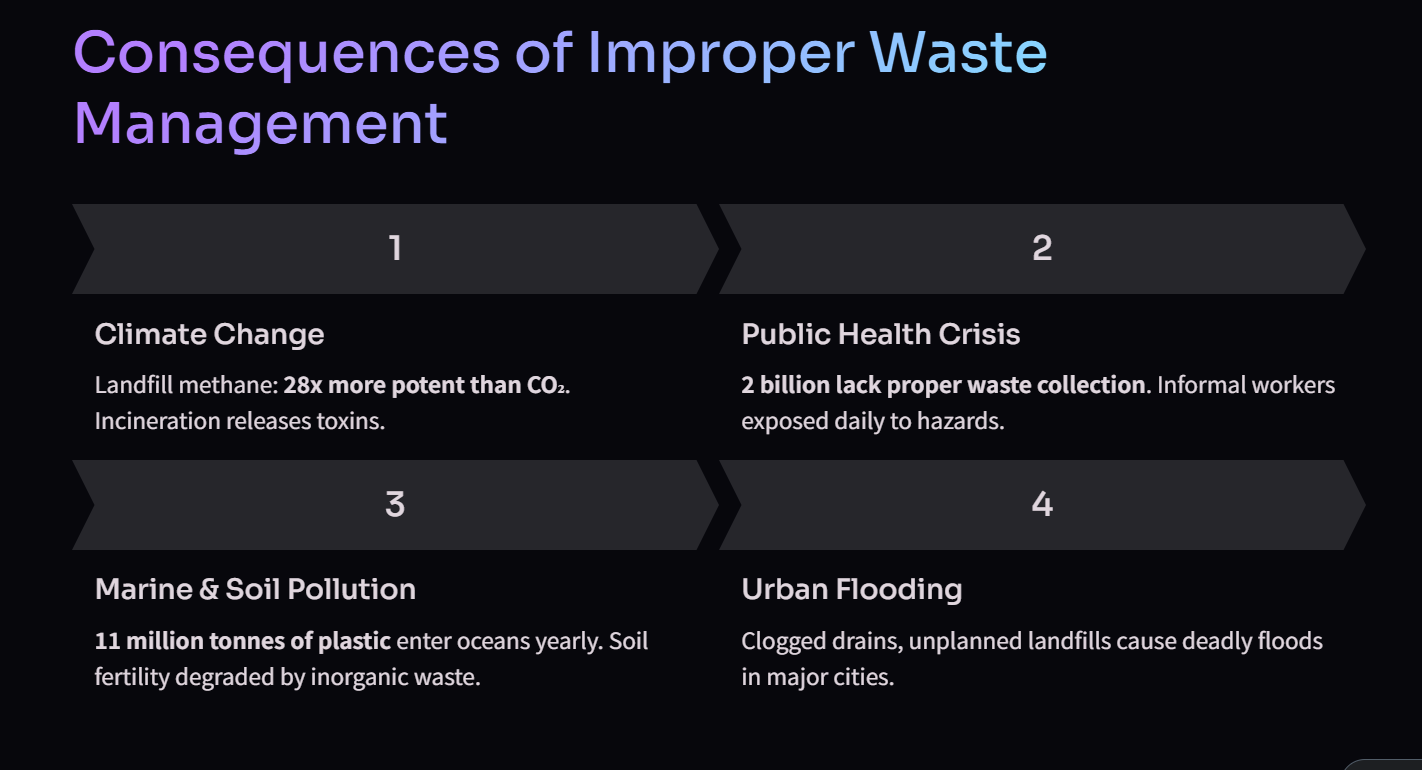
1. Climate Change
Waste mismanagement contributes significantly to greenhouse gas emissions.
- Methane from landfills is 28 times more potent than CO₂ over a 100-year period.
- Incineration of mixed waste releases toxic pollutants and contributes to air pollution.
2. Public Health Crisis
Contaminated air, water, and soil from waste impact millions.
- Over 2 billion people globally lack access to proper waste collection, according to UNEP.
- Informal waste workers often women and children face daily exposure to infectious and chemical waste.
3. Marine and Soil Pollution
- 11 million tonnes of plastic enter the oceans annually, endangering marine life.
- Inorganic waste seeps into agricultural fields, degrading soil fertility and affecting crop yields.
4. Urban Flooding and Infrastructure Damage
Clogged drains and unplanned landfills have turned heavy rainfall into deadly floods in cities like Mumbai, Chennai, and Jakarta.
Solving the Waste Crisis: What Needs to Change
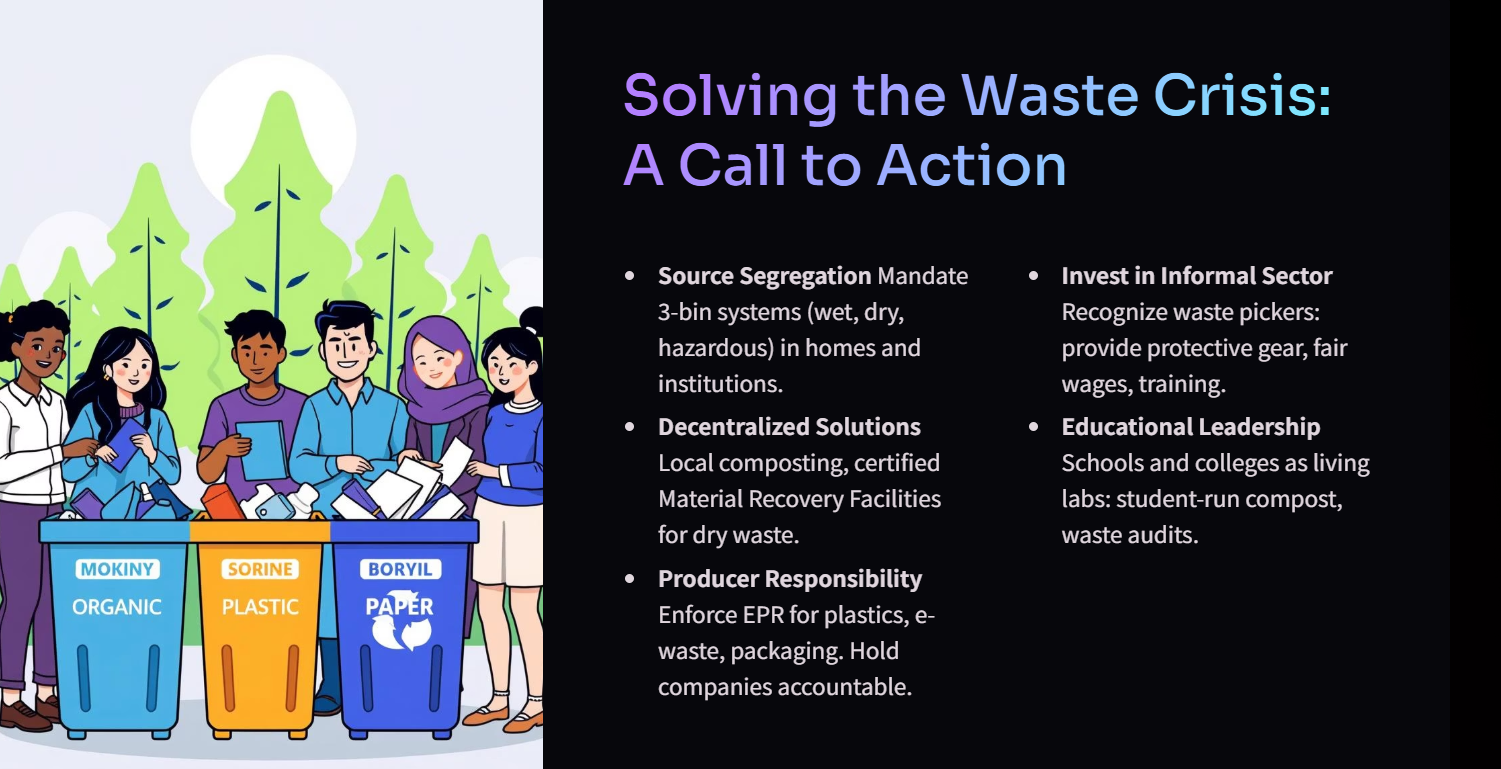
1. Source Segregation as the First Line of Defense
- Separate wet (organic), dry (recyclable), and hazardous waste at the source in homes, schools, temples, and offices.
- Municipal bylaws should enforce 3-bin systems across institutions and households.
2. Decentralized Composting and Recycling
- Local compost units in schools, hostels, and temple kitchens can handle organic waste efficiently.
- Dry waste should be channeled to certified Material Recovery Facilities (MRFs) for sorting and recycling.
3. Extended Producer Responsibility (EPR)
- Companies must take back plastic, e-waste, and packaging under EPR policies.
- In India, the Plastic Waste Management Rules, 2016 and the E-Waste Management Rules, 2022 push for producer accountability,but implementation is weak.
4. Invest in the Informal Sector
- Waste pickers recover up to 20% of recyclable material, yet remain unrecognized.
- Governments must provide protective gear, fair wages, and training to integrate them into formal systems.
5. Educational Institutions as Role Models
- Schools and colleges can serve as living labs teaching waste management through action.
- Student-run compost units, waste audits, and plastic-free campaigns can shift behavior at scale.
Conclusion: Reclaiming Our Wasted Potential
Waste is not merely a burden it’s a missed opportunity to regenerate, recycle, and rebuild. If managed responsibly, organic waste can restore soil, plastics can be reused, and e-waste can provide valuable metals for the circular economy.
The problem isn’t waste it’s how we see and treat it. For too long, we’ve looked away, choosing convenience over sustainability. But with climate change accelerating and cities choking, the need to rethink waste is no longer optional.
By empowering individuals, institutions, and industries to segregate, reduce, and recover waste, we can turn today’s waste into tomorrow’s wealth. The future of the planet lies in how we manage what we throw away.