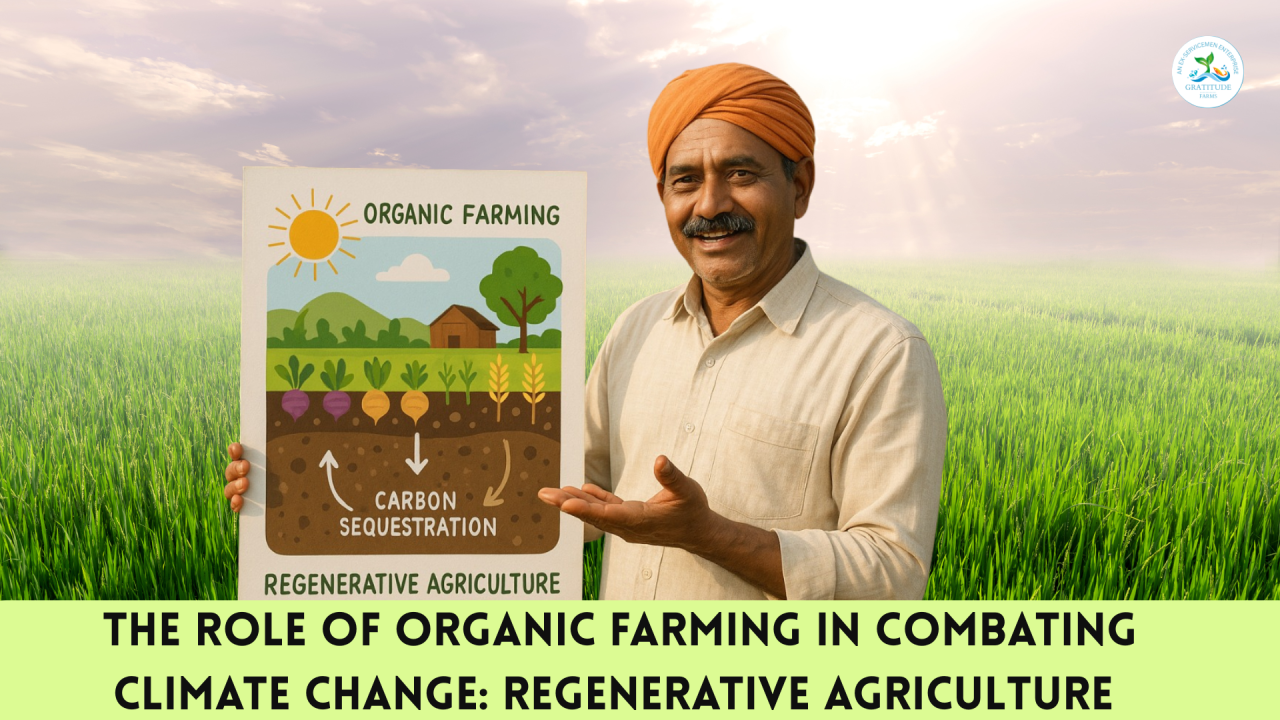
Climate change is no longer a distant threat it is a reality we’re all experiencing in rising temperatures, erratic weather patterns, and decreasing biodiversity. One of the biggest contributors to global greenhouse gas emissions is agriculture, responsible for about 24% of global emissions, according to the Intergovernmental Panel on Climate Change (IPCC). However, amidst the growing concern, organic and regenerative farming have emerged as powerful tools in reversing the damage.
This blog dives into how organic farming can help mitigate climate change through regenerative practices—supported by scientific data, case studies, and a problem-solving approach.
The Problem: Industrial Agriculture and Climate Crisis
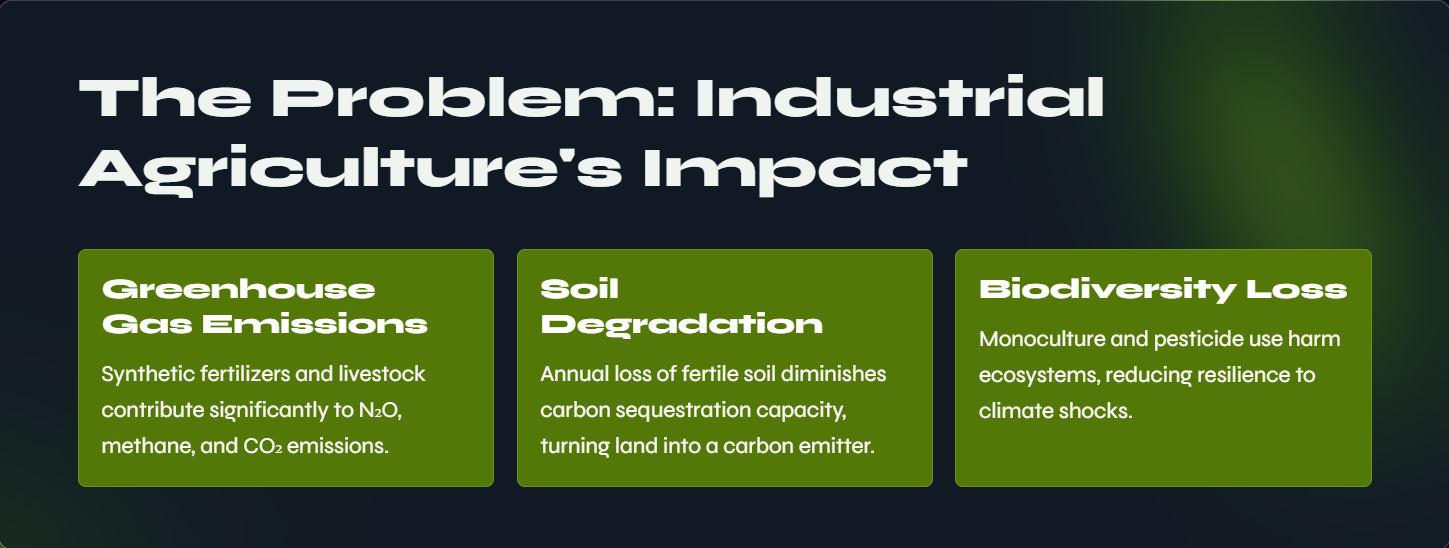
Modern industrial agriculture, driven by high-input and high-output methods, is resource-intensive and emission-heavy. Here’s how:
1. Greenhouse Gas Emissions
- Synthetic fertilizers release nitrous oxide (N₂O)—a greenhouse gas 298 times more potent than CO₂.
- Industrial agriculture accounts for: 11% of global CO₂ emissions (mostly from deforestation and machinery use) 44% of methane emissions (mainly from rice paddies and livestock) 82% of nitrous oxide emissions (from synthetic fertilizers)
2. Soil Degradation
- Over 24 billion tons of fertile soil are lost annually due to erosion and unsustainable farming.
- Degraded soils lose their ability to sequester carbon, making the land a carbon emitter rather than a sink.
3. Monoculture and Biodiversity Loss
- Monocropping and heavy pesticide use destroy beneficial microbes and pollinators.
- Biodiversity loss leads to weaker ecosystems and reduced resilience to climate shocks.
Summary:
Industrial agriculture accelerates climate change through emissions, soil degradation, deforestation, and biodiversity loss.
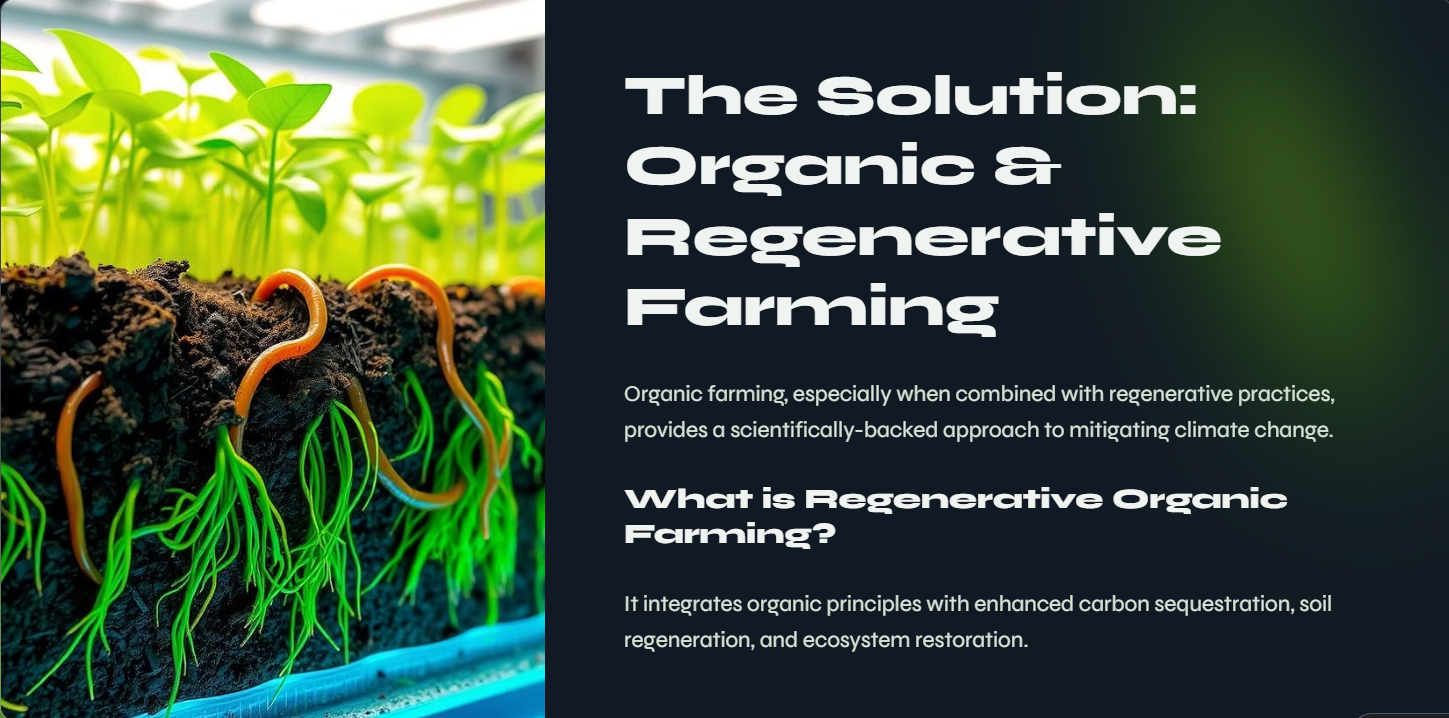
The Solution: Organic & Regenerative Farming
Organic farming, particularly when combined with regenerative agriculture, offers a viable, science-backed solution.
What is Regenerative Organic Farming?
It combines the core principles of organic farming (no synthetic inputs, biodiversity, animal welfare) with carbon sequestration, soil regeneration, and ecosystem restoration.
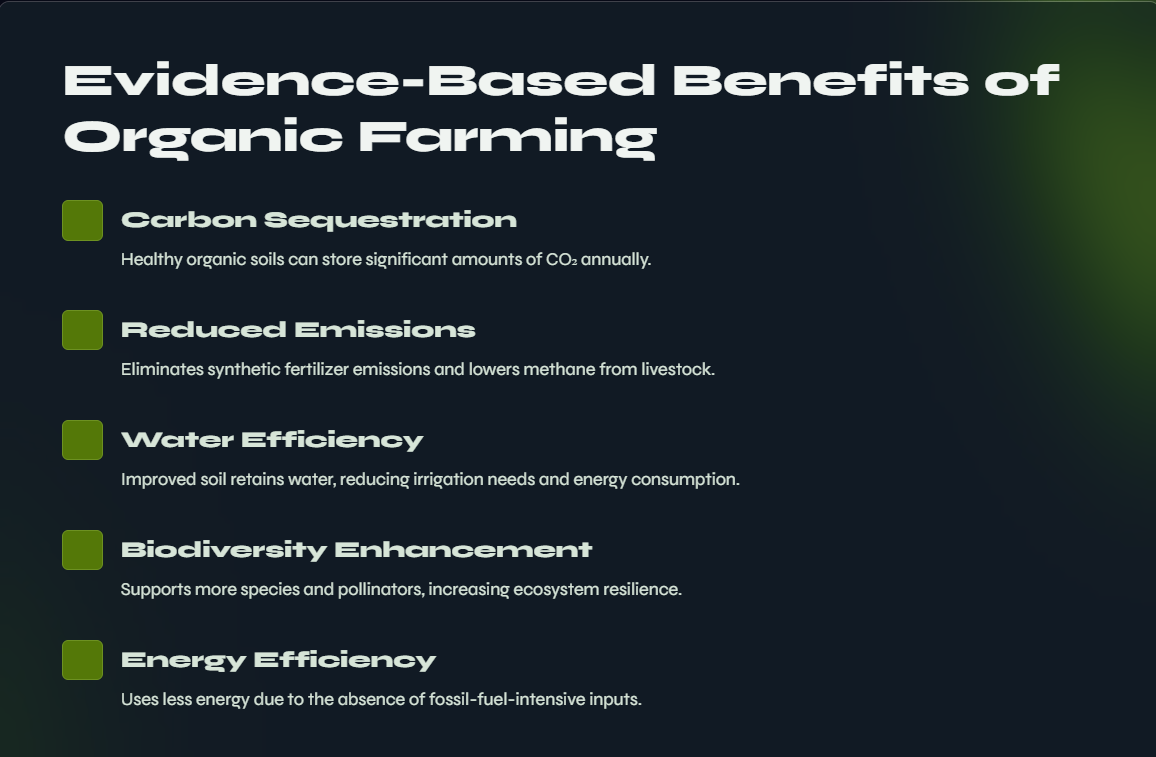
Evidence-Based Benefits of Organic Farming
1. Carbon Sequestration in Soil
- Healthy organic soils can act as carbon sinks, storing up to 3–5 metric tons of CO₂ per hectare per year.
- A 30-year study by the Rodale Institute found that organic systems sequestered 15–28% more carbon than conventional systems.
- Project Drawdown estimates that regenerative agriculture could remove 23.2 gigatons of CO₂ by 2050 if adopted widely.
2. Reduced Emissions
- No synthetic fertilizers = No nitrous oxide emissions from nitrogen-heavy chemicals.
- Livestock in organic systems are often grass-fed or rotationally grazed, reducing methane output compared to confined feedlots.
- Organic farms emit 20–50% less GHGs per hectare than conventional farms (FiBL & IFOAM, 2020).
3. Water Efficiency
- Organic soil with high organic matter content holds water better, reducing irrigation needs by 30–50%.
- Less water usage translates to lower energy consumption, thereby reducing indirect emissions.
4. Biodiversity Enhancement
- Organic farms support 30% more species and 50% more pollinators, according to a meta-analysis by the University of Oxford.
- Biodiversity increases resilience to pests and diseases, reducing dependency on synthetic chemicals.
5. Energy Efficiency
- Organic farms use 20–56% less energy per unit of production, primarily due to the elimination of fossil-fuel-intensive fertilizers and pesticides.
Problem-Solving in Practice: Real-Life Success Stories
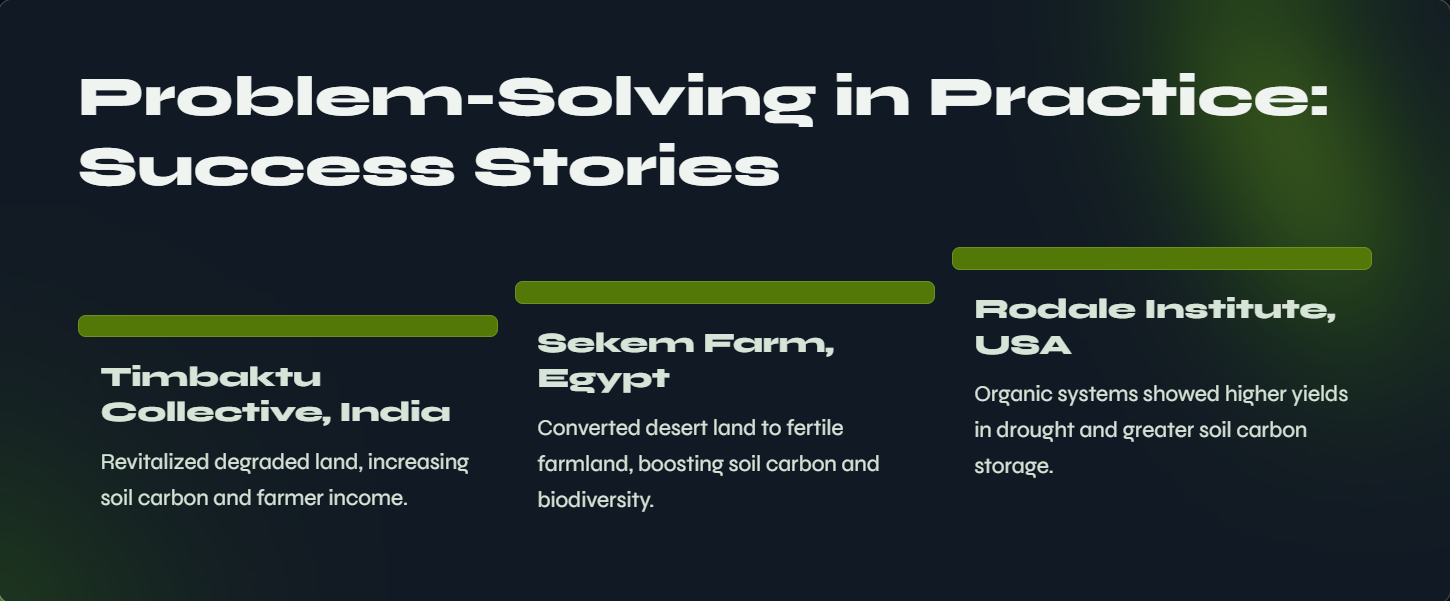
Case Study: Timbaktu Collective, India
- In Andhra Pradesh’s drought-prone Anantapur district, over 9,000 acres of degraded land were revived using organic and regenerative practices soil organic carbon rose from 0.24% to 0.78% in 5 years, and GHG emissions dropped by 30–40%.
- Over 2,000 farmers transitioned to organic methods, average income increased by 27%, and groundwater levels rose by up to 1.5 meters, showcasing the ecological and economic power of regenerative farming in dry land India.
Case Study: Sekem Farm, Egypt
- In arid climates where desertification is a major issue, Sekem has converted over 2,000 hectares of desert into fertile farmland using regenerative organic techniques.
- Result: Soil carbon increased by 1.4% over 10 years, and biodiversity returned to the region.
Case Study: Rodale Institute, USA
- Their long-term farming systems trial shows that organic systems outperform conventional in times of drought by up to 40% higher yields.
- The soil in organic plots stored more than 1,000 lbs of carbon per acre compared to conventional systems.
Challenges & Criticisms
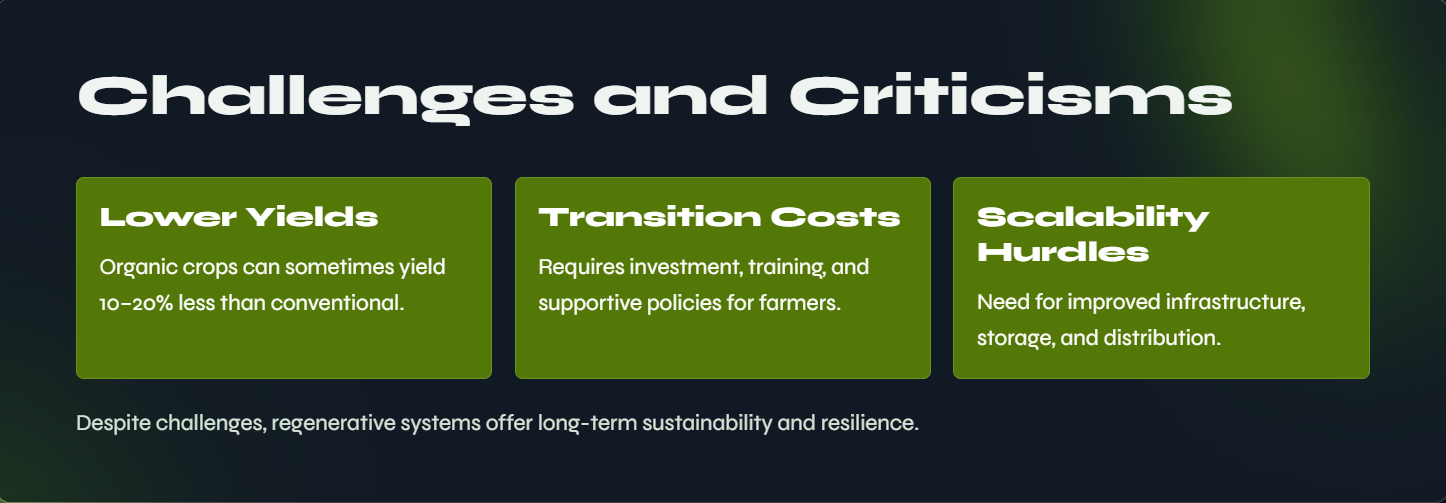
While organic farming holds promise, it’s not without limitations:
- Lower yields: Organic crops yield 10–20% less than conventional in some cases.
- Cost of transition: Shifting to organic farming requires investment, training, and policy support.
- Scalability: There is still a need for supportive infrastructure, storage, and distribution networks.
However, when evaluated per unit of nutrient output over time, regenerative systems can outperform conventional systems in sustainability and resilience.
Strategic Steps Forward
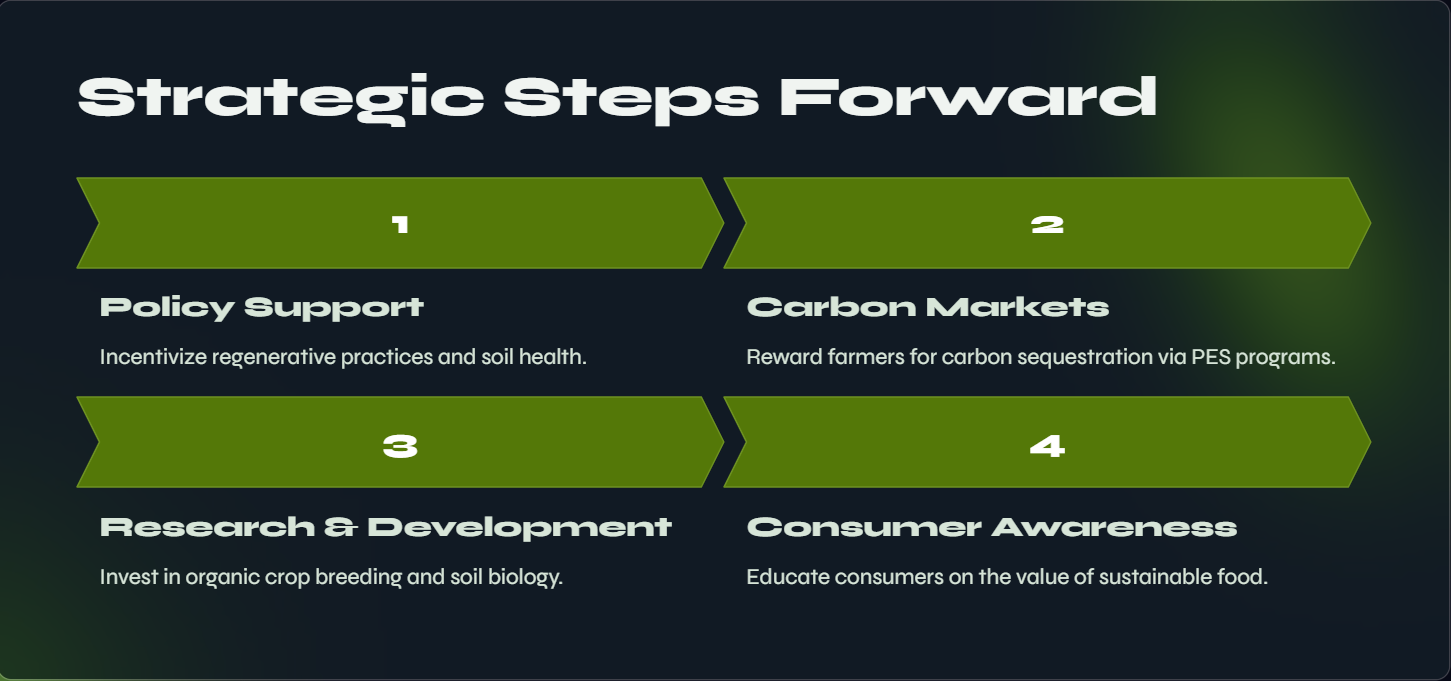
To scale the impact of organic farming in climate mitigation, multi-level action is needed:
1. Policy Support
- Subsidies for regenerative practices
- Soil health and carbon farming incentives
2. Carbon Markets
- Payment for Ecosystem Services (PES) programs to reward farmers for carbon sequestration
3. Research & Development
- More investment in organic crop breeding, pest control, and soil biology
4. Consumer Awareness
- Educating buyers on the long-term environmental cost of cheap conventional food
Conclusion: Farming for the Future
Organic and regenerative agriculture offer a scientifically sound and ecologically resilient pathway to combat climate change. By focusing on soil health, biodiversity, and natural cycles, organic farming turns the earth from a carbon emitter into a carbon sink.
If we want to preserve our climate, safeguard food security, and restore our ecosystems, the future must be regenerative. Transitioning to organic isn’t just a farming choice it’s a climate action.
“The soil is the great connector of lives… without proper care for it we can have no community, because without a community we cannot sustain life.” — Wendell Berry