Introduction
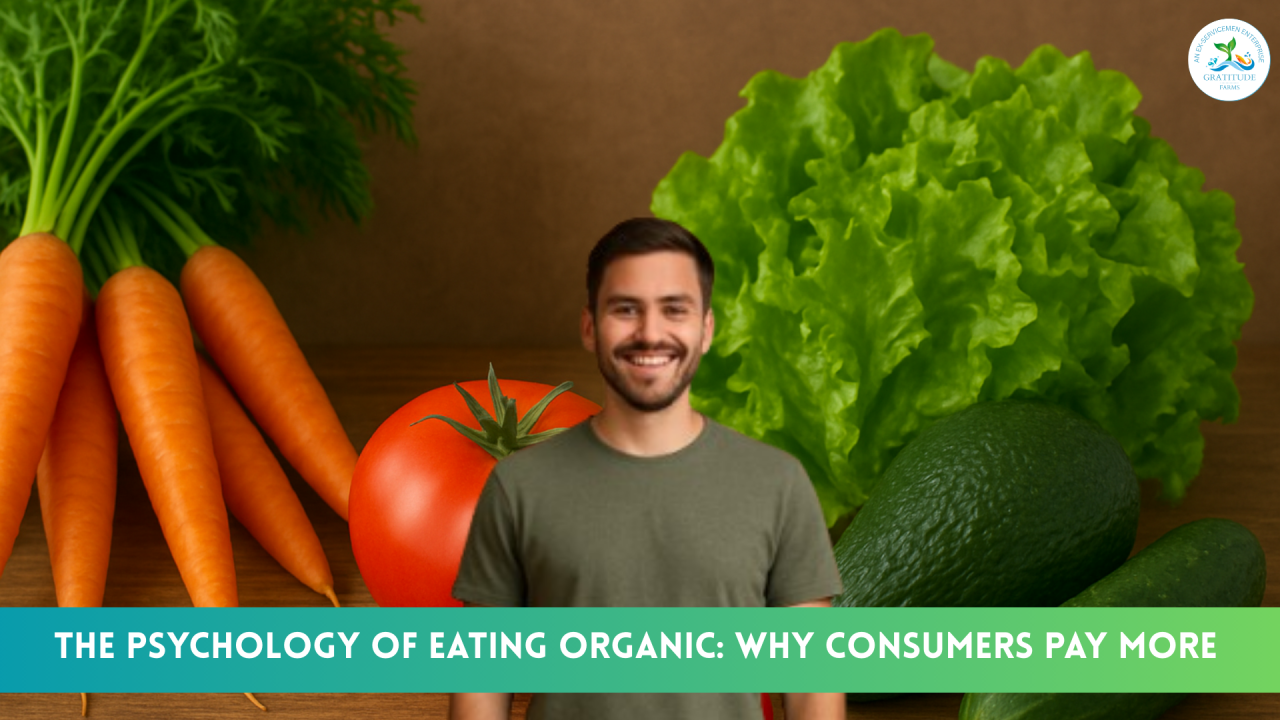
Walk into any supermarket today, and you will see a section proudly labeled “Organic.” The vegetables are fresher-looking, the packaging more eco-friendly, and the price tags noticeably higher. Yet, despite the cost difference, more and more consumers are willing to pay extra for organic food. According to a Research and Markets report (2024), the global organic food and beverage market is projected to reach USD 564 billion by 2030, growing at an annual rate of over 11%. This rapid growth raises a fascinating question:

👉 Why are consumers paying more for organic food when cheaper alternatives are available?
The answer lies not just in economics but also in psychology, trust, and perception. In this blog, we’ll explore the underlying reasons consumers are willing to pay more, the problems in the conventional food system that drive this choice, and the solutions organic farming offers.
The Problem: Trust Deficit in Conventional Food
For decades, conventional farming has relied on chemical fertilizers, pesticides, and genetically modified seeds to boost yields. While this helped feed growing populations, it also led to:
- Health concerns: Rising cases of pesticide residue in fruits and vegetables.
- Environmental degradation: Soil fertility loss, water contamination, and declining biodiversity.
- Consumer skepticism: Fear of “hidden costs” in food safety.
According to the FAO (Food and Agriculture Organization), nearly 3 million tons of pesticides are used worldwide every year. With media reports highlighting issues like pesticide-linked diseases or antibiotic resistance in livestock, consumers have begun associating conventional food with hidden risks.
Thus, the psychological shift toward organic food begins with a desire to reduce fear and uncertainty in food choices.
The Psychological Triggers Behind Paying More
1. Perception of Health and Safety
Consumers equate “organic” with clean, safe, and chemical-free. Even though not all scientific studies show dramatic health benefits, the perception of reduced risk is powerful. A Statista survey (2023) found that over 70% of organic buyers cite health and safety as their main reason.
For many, this is less about guaranteed benefits and more about peace of mind.
2. Emotional Association with “Natural”
Words like natural, pure, earth-friendly instantly connect emotionally. Research in consumer psychology shows that people trust “natural” labels more than “low-fat” or “sugar-free” ones. Organic farming taps into this desire for authenticity and “returning to roots.”
3. Status and Identity Signaling
Eating organic is no longer just about health it has become a lifestyle statement. Buying organic products signals:
- Social status: “I can afford better quality food.”
- Values alignment: “I care about sustainability and ethical farming.”
This is similar to why consumers buy luxury brands: the product reflects who they are and what they stand for.
4. The “Halo Effect” of Organic Labels
Studies show that when consumers see an “organic” label, they unconsciously assume the product is tastier, healthier, and higher quality, even if it’s the same as the non-organic version. This halo effect drives willingness to pay more.
5. Fear of Missing Out (FOMO) on Wellness
In today’s wellness-driven culture, people fear missing out on the latest health trend. Just as yoga, meditation, and veganism gained traction, organic food became part of the wellness package. Consumers don’t want to feel left behind in making “better lifestyle choices.”

The Economic Problem: Price Gap Between Organic and Conventional
While consumer psychology drives demand, the real challenge is price. Organic food often costs 20–100% more than conventional produce. The reasons include:
- Higher labor costs (manual weeding, crop rotation).
- Certification and compliance expenses.
- Smaller-scale production compared to industrial farming.
This price gap excludes a large section of the population, making organic food a niche choice for the middle and upper classes.
The Solution: Bridging Trust and Affordability
If organic farming is to expand beyond niche markets, the psychological desire for “better food” must align with affordability and accessibility. Here’s how:
1. Building Consumer Trust Through Transparency
- Use blockchain and QR code tracking to show the farm-to-fork journey.
- Local farmer markets where buyers meet growers directly.
When trust is high, consumers feel justified paying extra.
2. Community-Supported Agriculture (CSA) Models
CSAs allow consumers to subscribe to a farm’s produce in advance. This reduces distribution costs, gives farmers assured income, and provides consumers with lower-cost organic food.
3. Scaling Up Organic Farming
Government schemes like India’s Paramparagat Krishi Vikas Yojana (PKVY) and the EU’s Green Deal encourage scaling organic farming. Larger supply will naturally reduce prices, making it mainstream.
4. Educating Consumers Beyond Labels
Marketers and farmers should highlight not just health benefits but also the hidden costs of conventional food such as soil damage, water pollution, and long-term health risks. When consumers understand these external costs, they see organic food as a long-term investment, not an expense.
5. Innovation in Organic Retailing
- Affordable organic private labels in supermarkets.
- Direct-to-home delivery models.
- Partnerships with restaurants and cafes to normalize organic menus.
These solutions make organic food part of everyday consumption rather than a “luxury buy.”

Conclusion
The willingness to pay more for organic food is not just about price and product it’s about psychology and perception. Consumers pay more because they associate organic with safety, health, authenticity, and social identity. The higher cost is justified in their minds as a safeguard against the hidden dangers of conventional food.
However, if organic farming is to move beyond an elite market, it must bridge the gap between consumer psychology and economic reality. Building trust, scaling production, and educating consumers are critical steps.
In the end, the psychology of eating organic reflects a deeper human desire: to eat food that feels safe, ethical, and nourishing not just for the body, but for the planet too.