Introduction: The Water Crisis Threatening Organic Agriculture
India is home to over 2.3 million organic farmers, making it the country with the largest number of certified organic producers globally. But this growth is under constant threat due to one critical challenge: water scarcity.
With nearly 54% of India’s land area facing water stress, and more than 80% of rural irrigation dependent on rainfall, organic farming communities especially in semi-arid regions are at high risk. Unlike conventional agriculture, organic farms cannot rely on synthetic water-retaining chemicals or irrigation-heavy monoculture crops.
This brings us to a sustainable and low-cost solution: Rainwater Harvesting (RWH).
In this blog, we explore the most effective rainwater harvesting techniques for organic farms, backed by data, field experiences, and practical implementation models.
The Problem: Organic Farming Relies Heavily on Monsoon Rains
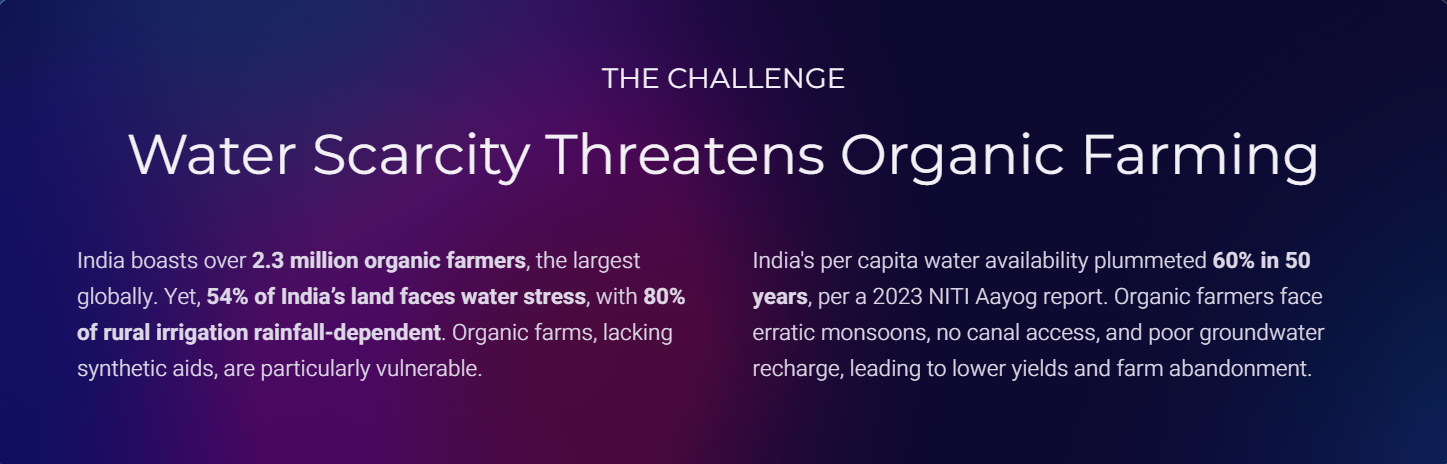
According to a 2023 report by NITI Aayog, India’s per capita water availability has dropped by over 60% in the past 50 years, with major farming states like Maharashtra, Tamil Nadu, and Rajasthan experiencing acute water stress.
Organic farmers, who often operate small-scale or marginal farms, face:
- Inconsistent and erratic monsoons
- No access to canal irrigation
- Poor groundwater recharge due to deforestation and soil degradation
This leads to lower productivity, crop failure, and even abandonment of organic practices.
Solution #1: Rooftop Rainwater Harvesting (RRWH) for Storage
Best suited for: Farmhouses, livestock sheds, processing units
How it works:
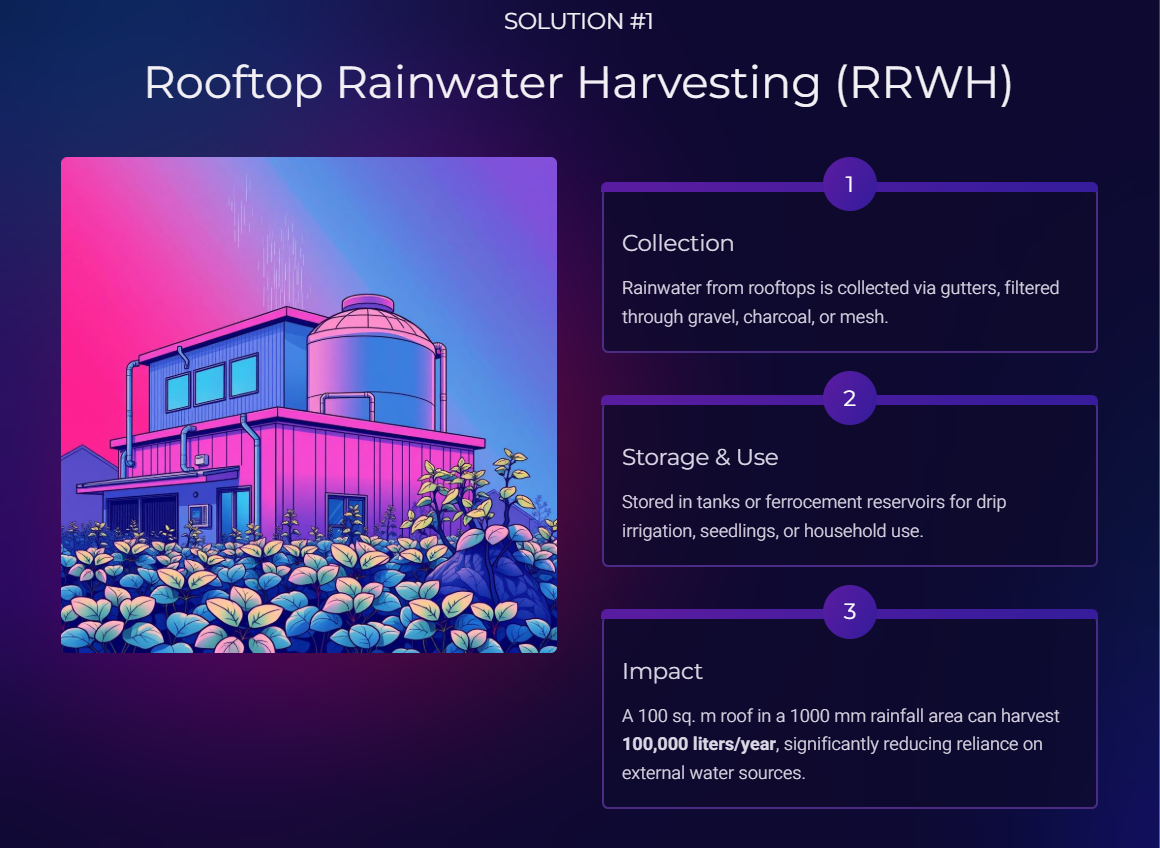
- Rainwater from rooftops is collected through gutters
- Passed through a filter (gravel, charcoal, mesh)
- Stored in tanks or ferrocement reservoirs
Benefits:
- Clean water for drip irrigation, seedlings, or household use
- Easy to install and maintain
- Reduces reliance on borewell or tanker water
Stat: A 100 sq. m roof in a 1000 mm rainfall area can harvest up to 1 lakh litres/year enough for small-scale irrigation or nursery operations.
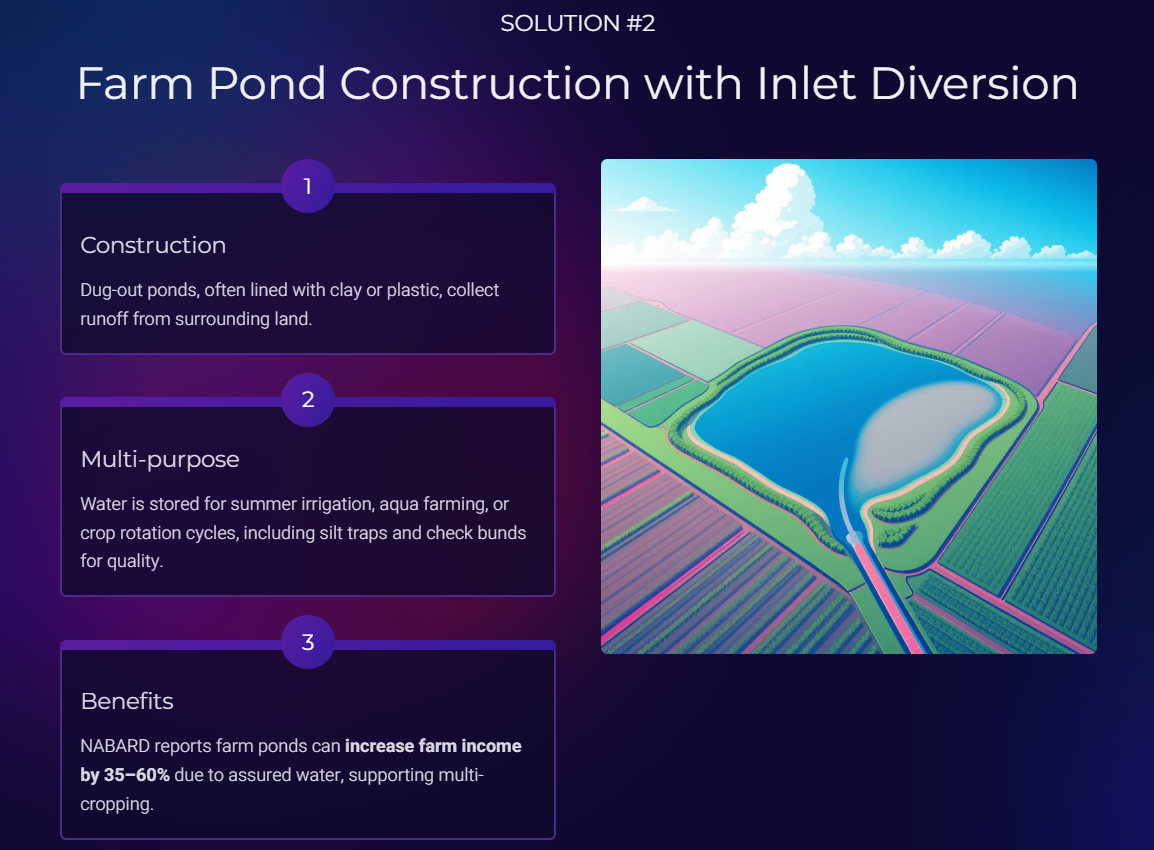
Solution #2: Farm Pond Construction with Inlet Diversion
Best suited for: Medium to large organic farms
How it works:
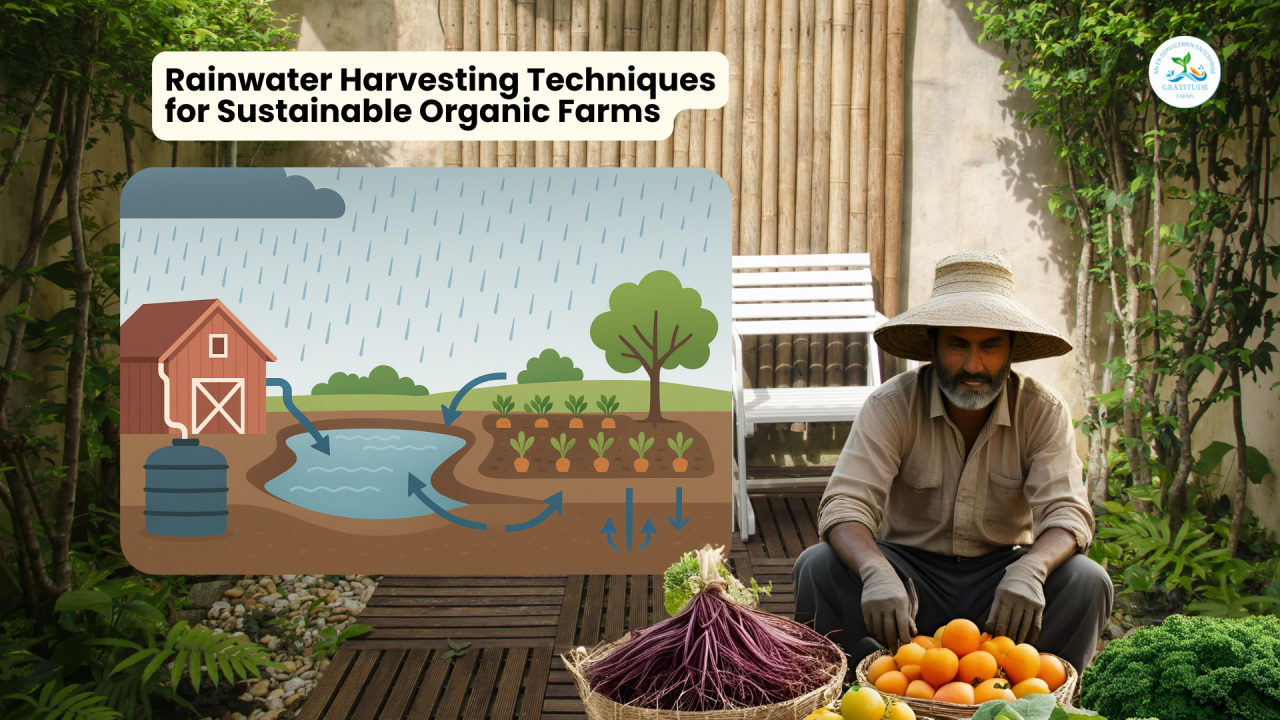
- Dug-out ponds (lined with clay or plastic) collect runoff from surrounding land
- Water is stored for summer irrigation, aqua farming, or crop rotation cycles
- Can include silt traps and check bunds to improve quality
Benefits:
- Long-term water source
- Recharges shallow groundwater
- Supports multi-cropping systems in organic farms
Stat: NABARD reports that farm ponds can increase farm income by 35–60% due to assured water availability during dry spells.
Solution #3: Contour Trenches and Swales for Water Infiltration
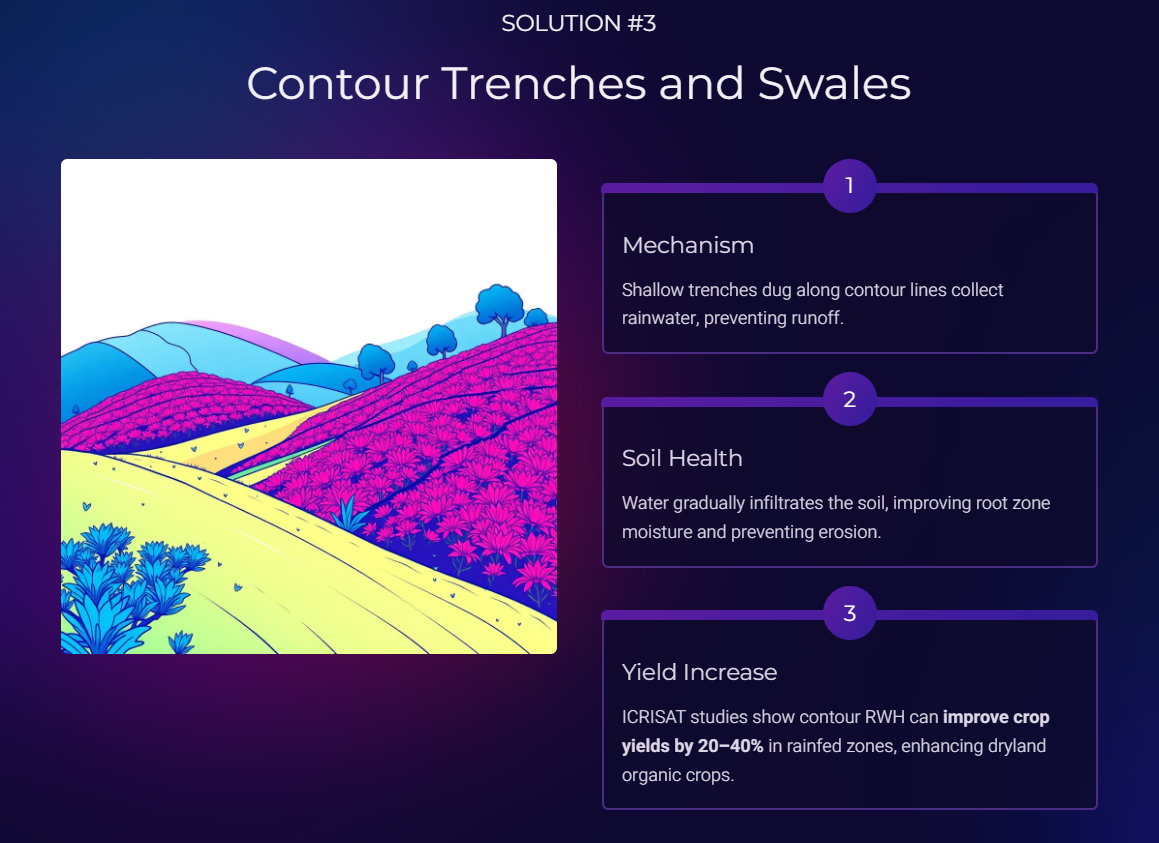
Best suited for: Hilly or sloped farms
How it works:
- Shallow trenches dug along the contour lines of the land
- Rainwater collects in these trenches instead of running off
- Gradually infiltrates the soil, improving root zone moisture
Benefits:
- Improves soil moisture retention
- Prevents erosion
- Enhances the performance of dryland organic crops like millets, pulses, and oilseeds
Stat: Studies by ICRISAT show that contour-based RWH can improve crop yields by 20–40% in rainfed zones.
Solution #4: Percolation Pits and Recharge Shafts
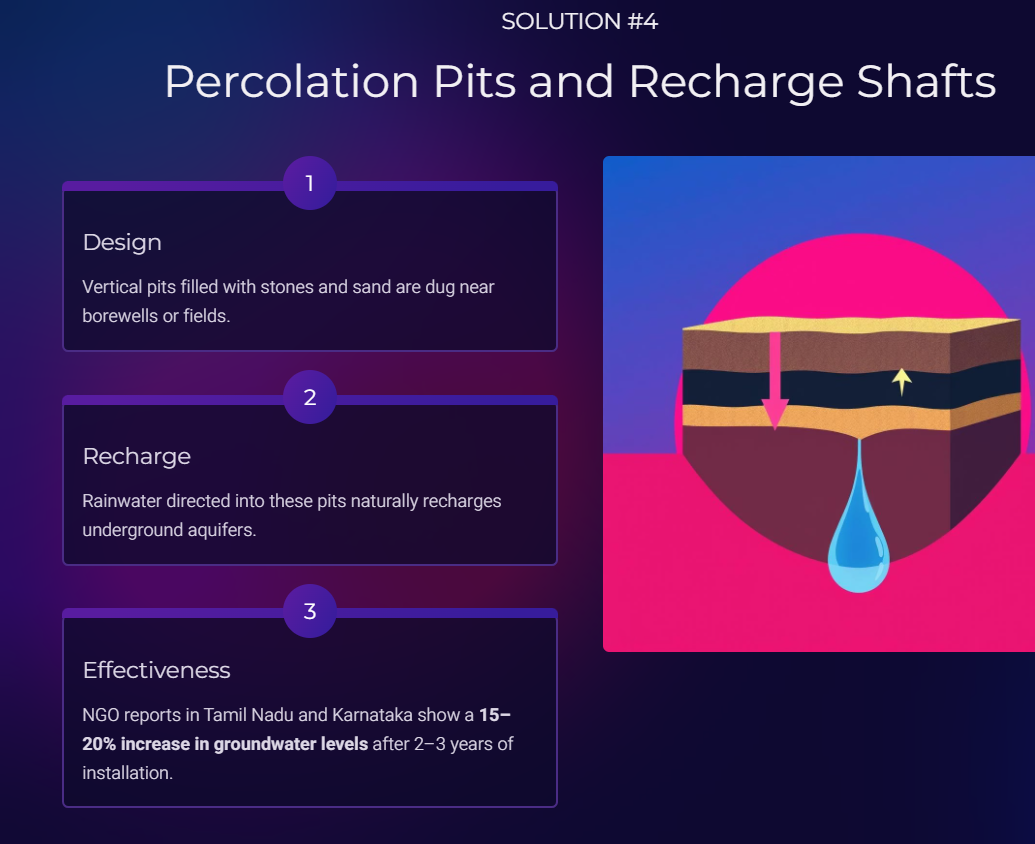
Best suited for: Areas with depleting groundwater
How it works:
- Vertical pits filled with stones and sand are dug near borewells or fields
- Rainwater directed into these pits recharges the aquifers naturally
Benefits:
- Improves long-term groundwater availability
- Low maintenance
- Can be combined with rooftop or surface runoff systems
Stat: In Tamil Nadu and Karnataka, local NGOs reported a 15–20% increase in groundwater levels after installing percolation pits over 2–3 years.
Solution #5: Use of Recharge Bunds and Check Dams
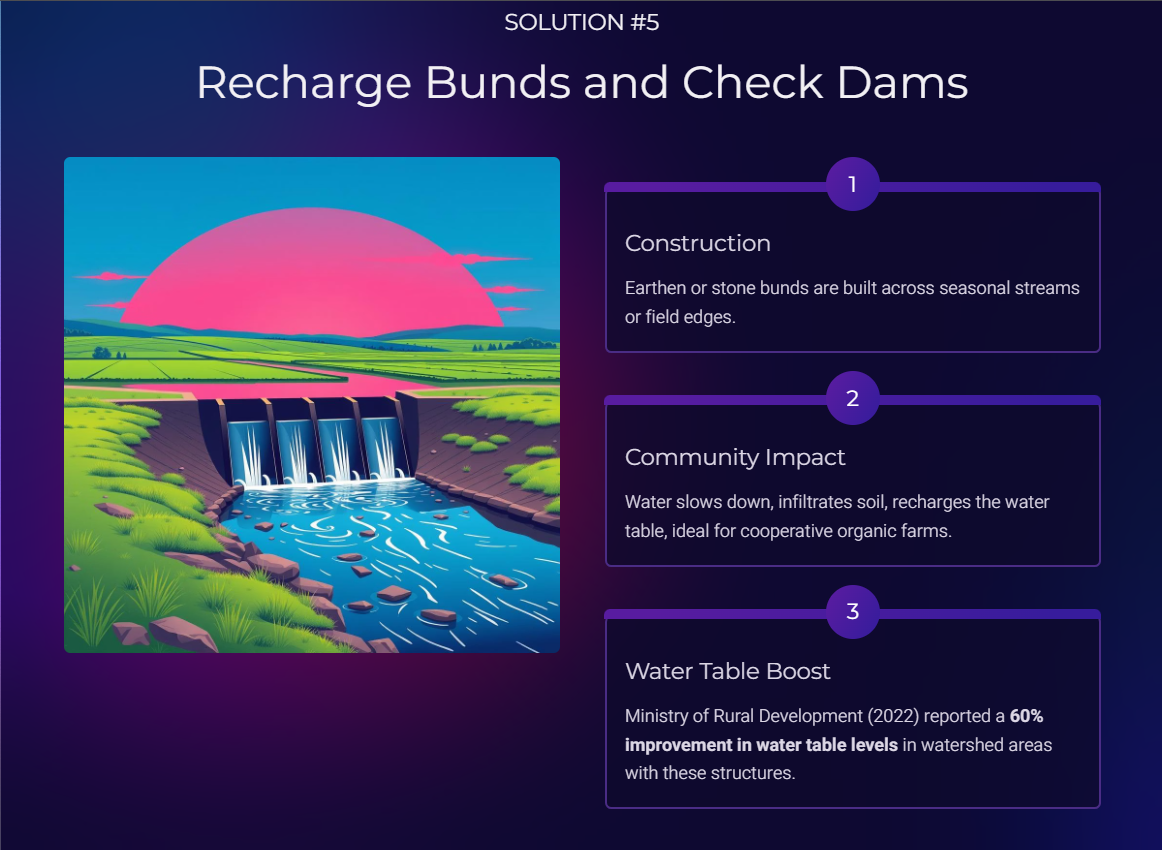
Best suited for: Community-level or cluster farming
How it works:
- Earthen or stone bunds are built across seasonal streams or field edges
- Water slows down, infiltrates soil, and recharges the water table
Benefits:
- Ideal for cooperative organic farms
- Prevents floodwater loss during peak rainfall
- Encourages group-based water security and soil conservation
Stat: A report from the Ministry of Rural Development (2022) noted a 60% improvement in water table levels in watershed areas with check dams and bunding.
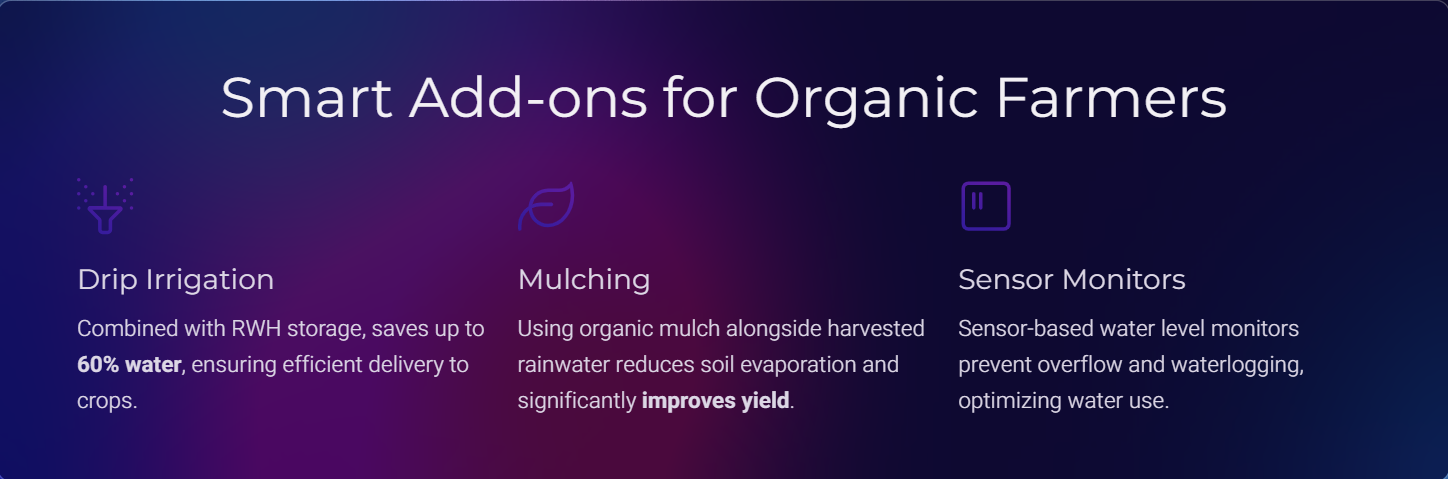
Smart Add-ons for Organic Farmers
- Drip Irrigation with RWH Storage Tanks → Saves up to 60% water
- Mulching + Rainwater Use → Reduces soil evaporation, improves yield
- Sensor-based Water Level Monitors → Prevents overflow and waterlogging
Conclusion: Rainwater Harvesting Is Not Just Sustainable, It’s Essential
Rainwater harvesting is no longer a “good-to-have” feature it’s a must-have survival strategy for India’s organic farmers.
Whether you’re farming half an acre or running a multi-acre organic estate, rainwater harvesting offers:
- Cost-effective water security
- Higher resilience to climate shocks
- Improved soil health—which is central to organic principles
By adopting the right technique suited to their land, every farmer can transform rain into a renewable resource. And in doing so, make organic farming not only sustainable, but also scalable for the future.