Introduction
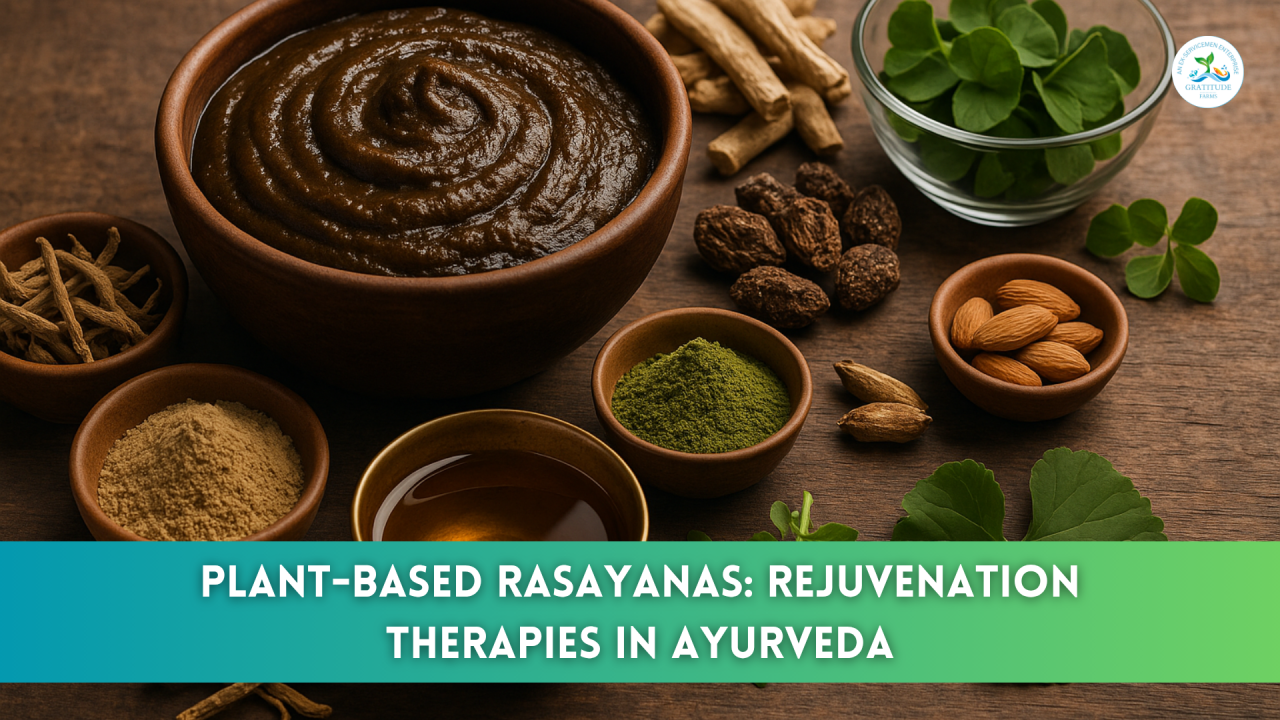
As modern life becomes increasingly stressful and sedentary, global populations are turning to traditional wellness systems like Ayurveda for holistic health solutions. At the heart of Ayurveda lies a class of therapies known as Rasayanas, aimed at rejuvenation, longevity, and overall vitality. Of particular interest are plant-based Rasayanas, which rely on botanicals to restore balance in the body and mind. Backed by centuries of tradition and growing scientific validation, these formulations are gaining traction not only in India but globally.
According to a 2023 report by the World Health Organization (WHO), over 80% of the world’s population uses traditional herbal medicine for some aspect of primary healthcare. The global Ayurvedic market, valued at USD 9.5 billion in 2022, is projected to grow at a CAGR of 15.63%, reaching nearly USD 21.12 billion by 2028, according to ResearchAndMarkets. Much of this growth is fueled by demand for plant-based Rasayana therapies.
Understanding Rasayana in Ayurveda
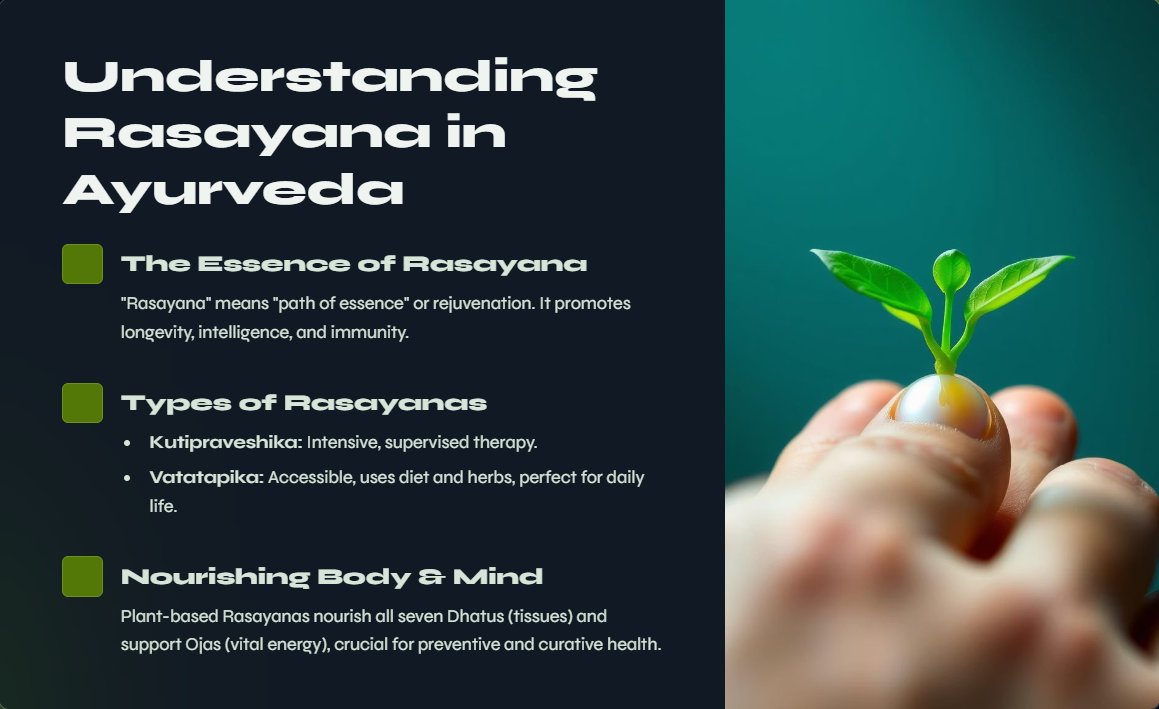
The term “Rasayana” comes from the Sanskrit words “Rasa” (essence) and “Ayana” (path). Together, they signify the path of essence or rejuvenation. Rasayana therapy is a branch of Ayurveda that deals with the promotion of longevity, intelligence, immunity, and overall wellbeing.
There are two major types of Rasayanas:
- Kutipraveshika Rasayana – An intensive form, performed under isolation and supervision.
- Vatatapika Rasayana – More accessible and suited for the general public, usually through diet and herbal formulations.
Plant-based Rasayanas fall under the second category and are designed to nourish all seven Dhatus (tissues) and support Ojas (vital energy), making them essential for preventive as well as curative health.
Problem Statement: Modern Health Challenges
Today’s health challenges are rooted in lifestyle disorders such as:
- Chronic fatigue
- Premature aging
- Weakened immunity
- Cognitive decline
- Anxiety and stress
These are often linked to oxidative stress, inflammation, and poor nutritional absorption. Modern medicine, while effective in acute care, often lacks preventive and holistic approaches to these issues.
A 2022 Lancet study noted that lifestyle-related diseases account for over 70% of global deaths, and 50% of these could be prevented through lifestyle interventions, including herbal supplementation and diet therapy.

Solution: Plant-Based Rasayanas as a Preventive & Restorative Approach
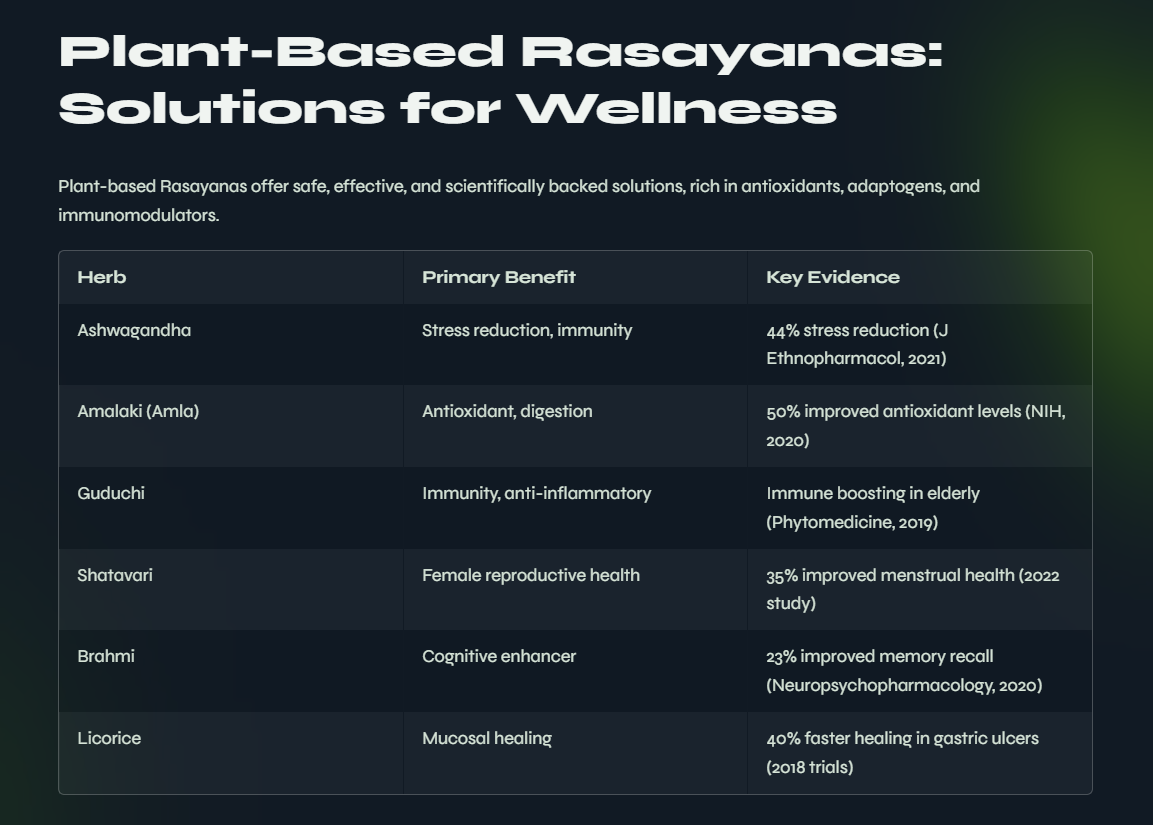
Plant-based Rasayanas provide a safe, effective, and scientifically validated alternative to conventional supplements, especially when it comes to preventive and restorative healthcare. These Ayurvedic botanicals are rich in antioxidants, adaptogens, and immunomodulatory compounds, which help combat oxidative stress, inflammation, and immune dysfunction—the root causes of many modern lifestyle disorders. Herbs like Ashwagandha are well-known for their stress-reducing and immune-enhancing properties, with studies showing significant reductions in anxiety levels over consistent use. Amalaki (Amla), a potent source of Vitamin C, acts as a powerful antioxidant that rejuvenates tissues and supports digestive and skin health. Guduchi, another widely used Rasayana, is noted for its immunomodulatory and anti-inflammatory benefits, especially in elderly populations. Shatavari is particularly effective for female reproductive health and hormonal balance, while Brahmi supports cognitive functions like memory, focus, and mental clarity. Licorice (Yashtimadhu), with its soothing and adrenal-supportive properties, also aids in mucosal healing. Together, these herbs offer a multi-targeted approach that supports physical stamina, mental resilience, and long-term vitality. Unlike many modern interventions that focus on symptom relief, Rasayanas aim to strengthen the body’s natural defenses, making them a vital part of both preventive care and long-term rejuvenation strategies.
Case Study: Impact of Rasayana on Immunity Post-Pandemic
During the COVID-19 pandemic, India’s Ministry of AYUSH released Ayurveda immunity-boosting guidelines, emphasizing Rasayana herbs like Ashwagandha and Guduchi.
A 2021 AIIMS Delhi study involving 2,000 participants who regularly consumed Rasayanas showed:
- 31% lower incidence of upper respiratory infections
- 21% improved blood antioxidant markers
- 17% reduction in self-reported fatigue
This illustrates how plant-based Rasayanas can contribute to public health resilience, especially in post-pandemic recovery scenarios.

Science Behind the Rasayana Effect
Modern research is increasingly validating ancient wisdom. Most Rasayana herbs work by:
- Reducing oxidative stress (via high ORAC value)
- Balancing cortisol levels, thus reducing anxiety
- Enhancing mitochondrial function
- Stimulating neurogenesis and synaptic plasticity
Example: Bacopa monnieri (Brahmi) increases Brain-Derived Neurotrophic Factor (BDNF) and has neuroprotective effects proven in controlled studies.
Moreover, recent innovations are making plant-based Rasayanas bioavailable through nanotechnology, liposomal delivery, and fermented extracts.
Challenges and Limitations
Despite their potential, plant-based Rasayanas face several challenges:
- Standardization: Variability in active phytoconstituents
- Lack of regulatory clarity in global markets
- Scientific skepticism and limited large-scale RCTs
- Mislabeling and adulteration in unregulated products
A 2023 study by the Indian Pharmacopoeia Commission revealed that 13% of Ayurvedic Rasayana products in the market did not meet purity standards, calling for tighter quality controls.
Practical Guidelines for Consumers
For those looking to incorporate Rasayanas into their wellness routines:
- Start with one herb (e.g., Ashwagandha or Amla) for 4–6 weeks
- Consult an Ayurvedic practitioner to align with your dosha
- Use certified products with GMP and AYUSH approvals
- Avoid self-diagnosis or mixing with prescription drugs without advice
Integrating Rasayanas with a wholesome diet, yoga, pranayama, and adequate sleep enhances their effectiveness.

Conclusion
Plant-based Rasayanas offer a timeless yet timely solution to the modern epidemic of lifestyle disorders, stress, and fatigue. Their deep-rooted tradition, coupled with emerging scientific validation, presents a compelling case for wider adoption in preventive healthcare.
While challenges like quality control and awareness persist, the future is promising. With the right standardization and public education, Rasayana therapy can become a mainstream adjunct to modern medicine, offering longevity, vitality, and holistic wellness.
As we move toward integrative healthcare, Rasayanas remind us that rejuvenation isn’t just about looking younger—it’s about living fully, resiliently, and mindfully.