Introduction
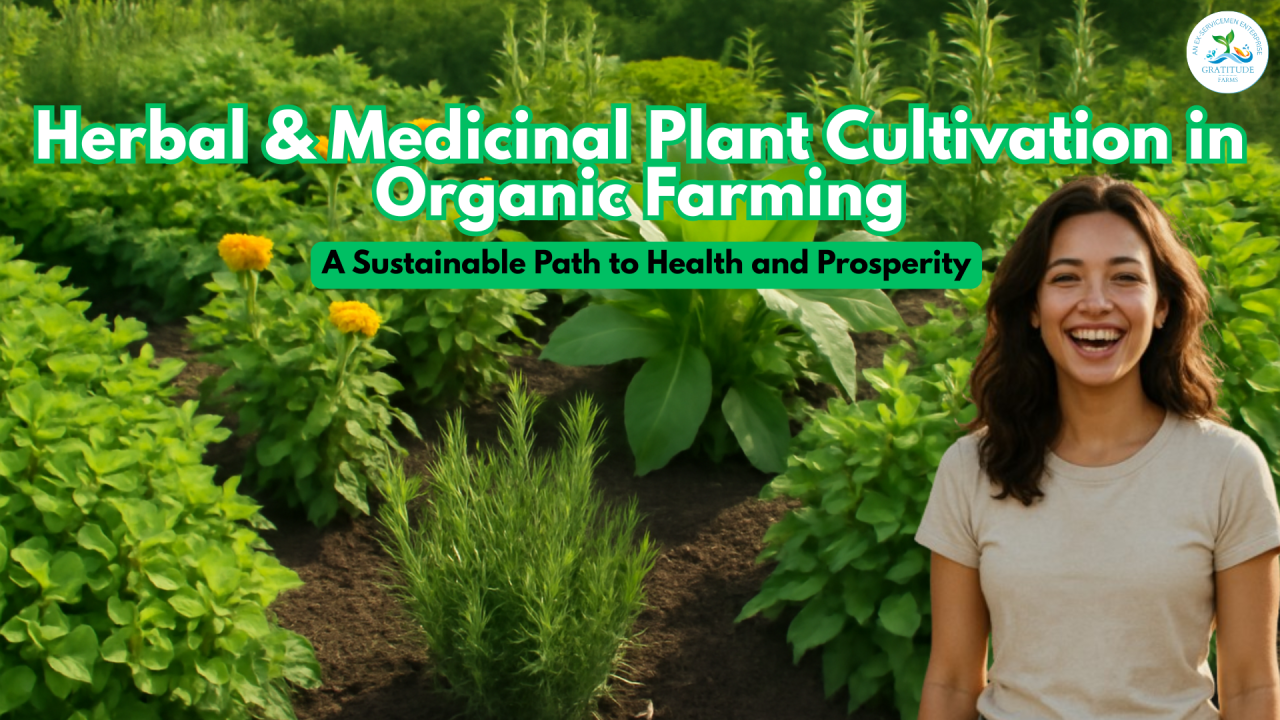
Herbal and medicinal plants have been an integral part of human healthcare for centuries, forming the backbone of Ayurveda, Traditional Chinese Medicine, and countless indigenous practices. Today, with global demand for natural remedies growing at 8.2% annually (Grand View Research, 2024), cultivating these plants through organic farming has become more than just a trend it’s a necessity. Consumers are increasingly wary of synthetic chemicals, preferring herbs grown in toxin-free environments. Yet, conventional cultivation often relies on pesticides and fertilizers that reduce medicinal potency and damage ecosystems.
This blog explores how organic farming practices can solve these problems while unlocking economic opportunities for farmers and meeting the rising demand for herbal medicines worldwide.
The Problem: Chemical Farming and Declining Medicinal Value
India is home to over 7,500 species of medicinal plants (Ministry of AYUSH), yet their quality has been deteriorating due to chemical inputs in conventional agriculture. Studies show that excessive use of pesticides can alter the phytochemical composition of herbs, lowering their medicinal effectiveness.
For example:
- A 2023 study in Phytomedicine found that turmeric grown with synthetic fertilizers had 18% lower curcumin levels compared to organically grown turmeric.
- WHO estimates that 80% of the global population relies on herbal medicine, yet more than 30% of traded herbs contain pesticide residues that exceed safe limits.
This not only poses a health risk to consumers but also reduces the credibility of the herbal medicine industry.

The Solution: Organic Farming for Herbal and Medicinal Plants
Organic farming emphasizes natural inputs, biodiversity, and soil health — perfectly suited for medicinal plant cultivation. Key benefits include:
- Preservation of Active Compounds Organically grown plants retain higher levels of alkaloids, flavonoids, and essential oils. For example, organically farmed Ashwagandha has been found to contain 20–25% higher withanolides compared to conventional varieties.
- Chemical-Free Healing Herbal medicines lose their credibility if contaminated with pesticides. Organic cultivation ensures residue-free raw material, aligning with WHO and EU guidelines.
- Soil and Ecosystem Health Herbal plants such as tulsi, neem, and moringa thrive in living soils rich in organic matter, ensuring long-term productivity.
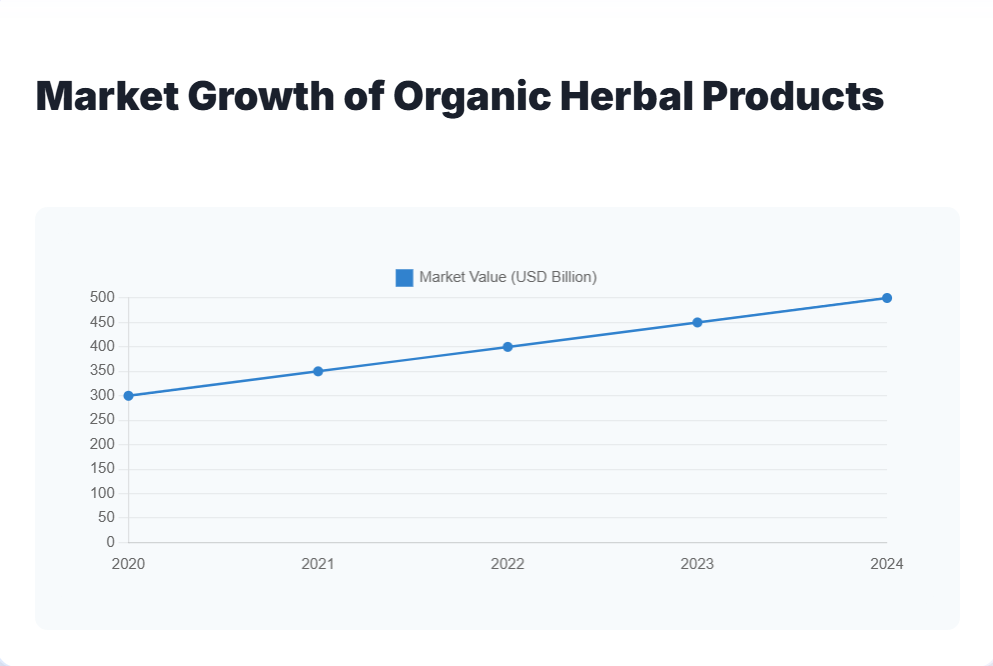
- Market Advantage The global herbal medicine market is projected to reach USD 356 billion by 2030 (Fortune Business Insights), and certified organic herbs fetch 20–40% higher prices in export markets.
Statistical Insights: Why Organic Herbal Farming is Growing
- India’s herbal export: Valued at USD 612 million in 2022, with 25% annual growth driven by demand for Ayurveda and nutraceuticals (APEDA).
- Consumer preference: 62% of global consumers prefer herbal supplements labeled as organic (Nielsen, 2023).
- Farmer earnings: Small farmers adopting organic turmeric, ginger, and aloe vera in Andhra Pradesh and Odisha reported 30–45% higher income due to premium pricing.
These figures highlight the economic and health-driven advantages of organic herbal farming.
Best Herbal & Medicinal Plants for Organic Cultivation
- Tulsi (Holy Basil) – Known for its immunity-boosting properties, tulsi thrives in organic soils and is widely used in teas, oils, and Ayurvedic formulations.
- Ashwagandha – Popular for stress relief and vitality, its organic roots fetch premium export prices.
- Aloe Vera – Used in skincare and nutraceuticals, aloe vera requires minimal chemical inputs, making it ideal for organic farming.
- Moringa – Called the “miracle tree,” rich in vitamins and minerals, highly demanded in the health supplement industry.
- Turmeric & Ginger – Both are in high global demand, with organically grown turmeric recognized for higher curcumin content.
Challenges in Organic Herbal Farming & How to Overcome Them
While opportunities are vast, challenges exist. Let’s explore them with solutions:
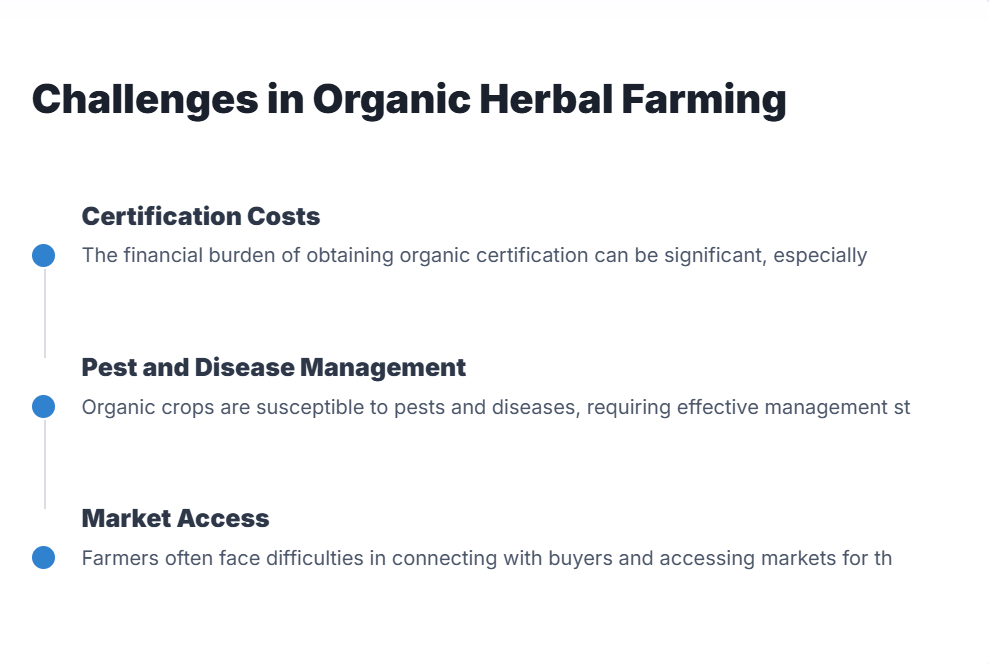
- Certification Costs Problem: Organic certification can cost between ₹40,000–₹60,000 annually, discouraging small farmers. Solution: Government schemes such as PKVY (Paramparagat Krishi Vikas Yojana) and NPOP certification support help reduce financial burden.
- Pest & Disease Management Problem: Herbal crops are vulnerable to fungal infections and pests. Solution: Use of bio-pesticides (neem oil, cow urine formulations, Trichoderma) ensures safe pest control.
- Market Access Problem: Farmers struggle to connect with buyers and exporters. Solution: Digital platforms and farmer-producer organizations (FPOs) are bridging the gap by directly linking farmers to Ayurvedic companies and global buyers.
- Knowledge Gap Problem: Many farmers are unaware of organic practices for specific medicinal plants. Solution: Extension services, training programs, and AYUSH-supported centers provide technical know-how.
Policy and Global Trends Supporting Organic Herbal Farming
Governments worldwide are pushing herbal farming as part of sustainable agriculture:
- India’s Ministry of AYUSH launched the National Medicinal Plants Board (NMPB) to promote cultivation and ensure quality.
- EU regulations allow only organic-certified herbs in many therapeutic supplements.
- US and European markets prefer India as a supplier of organic-certified turmeric, tulsi, and ashwagandha.
This means farmers who shift to organic cultivation gain a competitive edge in both domestic and international markets.
Case Study: Organic Tulsi Farming in Madhya Pradesh
A farmer cooperative in Madhya Pradesh converted 1,200 acres to organic tulsi farming. Within 3 years:
- Their income rose by 35% due to export demand from Germany and the USA.
- Soil organic carbon increased by 22%, improving long-term sustainability.
- The group signed contracts with Ayurvedic companies, ensuring steady income.
This example shows how community-driven organic herbal farming can solve both economic and environmental challenges.
Conclusion
Herbal and medicinal plant cultivation in organic farming is more than just a trend it is a problem-solving approach to health, environment, and farmer prosperity. With rising consumer demand, supportive policies, and proven health benefits, this sector holds immense potential. By shifting away from chemical inputs, farmers can produce herbs that are purer, richer in medicinal value, and globally competitive.
For a country like India, blessed with diverse medicinal flora and a strong Ayurvedic tradition, organic herbal farming is not only an economic opportunity but also a pathway to reviving ancient wisdom in a modern, sustainable way.