Introduction
Modern farming has transformed how the world grows food, but it has also created a hidden crisis: chemical dependency in agriculture. Farmers across the globe have long relied on synthetic fertilizers to boost yields, yet these quick fixes come with heavy costs depleted soil, polluted water, and weakened ecosystems. The question then arises: Is there a way to nourish crops without harming the Earth?
The answer lies in the wisdom of natural farming. Long before the arrival of chemical inputs, farmers used organic fertilizers like cow dung, compost, and bio-extracts to enrich their fields. Today, as the world seeks sustainable alternatives, the spotlight has returned to these natural methods. Among them, compost tea a nutrient-rich liquid fertilizer brewed from compost stands out as a game-changer.
In this blog, we’ll explore the science behind natural fertilizers, from the humble cow dung to the modern innovation of compost tea, and understand how they offer real solutions to today’s agricultural problems.

The Problem: Overuse of Chemical Fertilizers
Chemical fertilizers, often high in nitrogen, phosphorus, and potassium (NPK), promise immediate results. Crops grow faster, yields increase, and farmers see quick profits. But beneath the surface, these practices silently degrade farmlands.
- Soil Depletion: Continuous use of synthetic inputs strips soil of its natural organic matter, reducing fertility over time.
- Water Pollution: Excess nitrogen leaches into rivers and groundwater, causing algal blooms and health hazards.
- Declining Biodiversity: Chemical-heavy soils harm earthworms, microbes, and pollinators essential for crop health.
- Rising Costs: Farmers get locked into buying fertilizers season after season, raising input costs and debt risks.
This vicious cycle has left many farmers looking for safer, cost-effective, and sustainable alternatives.
Natural Fertilizers: Reviving Ancient Wisdom
Natural fertilizers are organic substances derived from plants, animals, or minerals. They do more than just feed crops they rebuild the soil ecosystem.
- Cow Dung: Traditionally called “black gold” in rural farming communities, cow dung is rich in nitrogen, phosphorus, potassium, and beneficial microbes. It improves soil texture, increases water retention, and supports microbial diversity.
- Vermicompost: Created using earthworms, vermicompost is nutrient-dense and improves soil aeration.
- Green Manure: Cover crops like legumes are grown and ploughed back into the soil, fixing nitrogen naturally.
- Bone Meal & Neem Cake: Slow-release natural fertilizers that protect against pests while improving fertility.
But among these, compost tea has gained attention for its ability to deliver nutrients quickly in a liquid form, acting as both fertilizer and a plant protector.

What is Compost Tea?
Compost tea is not the kind of tea you sip on a rainy day. It’s a liquid extract brewed from high-quality compost, teeming with beneficial bacteria, fungi, protozoa, and nutrients. Think of it as a natural energy drink for plants.
There are two main types:
- Aerated Compost Tea (ACT) – Made by bubbling oxygen into water mixed with compost, molasses, or other natural stimulants. This boosts microbial activity.
- Non-Aerated Compost Tea (NCT) – A simpler version, steeped in water without forced aeration, but slower in microbial growth.
Both varieties help replenish soil biology and provide nutrients in forms plants can absorb almost instantly.
The Science Behind Compost Tea
The magic of compost tea lies in microbiology. Healthy compost contains billions of beneficial organisms that:
- Suppress Plant Diseases: Good microbes outcompete harmful pathogens in the soil and on leaves.
- Improve Nutrient Uptake: Microbes convert organic matter into plant-available forms of nitrogen, phosphorus, and micronutrients.
- Boost Plant Immunity: Certain beneficial fungi form protective layers around roots, enhancing resilience to stress.
- Balance Soil pH: Compost tea restores natural soil balance, preventing toxic buildups.
In essence, compost tea not only feeds plants but also rebuilds the ecosystem that keeps soil alive.
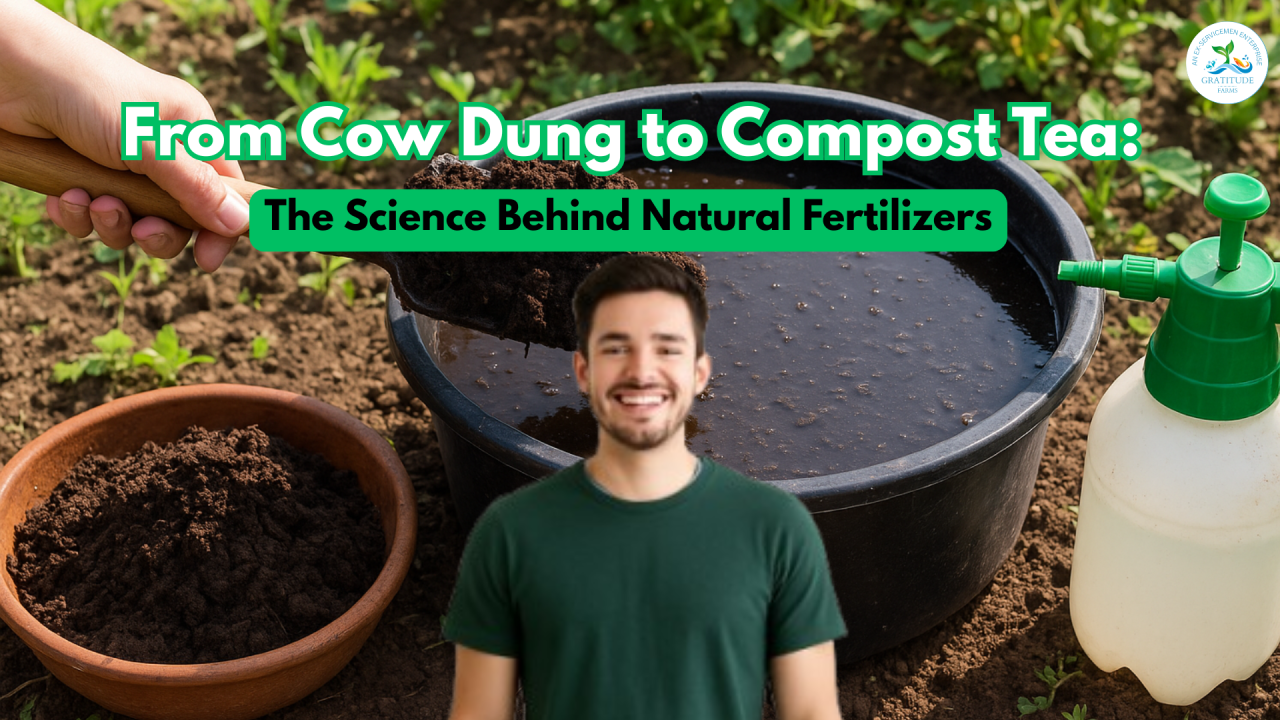
From Cow Dung to Compost Tea: A Journey of Transformation
- Raw Cow Dung → Rich in nutrients but can harbor pathogens if applied directly. Traditionally mixed with straw or crop residues to form compost.
- Compost Formation → Over weeks, microbial activity breaks down cow dung into stable humus, reducing pathogens and odors.
- Brewing Compost Tea → The finished compost is soaked in water, sometimes with added natural sugars (jaggery or molasses), creating a microbe-rich liquid.
- Application → Farmers spray compost tea on crops or apply it directly to soil. This strengthens root zones, reduces fungal attacks, and improves yield.
This transformation shows how a humble by-product like cow dung evolves into a scientifically advanced, eco-friendly farming solution.
Practical Benefits for Farmers
- Cost Savings: Reduces dependence on costly chemical fertilizers.
- Soil Regeneration: Builds organic matter and restores fertility long-term.
- Higher Yields: Studies show compost tea-treated plants grow stronger and produce more.
- Eco-Friendly Farming: Zero risk of chemical pollution, safe for biodiversity.
- Consumer Trust: Organic produce fetches higher market value and builds farmer reputation.
Real-World Example: Compost Tea in Action
In parts of Andhra Pradesh, India, natural farming movements like Zero Budget Natural Farming (ZBNF) have scaled up compost tea practices. Farmers there use “Jeevamrutha,” a traditional microbial solution made from cow dung, cow urine, jaggery, and pulses flour. This solution works similarly to compost tea, improving soil fertility while reducing costs. Reports show that farmers practicing this method have cut input costs by up to 70% while maintaining healthy yields.

Challenges and Solutions
Challenge 1: Lack of Awareness Many farmers still see chemical fertilizers as the only “proven” option.
Solution: Conduct workshops and farmer-to-farmer training on natural fertilizer practices.
Challenge 2: Quality Control Improperly brewed compost tea may contain harmful microbes.
Solution: Use well-decomposed compost and follow aeration guidelines strictly.
Challenge 3: Short Shelf Life Compost tea must be used within 24–48 hours.
Solution: Small-batch brewing and community-level production can solve storage issues.
Conclusion
The journey from cow dung to compost tea is more than just a process of making fertilizer it’s a return to farming in harmony with nature. While chemical fertilizers deplete the land and trap farmers in cycles of dependency, natural fertilizers restore balance, improve yields, and safeguard ecosystems.
By embracing compost tea and other organic inputs, farmers can solve modern agricultural problems soil degradation, rising costs, and environmental damage while building a more sustainable future.
As the saying goes, “Healthy soil grows healthy food, and healthy food grows healthy people.” Compost tea is not just a farming technique; it’s a step toward a greener, healthier tomorrow.