Introduction: The Silent Crisis of Farmer Migration
India is witnessing a silent but steady exodus from its villages. Over the past two decades, millions of small and marginal farmers have left agriculture in search of better livelihood options in cities. According to the 2011 Census, more than 30% of rural households reported at least one member migrating for work, with a large chunk being landless or smallholder farmers. This mass migration is not just a demographic shift it is a reflection of deep-rooted structural issues in Indian agriculture.
As cities get overcrowded and rural economies weaken, the question we must now ask is: Can organic farming be a viable solution to reverse this trend? Can it offer rural families both dignity and a sustainable livelihood without forcing them to abandon their land?
In this blog, we’ll explore this question using a problem-solving approach, backed by data, case studies, and practical insights into the growing organic farming movement in India.
The Problem: Why Are Farmers Leaving Their Land?
1. Economic Unviability of Conventional Farming
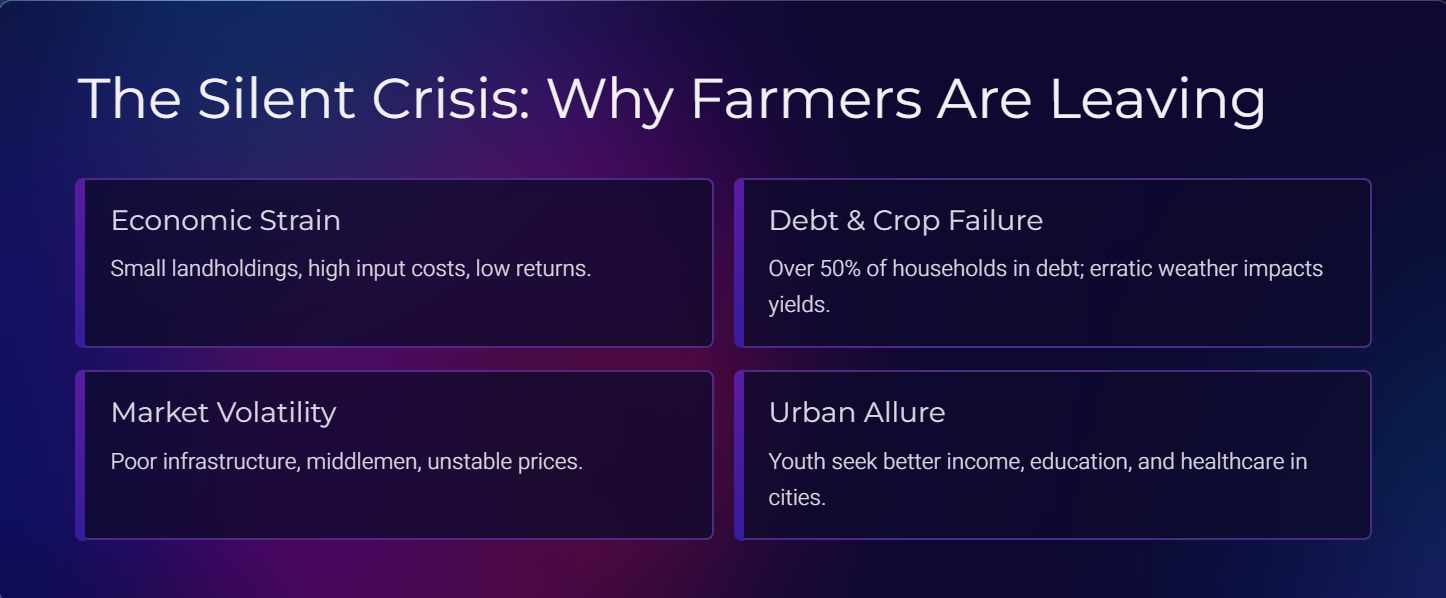
Most farmers in India operate on small landholdings 86% of them own less than 2 hectares, according to the Agriculture Census 2015–16. These small plots are often unable to generate a profitable yield under conventional chemical-intensive farming. Rising costs of inputs like fertilizers, pesticides, and hybrid seeds have made farming a high-risk, low-return occupation.
2. Debt Traps and Crop Failures
According to the National Sample Survey Office (NSSO), more than 50% of agricultural households are in debt, and frequent crop failures due to erratic weather and poor soil health only worsen the cycle. In regions like Vidarbha and Bundelkhand, many families see migration as the only option to escape the debt trap.
3. Lack of Market Linkages and Price Volatility
Farmers often struggle with poor infrastructure, lack of storage, and middlemen-dominated market systems. Even when they get a good harvest, price crashes or delays in payment can wipe out profits.
4. Urban Pull vs. Rural Push
In search of better income, healthcare, and education, rural youth are drawn to cities. However, most end up as unskilled laborers in construction, factories, or the informal sector often earning low wages under poor living conditions.
Organic Farming: A Sustainable Alternative?
Organic farming, which avoids synthetic inputs and promotes biodiversity, soil health, and local resource use, is gaining traction globally. But can it truly provide economic security for farmers enough to make them stay on their land?
Let’s explore this through key statistical and real-world indicators.
1. Economic Viability: Can Farmers Earn More Through Organic?
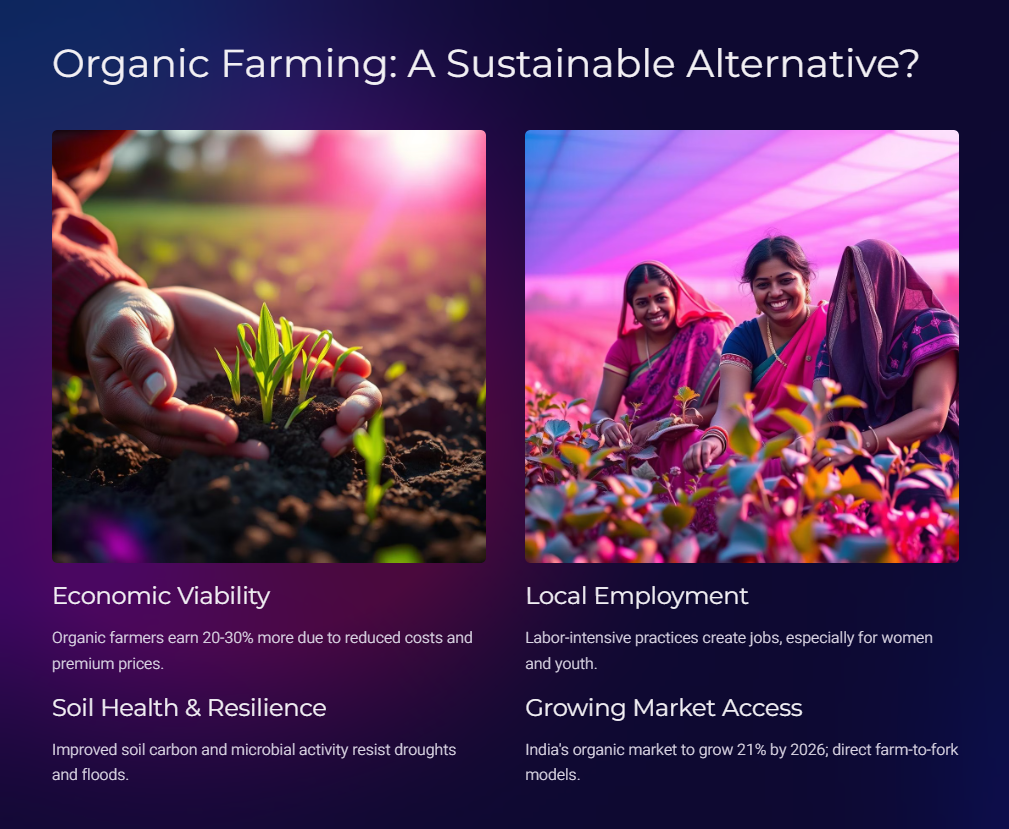
A 2022 report by the International Federation of Organic Agriculture Movements (IFOAM) found that organic farmers in India earn 20–30% more on average than conventional farmers, largely due to:
- Reduced input costs (no chemical fertilizers or pesticides)
- Higher price premiums in organic markets
- Access to value-added processing (e.g., making ghee, pickles, herbal oils)
In Madhya Pradesh, the largest organic farming state in India, farmers under the “Paramparagat Krishi Vikas Yojana” (PKVY) have reported 30–40% savings in input costs and better long-term soil productivity.
2. Soil Health and Climate Resilience
A long-term trial by the Indian Council of Agricultural Research (ICAR) showed that organic plots maintained higher organic carbon and microbial activity, making them more resilient to droughts and floods. This is crucial in climate-stressed regions like Rajasthan, where desertification is pushing farmers away.
Improved soil health means better yields over time without depending on external chemical inputs—reducing the risk of crop failure.
3. Local Employment Generation
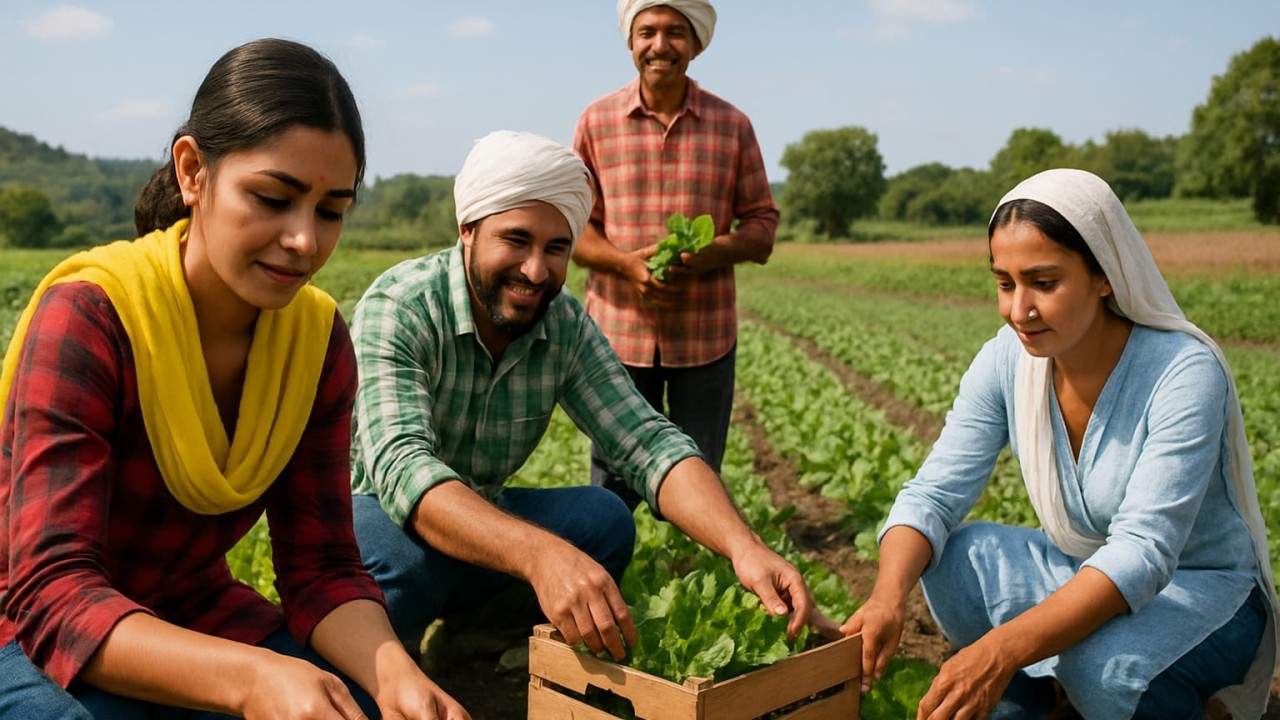
Organic farming is labor-intensive, especially for weeding, composting, and bio-input preparation. This creates more jobs at the local level, especially for women and youth. In Kerala, tribal communities involved in organic turmeric and pepper farming have formed Self-Help Groups (SHGs) to manage collective processing and marketing—bringing economic empowerment without migrating to cities.
4. Market Access and Consumer Demand
India’s organic food market is expected to grow at a CAGR of 21% between 2021 and 2026, according to a report by IMARC Group. The domestic demand is rising, especially among urban middle-class consumers. Online platforms and farm-to-fork supply chains (like Zama Organic, Farmizen, Gratitude Farms, etc.) are connecting organic farmers directly to premium markets.
With proper certification and branding, small organic farmers can tap into both domestic and export markets earning more per acre than conventional farmers.
5. Case Studies: Organic Farming That Stopped Migration
Trinity Saioo – Meghalaya’s Turmeric Revolution
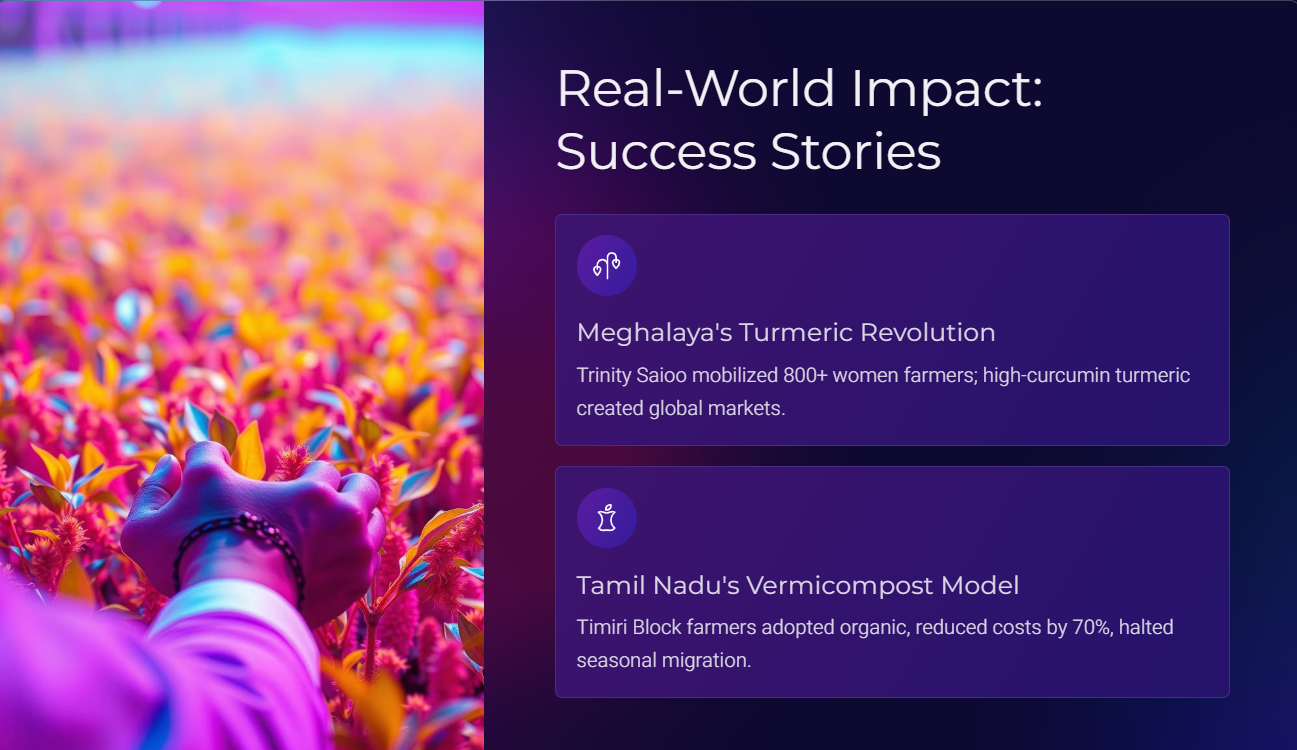
In the Jaintia Hills of Meghalaya, Padma Shri awardee Trinity Saioo mobilized over 800 women farmers to grow Lakadong turmeric organically. The high curcumin variety and organic cultivation practices have opened global markets and halted migration in the village. Youth now stay back to work in post-harvest processing and marketing units.
Timiri Block – Tamil Nadu’s Vermicompost Model
In Ranipet District, Tamil Nadu, villages under the guidance of local NGOs started converting cow dung and leaf waste into vermicompost. Over 600 farmers adopted organic farming practices and formed cooperatives. These farmers reduced chemical input costs by 70%, increased net income, and stopped seasonal migration to Chennai and Coimbatore.
Challenges and Limitations
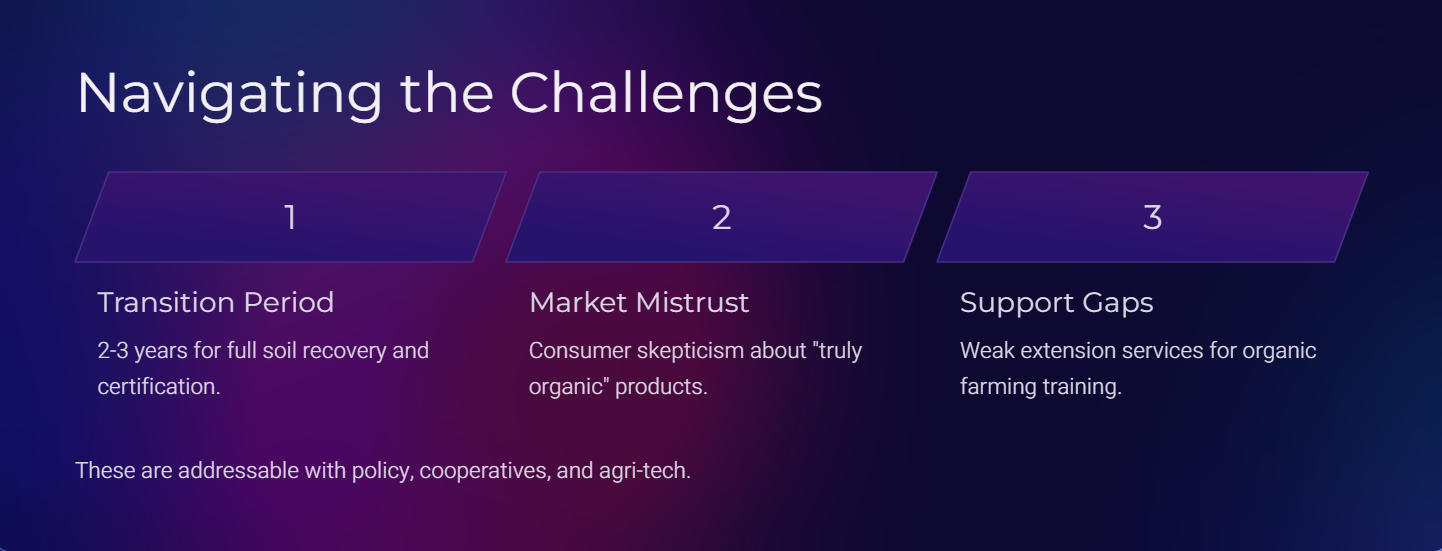
While the data is promising, organic farming is not a magic bullet. Several challenges remain:
- Transition Period: Farmers switching to organic need at least 2–3 years for full soil recovery and certification.
- Market Mistrust: Many urban consumers still question whether “organic” is truly organic.
- Lack of Training and Support: Extension services for organic farming are still weak compared to conventional agriculture.
However, these are addressable with better policy focus, cooperative models, and use of agri-tech platforms for traceability and marketing.
Conclusion: A Roadmap to Reverse Migration
The migration of farmers to urban centers is not merely a livelihood issue it’s a symptom of broken rural systems. Organic farming offers more than just chemical-free crops it offers:
- Sustainable income through reduced input costs and premium markets
- Healthier soil and long-term productivity
- Local employment and value addition
- Empowerment of women and tribal communities
- Dignity and pride in farming as a profession
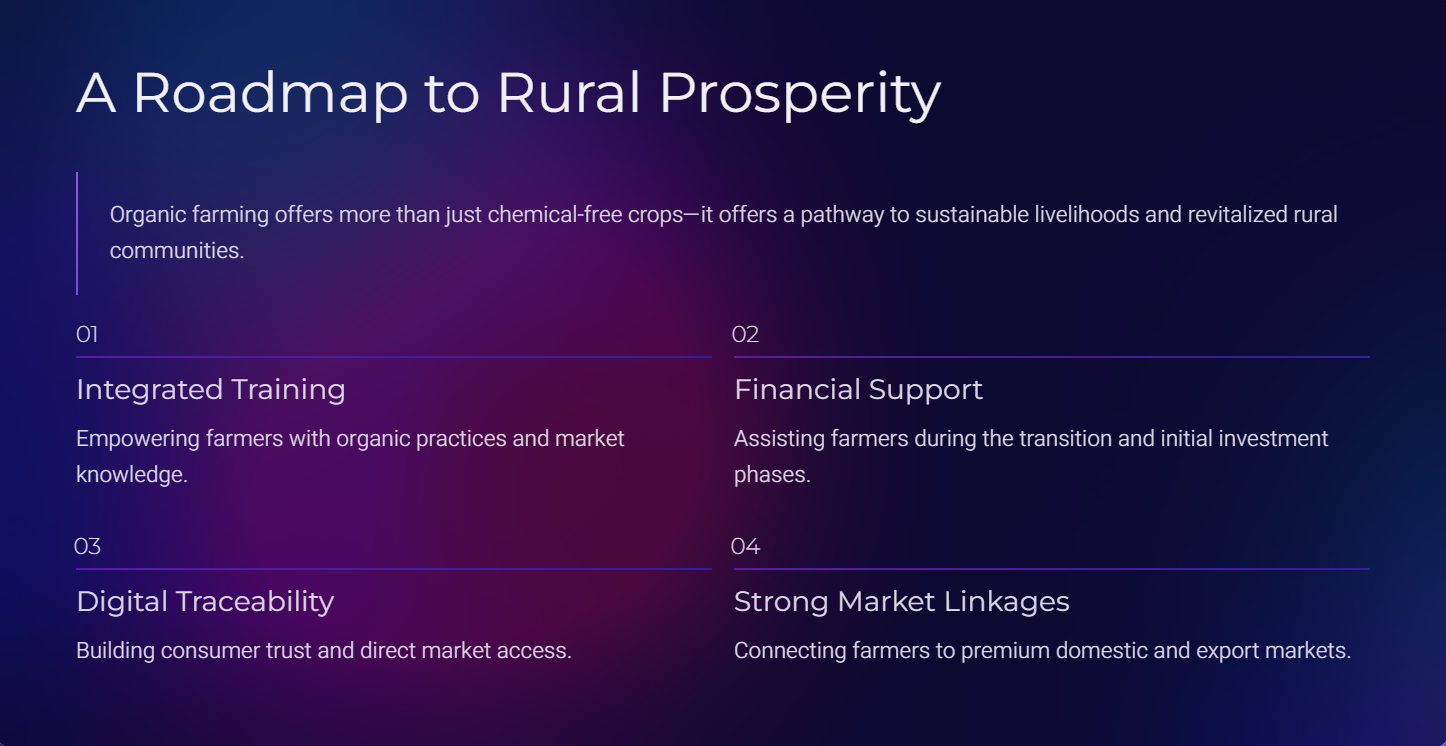
For organic farming to effectively reverse migration, it must be integrated with training, financial support, digital traceability, and strong market linkages.
The future of India’s villages depends not just on retaining people but on reviving rural prosperity and organic farming is a proven, scalable path in that direction.