Introduction
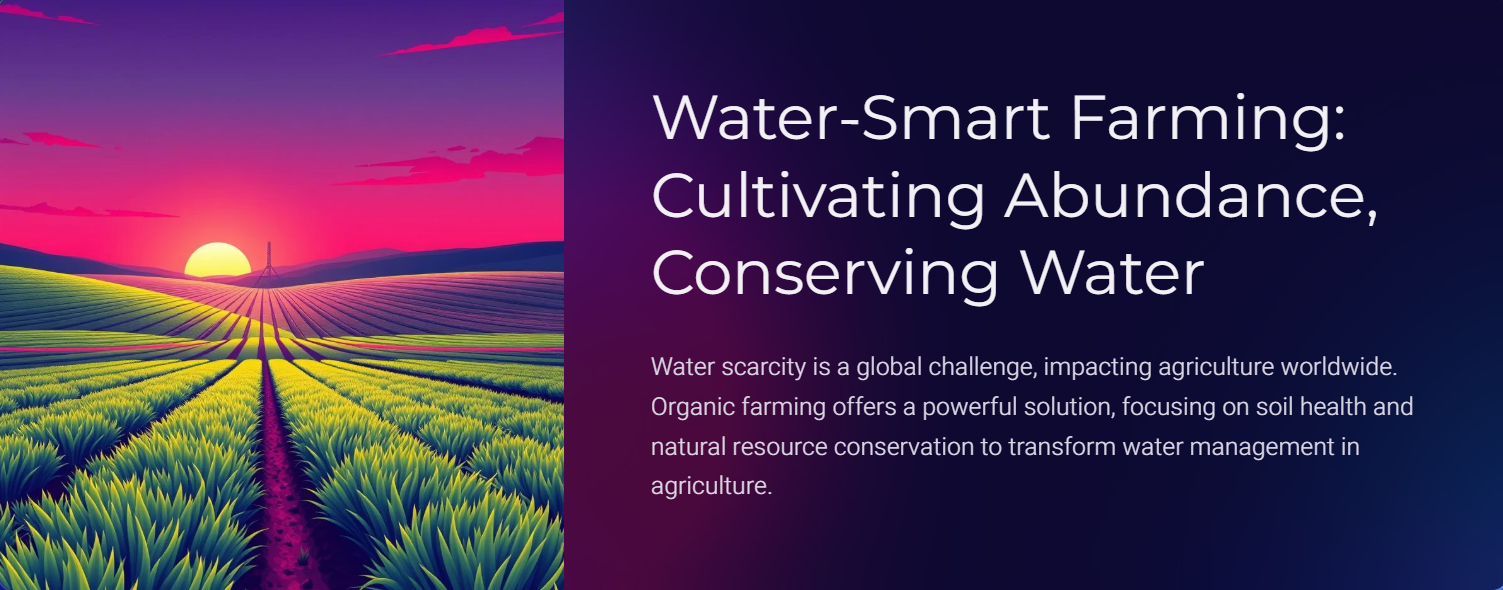
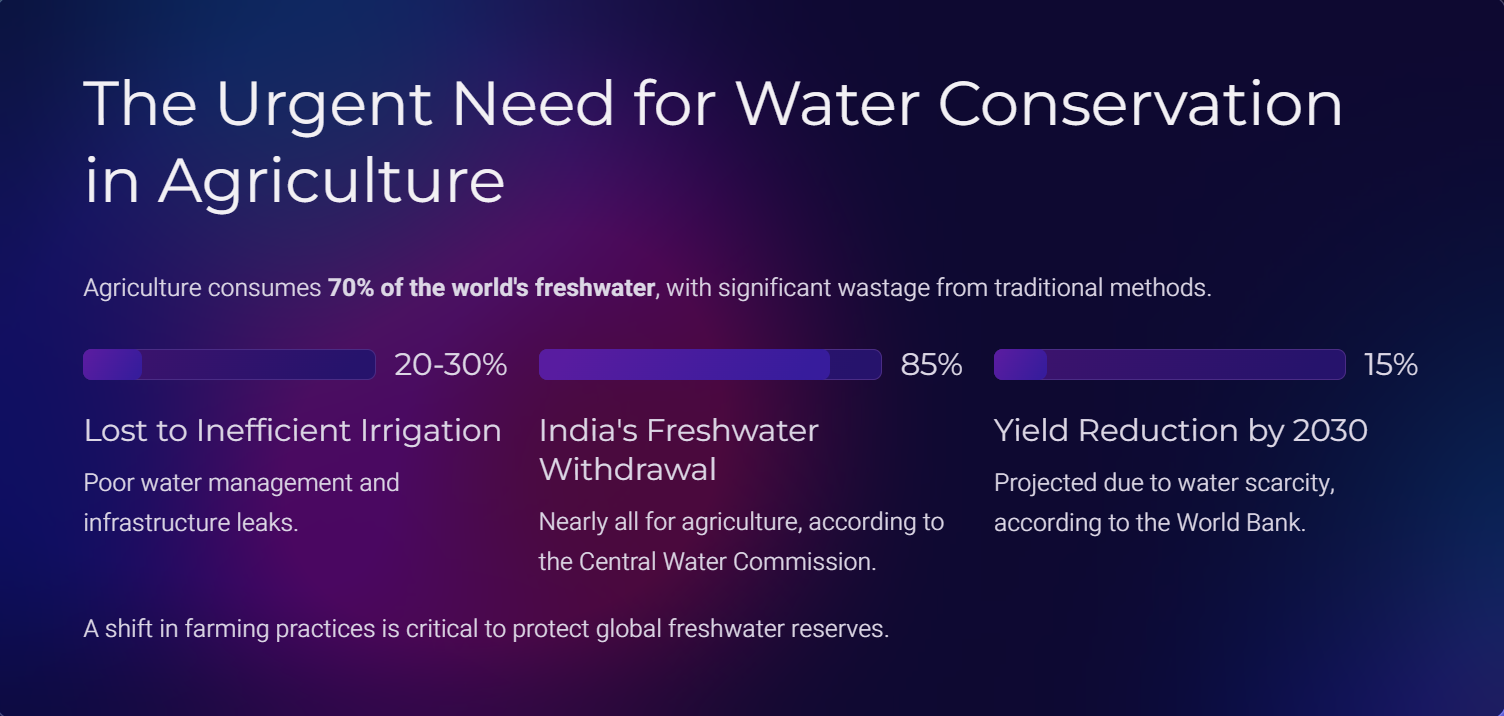
Water scarcity is no longer a distant environmental concern it’s a reality affecting agriculture worldwide. According to the United Nations Food and Agriculture Organization (FAO), agriculture consumes 70% of the world’s freshwater resources, and traditional farming methods are a major contributor to wastage. With global water demand projected to increase by 55% by 2050, the need for sustainable water management in farming has never been more urgent.
Organic farming, with its focus on soil health, biodiversity, and natural resource conservation, offers practical and proven solutions for water-smart agriculture. By reducing chemical dependency, improving soil’s water-retention capacity, and adopting eco-friendly irrigation systems, organic methods can play a significant role in combating water scarcity—especially in drought-prone regions.
This blog explores the statistics, challenges, and solutions of water conservation in agriculture through the lens of organic farming.
The Problem: Agriculture and Water Wastage
Modern agriculture relies heavily on irrigation systems that prioritize yield over sustainability. The result? Massive water wastage.
Key statistics to note:
- FAO data shows that 20–30% of water used for irrigation is lost due to poor water management and infrastructure leaks.
- In India, the Central Water Commission reports that nearly 85% of freshwater withdrawals are for agriculture.
- Conventional farming practices, such as flood irrigation and excessive use of synthetic fertilizers, degrade soil structure, causing faster runoff and lower water absorption.
- The World Bank warns that by 2030, water scarcity could reduce agricultural yields by up to 15% globally.
Clearly, without a shift in farming practices, agriculture will remain one of the largest stressors on global freshwater reserves.
Why Organic Farming is Water-Smart
Organic farming integrates water conservation into its core practices. Let’s explore how and why these methods work.
1. Improved Soil Structure and Water Retention
Healthy soil is like a sponge it absorbs and retains water for longer periods. Organic farming avoids chemical fertilizers that harm soil organisms and instead uses compost, green manure, and vermi compost to improve soil structure.
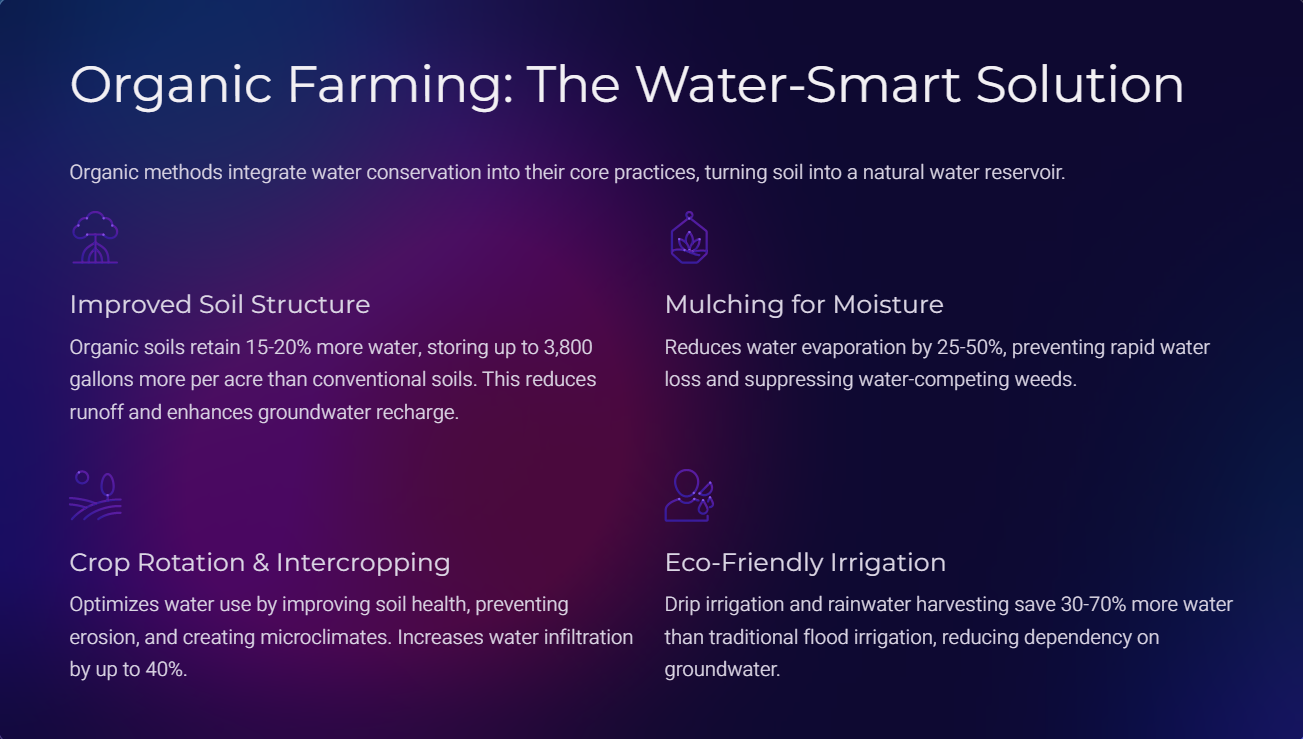
- Rodale Institute’s 30-year trial found that organically farmed soils retained 15–20% more water than conventionally farmed soils.
- Organic soils can store up to 3,800 gallons of water per acre more than conventional soils, reducing the need for frequent irrigation.
How it helps: Better soil structure means less runoff, more groundwater recharge, and consistent crop hydration even during dry spells.
2. Mulching for Moisture Lock-In
Mulching—covering the soil with crop residues, leaves, or organic matter is a staple in organic farming.
- It reduces water evaporation by 25–50%, according to the International Water Management Institute.
- It prevents soil temperature spikes, which can cause rapid water loss.
Mulching also suppresses weeds that compete with crops for water, ensuring more efficient resource use.
3. Crop Rotation and Intercropping
Organic farms frequently use crop rotation (alternating crops in a field) and intercropping (growing multiple crops together). These techniques optimize water use by:
- Maintaining soil health, preventing erosion.
- Creating microclimates that reduce evaporation.
- Allowing deep-rooted plants to tap into lower soil moisture while shallow-rooted crops use surface water.
A University of Minnesota study found that crop rotation improved soil’s water infiltration by up to 40%.
4. Low-Water-Use Crops and Indigenous Varieties
Organic farming often promotes traditional and drought-resistant crop varieties. These require significantly less irrigation than high-yield hybrid crops.
For example:
- Millets use 70% less water than rice.
- Legumes improve soil nitrogen naturally, reducing the need for water-demanding synthetic fertilizers.
This not only saves water but also increases climate resilience for farmers.
5. Eco-Friendly Irrigation Techniques
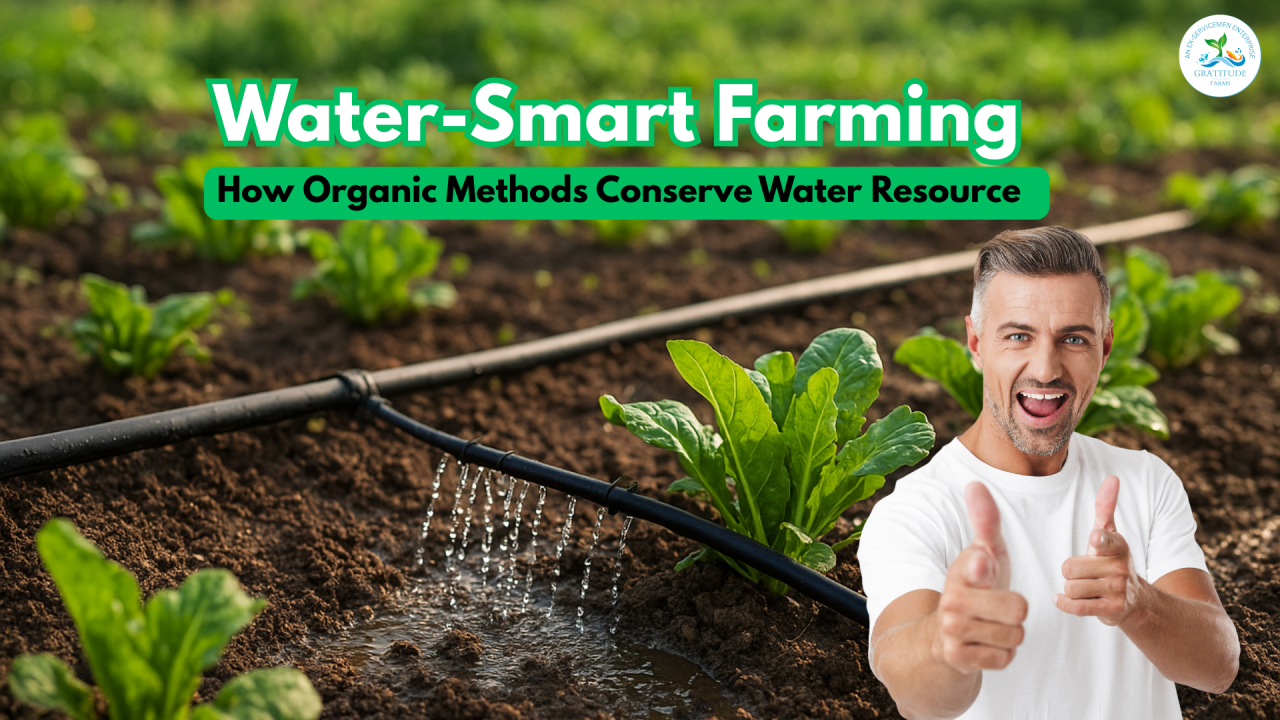
Organic farms tend to integrate drip irrigation, sprinkler systems, and rainwater harvesting more consistently than conventional farms.
- Drip irrigation can save 30–70% more water than flood irrigation.
- Rainwater harvesting reduces dependency on groundwater, which is over-exploited in many farming regions.
A case study in Maharashtra, India, showed that farmers combining organic methods with drip irrigation reduced water use by 60% while increasing yield by 20% compared to conventional practices.
Cost-Benefit Analysis
Cost Considerations:
- Initial investment in drip irrigation, mulching materials, and compost production can be higher compared to conventional farming.
- Training and labor costs for organic methods may also increase in the short term.
Benefits:
- Long-term savings on water and electricity (for pumping).
- Reduced dependency on expensive synthetic fertilizers and pesticides.
- Increased soil fertility means better yields in the long run.
- Access to premium markets for organic produce, which often sell at 20–30% higher prices.
According to a 2019 FiBL (Research Institute of Organic Agriculture) report, organic farmers save up to 30% on irrigation costs annually and improve net profits by 15–25% after 3–5 years of transition.
Challenges in Adoption
While organic farming offers water-saving benefits, adoption faces hurdles:
- Transition Period: Farmers shifting from conventional to organic methods may face reduced yields in the first 2–3 years.
- Knowledge Gap: Many farmers are unaware of water-smart organic techniques.
- Market Access: Organic certification and market linkage can be time-consuming and expensive.
Solution:
- Government Incentives: Subsidies for drip irrigation, organic certification, and training programs.
- Community Learning Models: Farmer cooperatives that share resources like composting units and rainwater harvesting systems.
- Awareness Campaigns: Showcasing successful organic water-conservation projects to encourage adoption.
Case Study: Rajasthan’s Water-Wise Organic Farms
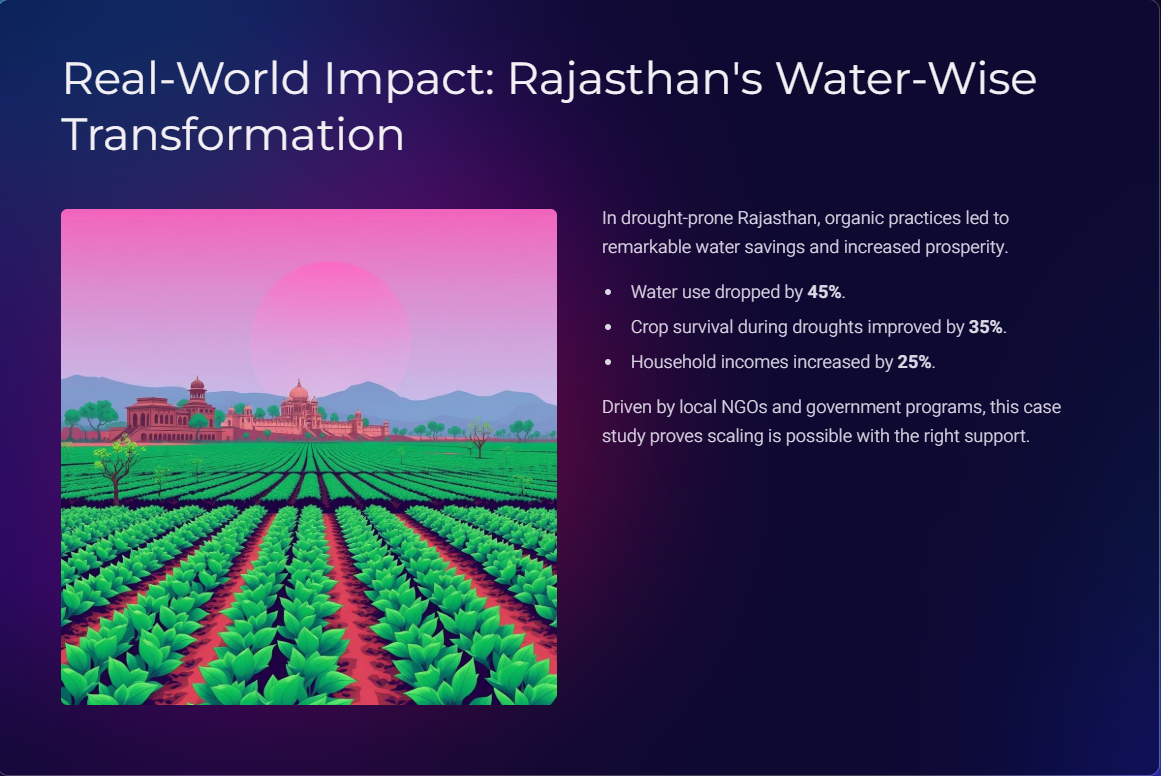
In Rajasthan, one of India’s driest states, farmers have adopted organic mulching, rainwater harvesting, and intercropping to combat water scarcity. Over five years:
- Water use dropped by 45%.
- Crop survival during droughts improved by 35%.
- Household incomes increased by 25%, partly due to premium organic market prices.
This transformation was driven by local NGOs and government training programs, proving that scaling up is possible with the right support.
Conclusion
Water scarcity is a pressing global challenge, and agriculture is at the heart of the problem and the solution. Organic farming offers proven, data-backed methods to conserve water while maintaining healthy yields. By improving soil health, using mulching, diversifying crops, and adopting efficient irrigation systems, farmers can significantly reduce water usage.
Transitioning to water-smart organic methods may require initial investment and training, but the long-term benefits for farmers, consumers, and the planet are undeniable. If widely adopted, these practices could be a game-changer in ensuring food security and water sustainability for future generations.
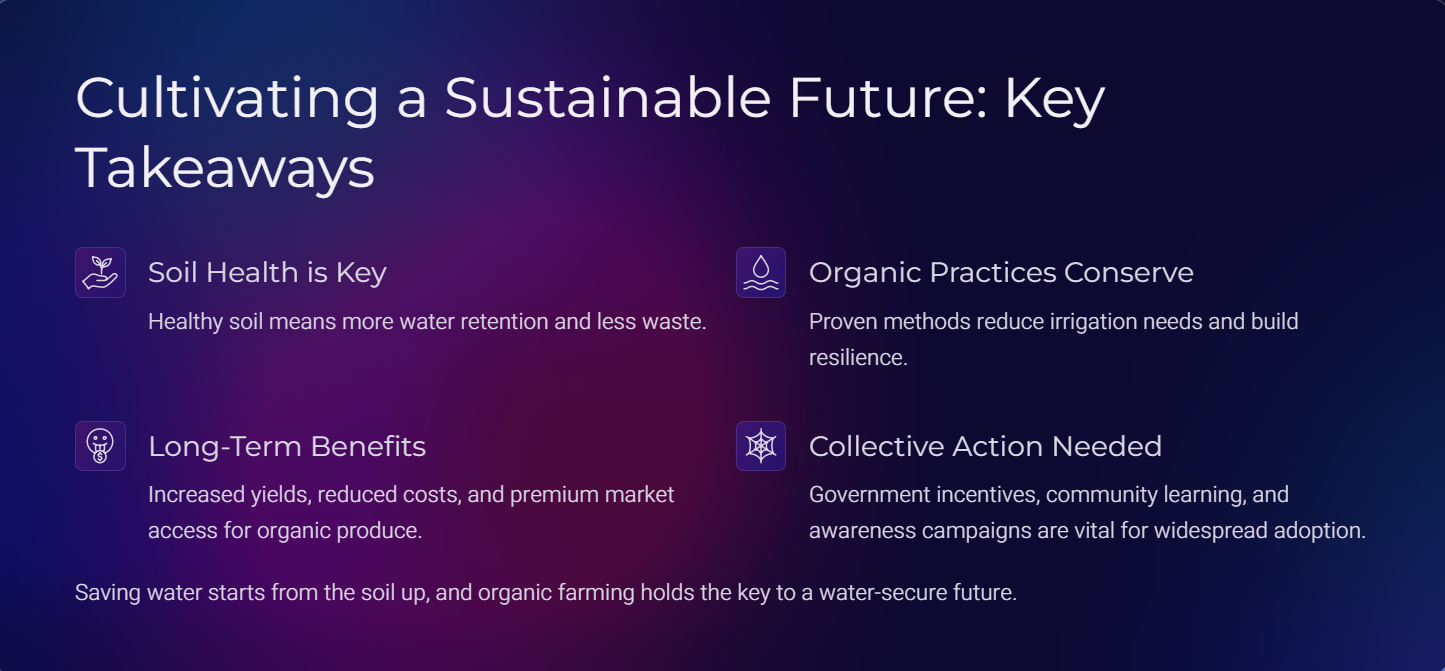
In short: Saving water starts from the soil up, and organic farming holds the key.