Introduction
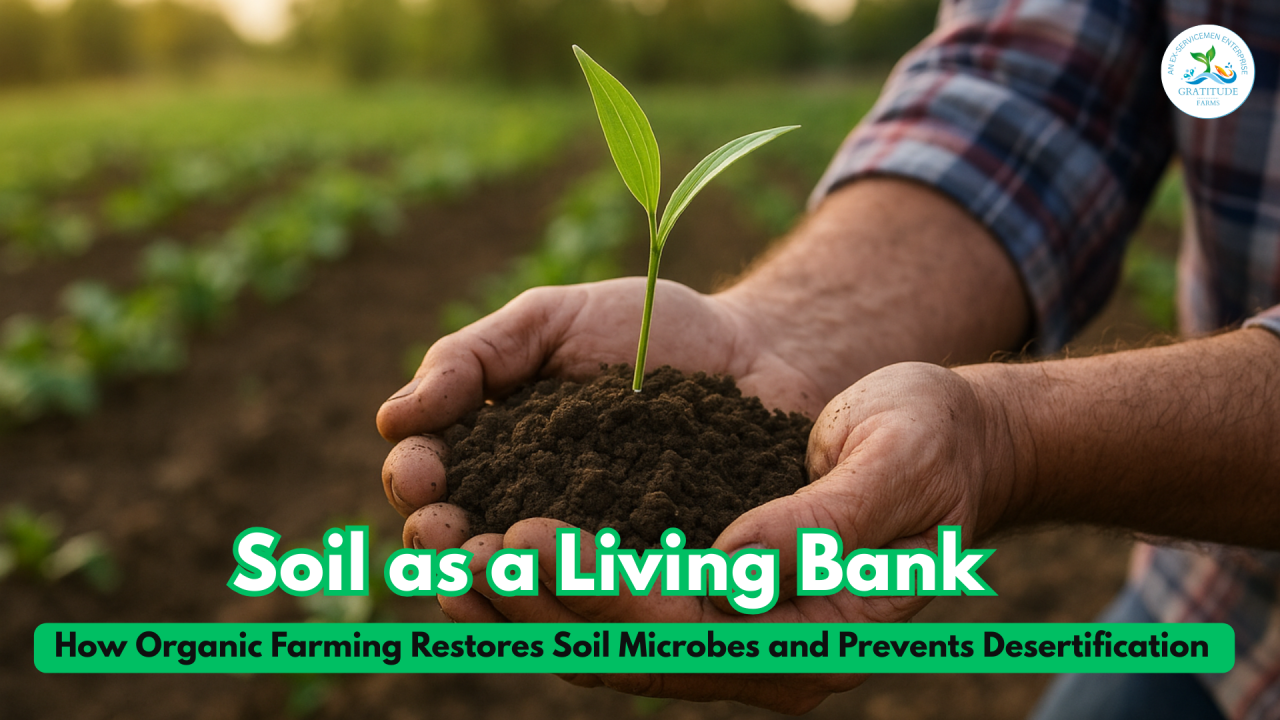
Soil is often described as “dirt” under our feet, but in reality, it is a living bank of biodiversity, fertility, and resilience. Every handful of healthy soil contains billions of microorganisms bacteria, fungi, protozoa, and earthworms that play a crucial role in nutrient cycling, plant growth, and climate balance. Yet, modern chemical-intensive farming has been withdrawing from this “living bank” without making deposits, leaving soils depleted, lifeless, and vulnerable to desertification.
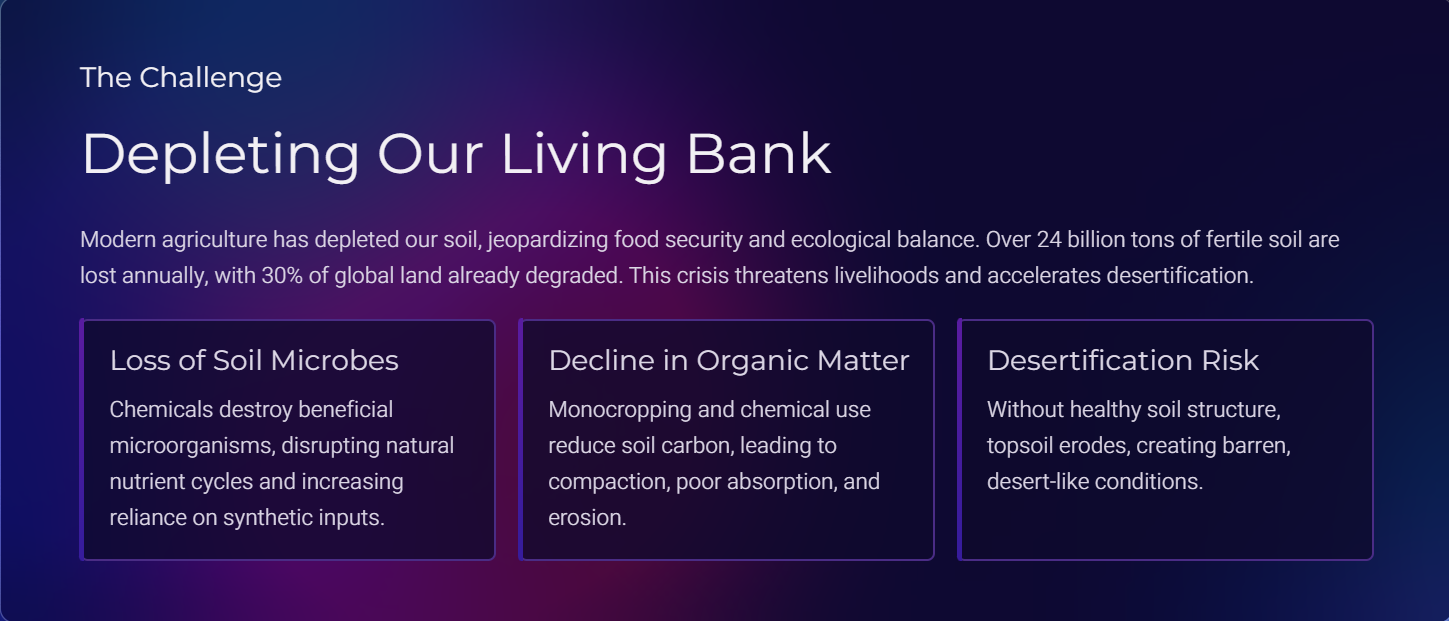
According to the United Nations Convention to Combat Desertification (UNCCD), over 24 billion tons of fertile soil are lost globally every year, and nearly 30% of the Earth’s land area is already degraded. In India, the Indian Council of Agricultural Research (ICAR) estimates that over 30% of cultivable land is facing degradation due to soil erosion, salinization, and nutrient depletion. This crisis threatens food security, farmer livelihoods, and ecological stability.
Here is where organic farming emerges as a solution. By focusing on soil as a living system rather than a lifeless medium, organic practices restore microbial life, enhance fertility, and prevent land degradation. Let us explore how organic farming works as a problem-solving tool to rejuvenate the soil and protect our future.
The Problem: Soil Degradation and Its Consequences
- Loss of Soil Microbes Chemical fertilizers and pesticides disrupt soil biology by killing beneficial microbes. This reduces the soil’s ability to recycle nutrients naturally, leading to dependency on external chemical inputs.
- Decline in Organic Matter Continuous monocropping and chemical farming reduce soil organic carbon, making soil compact, less absorbent, and more prone to erosion.
- Desertification Risk Without healthy microbes and organic matter, soil structure collapses. Wind and water erosion then wash away topsoil, leading to barren, desert-like conditions.
- Impact on Food Security Degraded soils produce lower yields and crops with reduced nutritional value. This is a growing concern for a world that must feed nearly 10 billion people by 2050.
The Solution: Treating Soil as a Living Bank
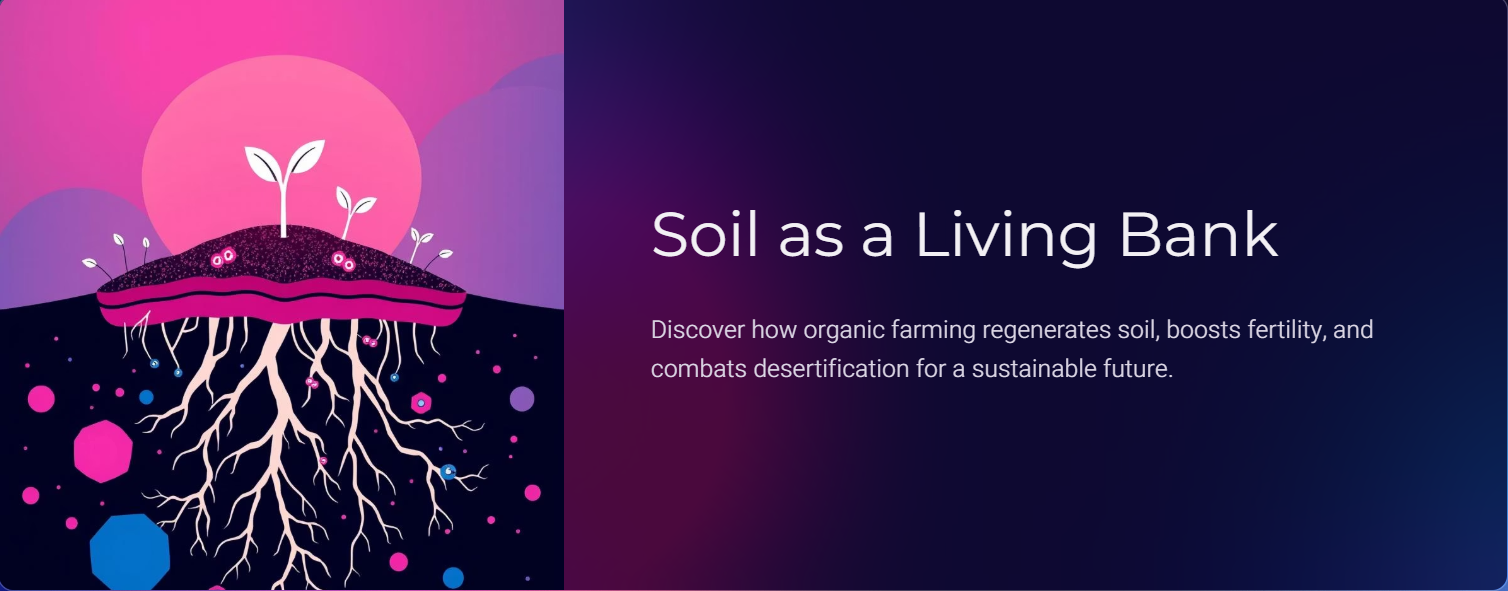
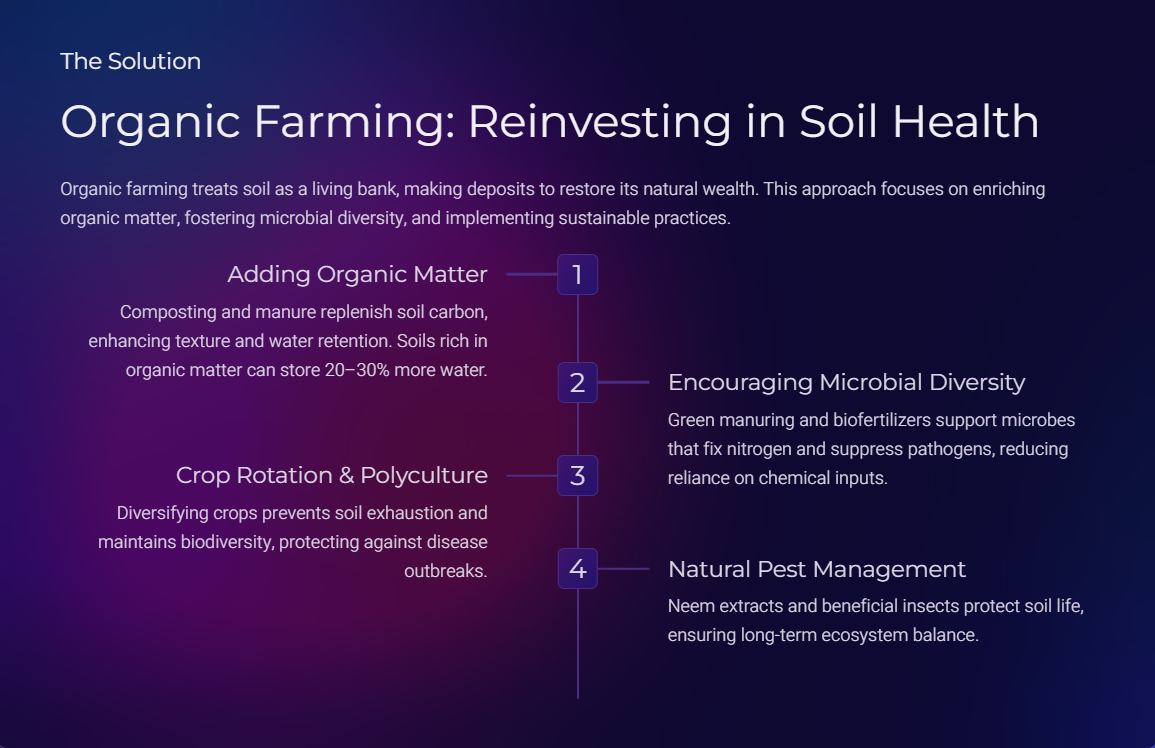
To restore soil, we must think of it as a bank account. Every crop, every harvest is a withdrawal. Unless we make deposits in the form of organic matter, biodiversity, and microbial activity the bank account runs dry. Organic farming is about depositing back into the soil’s natural wealth.
1. Adding Organic Matter (The Principal Investment)
Practices such as composting, vermicomposting, and using farmyard manure restore organic carbon. Organic matter improves soil texture, water retention, and microbial activity. A study by FAO (Food and Agriculture Organization) found that soils rich in organic matter can store 20–30% more water, reducing drought risk.
2. Encouraging Microbial Diversity (The Interest Earned)
Organic techniques such as green manuring and biofertilizers provide a habitat for microbes. These microbes fix nitrogen, solubilize phosphorus, and suppress harmful pathogens. For example, Rhizobium bacteria in legumes naturally add nitrogen to the soil, reducing dependence on chemical urea.
3. Crop Rotation and Polyculture (Risk Diversification)
Just as banks diversify investments, organic farmers diversify crops. Crop rotation prevents soil exhaustion, while polyculture maintains biodiversity in the soil. This protects soil microbes and reduces disease outbreaks.
4. Natural Pest Management (Protecting the Assets)
Instead of synthetic pesticides, organic farming uses neem extracts, beneficial insects, and trap crops. These methods safeguard soil life while controlling pests, ensuring long-term balance in the soil ecosystem.
5. Agroforestry and Cover Crops (Long-Term Savings)
Planting trees alongside crops and using cover crops prevent soil erosion, add organic litter, and provide shade that nurtures microbial communities. Agroforestry is increasingly recognized as a shield against desertification in semi-arid regions.
Case Study: Organic Farming as a Tool Against Desertification
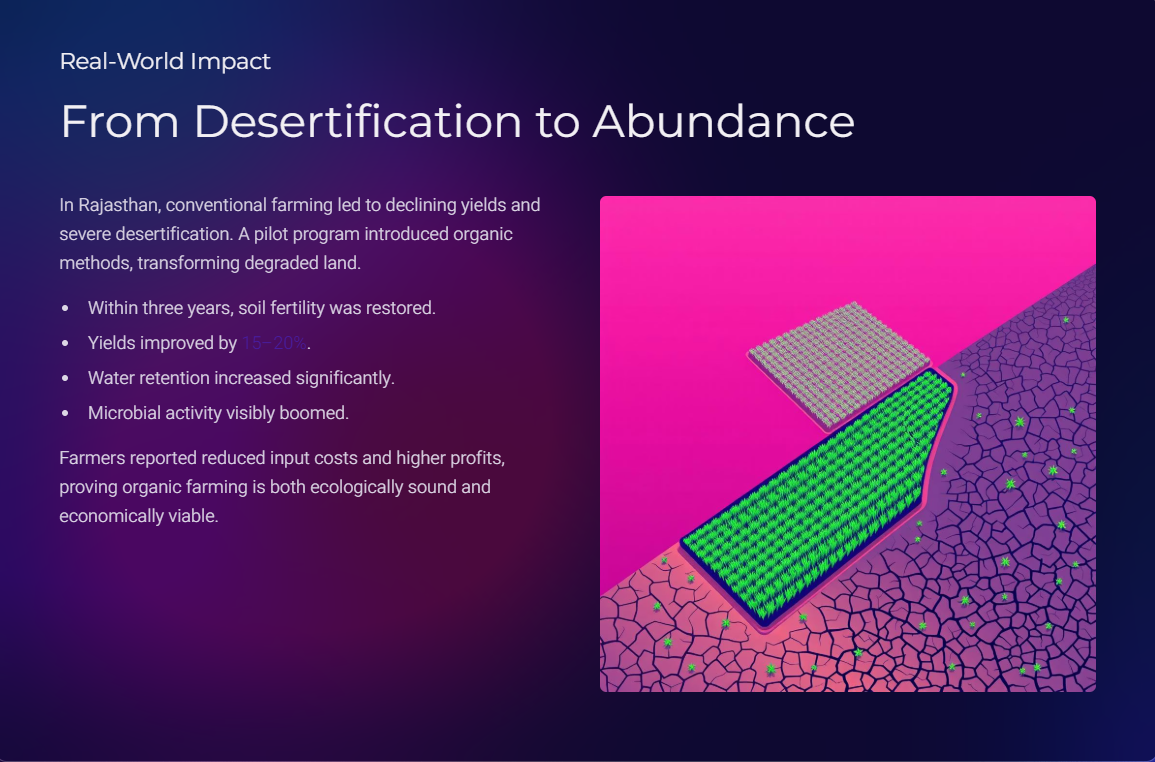
In Rajasthan, parts of Barmer and Jaisalmer are highly prone to desertification. Farmers practicing conventional chemical farming saw declining yields due to water scarcity and soil erosion. However, a pilot program introducing organic methods such as vermicomposting, crop rotation with legumes, and mulching restored soil fertility within three years. Yields improved by 15–20%, water retention increased, and microbial activity was visibly higher. Farmers reported reduced input costs, proving that organic farming is not just ecologically sustainable but also economically viable.
Statistical Insights: Why Organic Farming is the Future
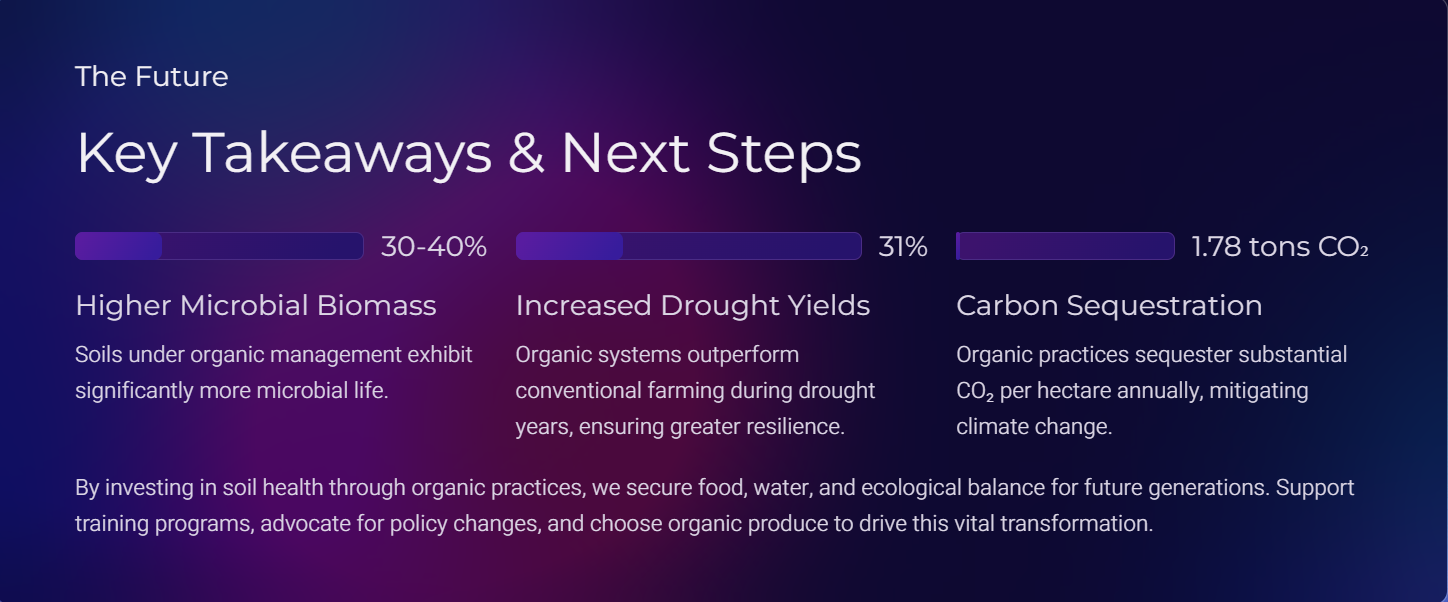
- FAO reports that soils under organic management show 30–40% higher microbial biomass than conventional soils.
- Rodale Institute’s long-term trial (40+ years) shows organic systems outperform conventional farming during drought years, producing 31% higher yields.
- According to TERI (The Energy and Resources Institute, India), organic soil practices can sequester up to 1.78 tons of CO₂ per hectare annually, mitigating climate change while improving fertility.
The Wider Benefits of Restoring Soil
- Food Security: Healthy soils provide higher yields and nutrient-dense crops.
- Water Security: Improved soil structure increases water retention, crucial in drought-prone regions.
- Climate Resilience: Organic soils absorb carbon and withstand extreme weather better.
- Farmer Livelihoods: Reduced chemical input costs and higher resilience lead to stable incomes.
- Biodiversity: From earthworms to fungi, soil biodiversity flourishes, creating a resilient ecosystem.
Challenges in Implementation
While the benefits are clear, scaling organic farming faces challenges:
- Farmers often lack awareness of soil biology and organic methods.
- Transitioning from chemical farming may initially reduce yields.
- Market access for organic produce remains limited, with certification hurdles.
However, with government support, training programs, and consumer awareness, these challenges can be overcome.
Conclusion
Soil is not just the ground beneath us; it is a living bank that sustains civilizations. Depleting it with chemical withdrawals risks turning fertile lands into deserts. Organic farming provides a problem-solving approach by restoring soil microbes, enriching organic matter, and preventing desertification.
For farmers, policymakers, and consumers, the message is clear: by investing in soil health through organic practices, we secure not only food and water but also ecological balance and climate resilience. Just as we save money for future generations, we must save soil because once the soil bank is bankrupt, no amount of wealth can buy it back.