Organic farming isn’t just a trend it’s a movement. But while the benefits are well-known, the path to success is riddled with common pitfalls. Studies show that nearly 60% of new organic farmers experience lower-than-expected yields and financial losses in their first three years due to avoidable mistakes.
Whether you’re a beginner or transitioning from conventional agriculture, understanding these mistakes and knowing how to fix them can be the difference between a thriving, sustainable farm and one that barely breaks even.

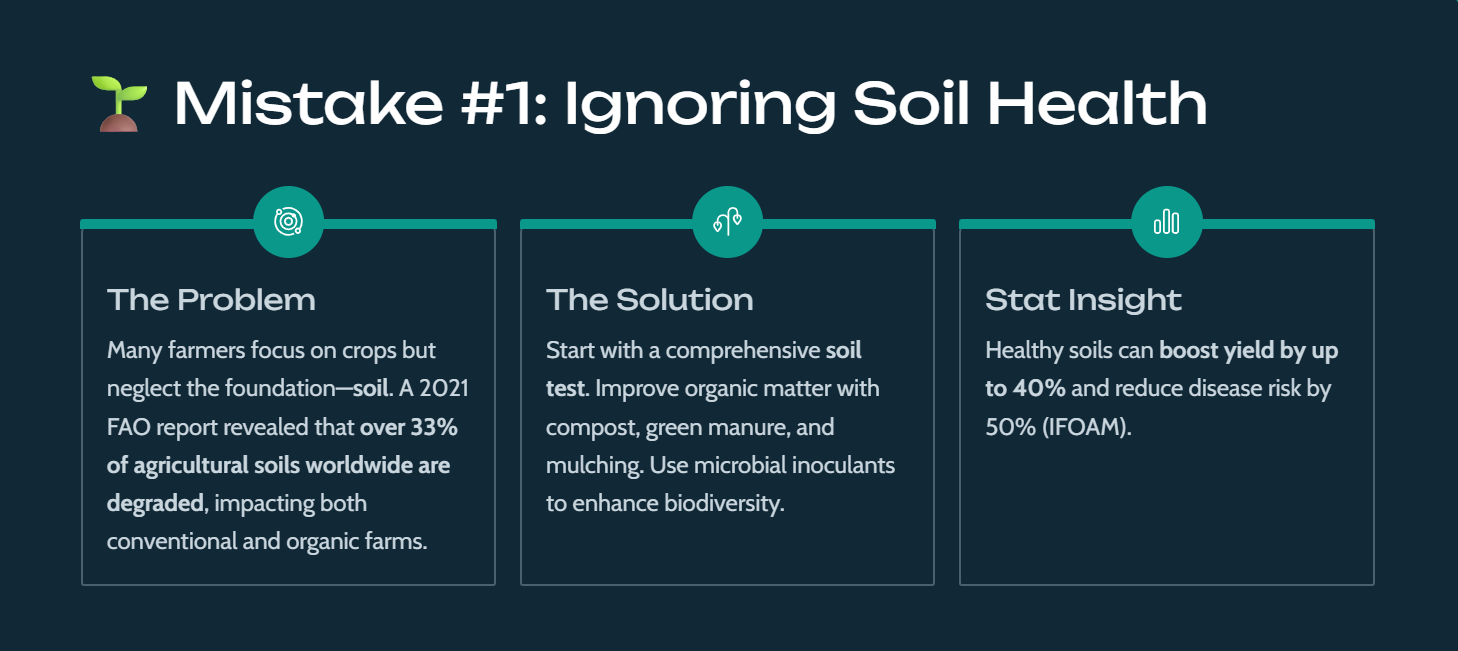
Mistake #1: Ignoring Soil Health
The Problem: Many farmers focus on crops but neglect the foundation soil. A 2021 FAO report revealed that over 33% of agricultural soils worldwide are degraded, impacting both conventional and organic farms.
The Solution: Start with a comprehensive soil test. Improve organic matter with compost, green manure, and mulching. Use microbial inoculants to enhance biodiversity.
Stat Insight: Healthy soils can boost yield by up to 40% and reduce disease risk by 50% (IFOAM).
Mistake #2: Poor Crop Planning and Rotation
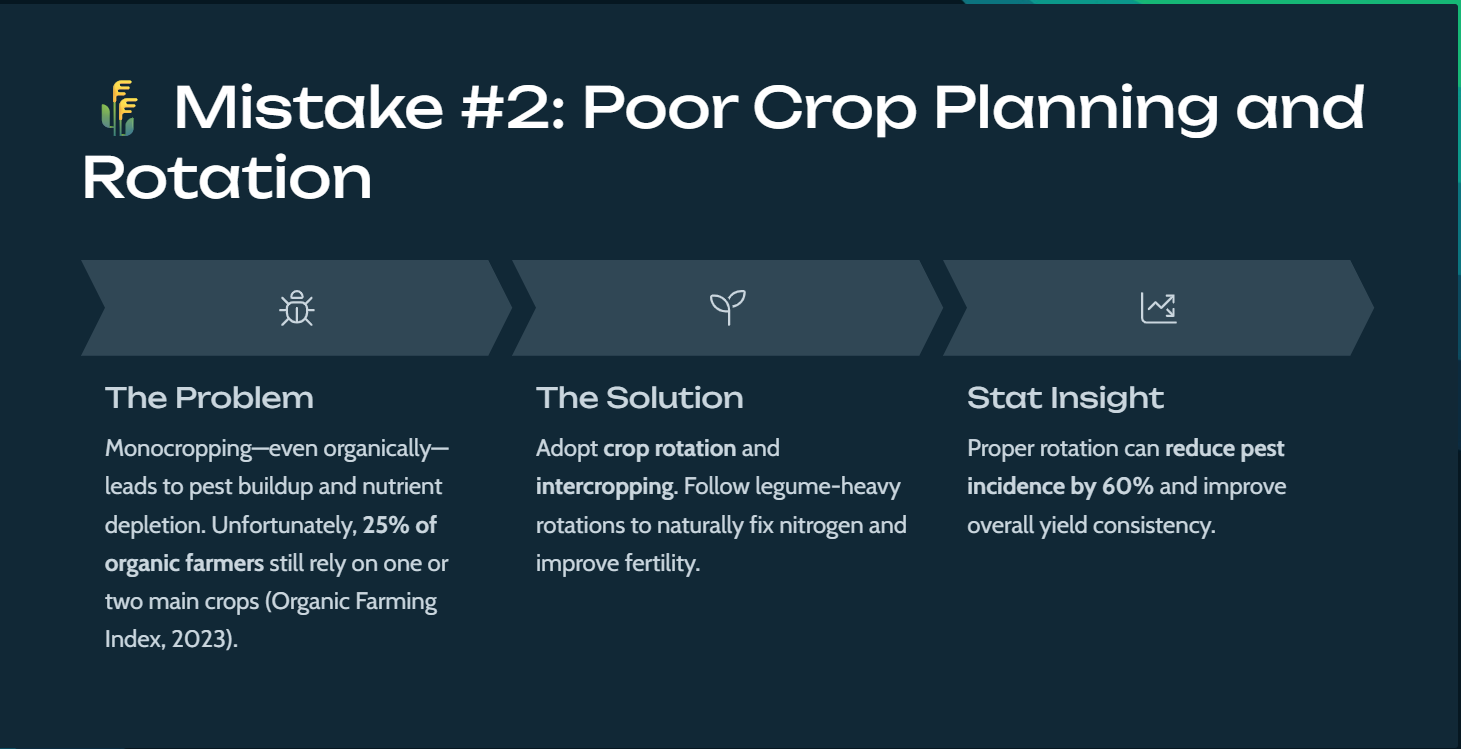
The Problem: Monocropping even organically leads to pest buildup and nutrient depletion. Unfortunately, 25% of organic farmers still rely on one or two main crops (Organic Farming Index, 2023).
The Solution: Adopt crop rotation and intercropping. Follow legume-heavy rotations to naturally fix nitrogen and improve fertility.
Stat Insight: Proper rotation can reduce pest incidence by 60% and improve overall yield consistency.
Mistake #3: Inadequate Water Management
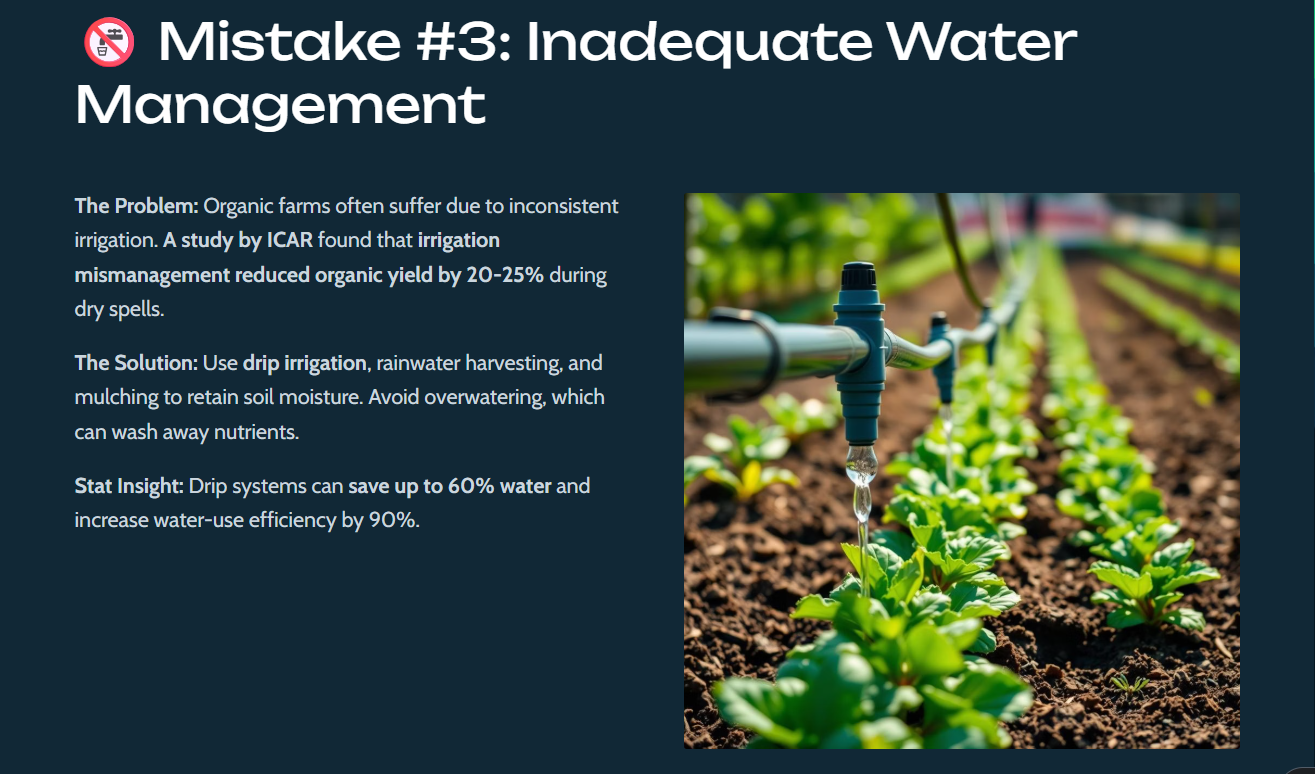
The Problem: Organic farms often suffer due to inconsistent irrigation. A study by ICAR found that irrigation mismanagement reduced organic yield by 20-25% during dry spells.
The Solution: Use drip irrigation, rainwater harvesting, and mulching to retain soil moisture. Avoid overwatering, which can wash away nutrients.
Stat Insight: Drip systems can save up to 60% water and increase water-use efficiency by 90%.
Mistake #4: Misunderstanding Organic Pest Control
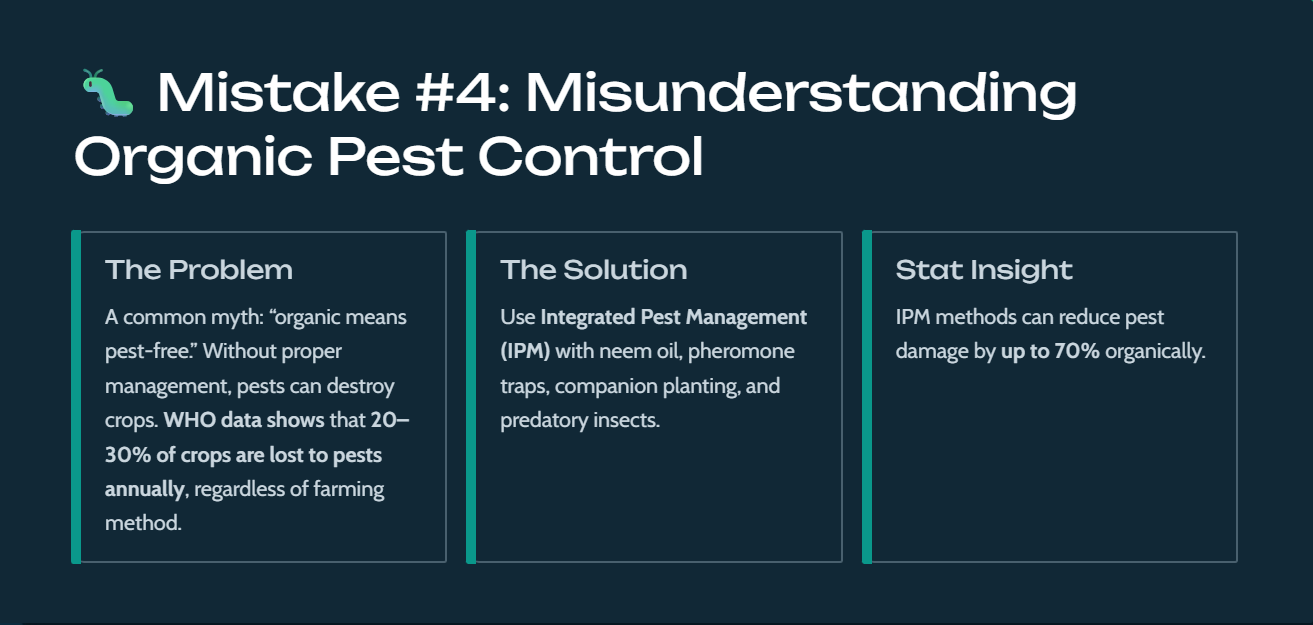
The Problem: A common myth: “organic means pest-free.” Without proper management, pests can destroy crops. WHO data shows that 20–30% of crops are lost to pests annually, regardless of farming method.
The Solution: Use Integrated Pest Management (IPM) with neem oil, pheromone traps, companion planting, and predatory insects.
Stat Insight: IPM methods can reduce pest damage by up to 70% organically.
Mistake #5: Incomplete Knowledge of Organic Standards
The Problem: Many assume organic farming is just about avoiding chemicals. However, 71% of rejected organic certifications in India in 2022 were due to non-compliance with documentation or input use (APEDA report).
The Solution: Stay updated with NPOP (India) or USDA (US) standards. Keep input records, soil logs, and proof of organic seeds and amendments.
Stat Insight: Farmers who maintain full compliance see 20% higher market prices due to better certification and traceability.

Mistake #6: Overlooking Seed Selection
The Problem: Using conventional or hybrid seeds in organic systems reduces compatibility and resilience. A study in Punjab found that non-organic seeds underperformed by 35% in organic plots.
The Solution: Choose organic, open-pollinated, or heirloom seeds bred for your agro-climate. Save seeds from successful crops to build resilience over time.
Stat Insight: Locally adapted organic seeds show 25–30% better pest resistance than hybrid varieties.

Mistake #7: Underestimating the Transition Period
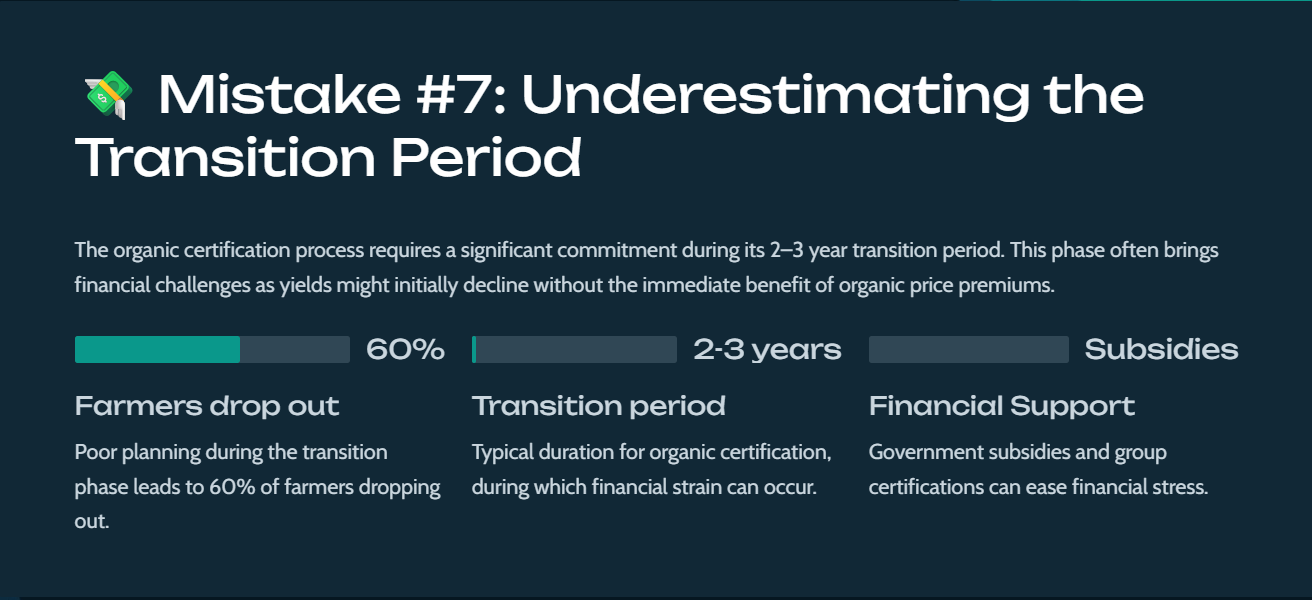
The Problem: Organic certification typically requires a 2–3 year transition. Farmers often face financial stress during this period due to declining yields and no organic price premiums.
The Solution: Plan financially for the transition. Consider group certification, government subsidies, or parallel farming (mixing organic with conventional) initially.
Stat Insight: A NABARD report notes that 60% of farmers who drop out of organic farming cite poor planning during the transition phase.
Mistake #8: Relying on Chemical Farming Mindset
The Problem: Old habits die hard. Many new organic farmers still rely on quick-fix solutions or synthetic thinking leading to long-term soil damage and certification issues.
The Solution: Adopt a systems-based mindset. Think holistically soil, water, plants, animals, and microbes are interconnected.
Stat Insight: Holistic farms report up to 3x higher biodiversity and 2x better resilience to climate shocks.

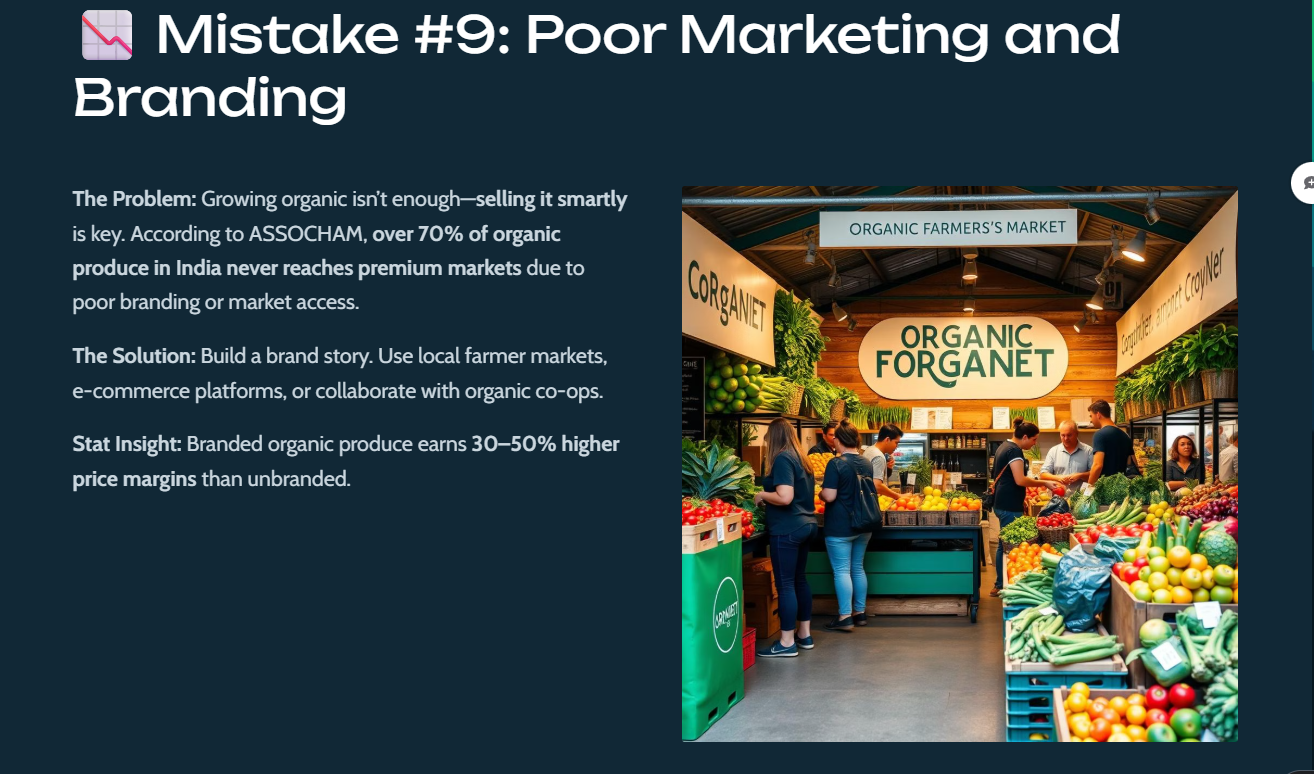
Mistake #9: Poor Marketing and Branding
The Problem: Growing organic isn’t enough selling it smartly is key. According to ASSOCHAM, over 70% of organic produce in India never reaches premium markets due to poor branding or market access.
The Solution: Build a brand story. Use local farmer markets, e-commerce platforms, or collaborate with organic co-ops.
Stat Insight: Branded organic produce earns 30–50% higher price margins than unbranded.
Mistake #10: Lack of Continuous Learning
The Problem: Farming evolves. Weather patterns, pests, and even organic regulations shift over time. Yet many farmers stop learning post-certification.
The Solution: Attend workshops, join farmer groups, follow IFOAM, FAO, and local Krishi Vigyan Kendras (KVKs).
Stat Insight: Farmers engaged in regular training and knowledge-sharing networks see 25% more productivity on average (FAO, 2023).
Conclusion: Growing Organic is a Journey, Not a Shortcut
Organic farming is a commitment to health, the environment, and future generations. But even with the best intentions, mistakes are common. The good news? Every mistake has a solution and often, a simple one backed by data and experience.
By focusing on soil health, smart planning, continuous education, and better marketing, you can not only avoid these pitfalls but thrive in the organic space.
Remember: Organic farming rewards the patient, the persistent, and the informed.