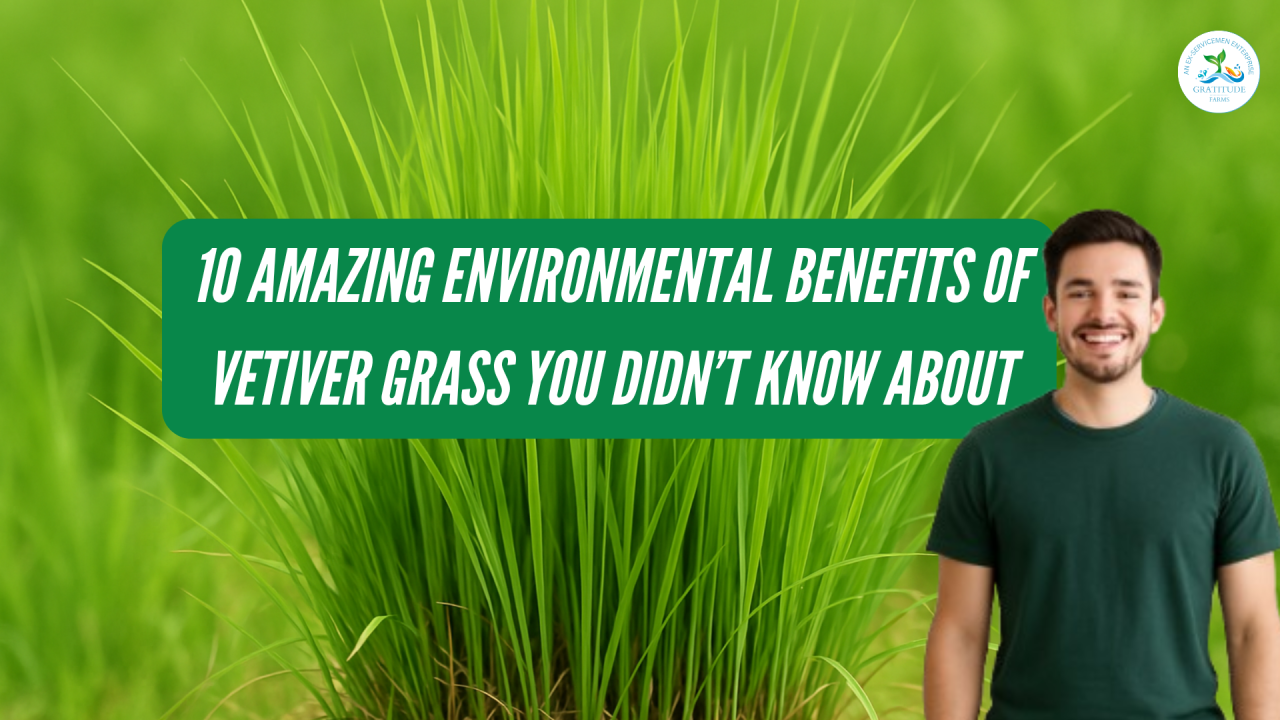
Vetiver grass (Chrysopogon zizanioides) is an environmental powerhouse offering remarkable benefits for sustainability. Native to India and famed for its fragrant roots used in perfumery, vetiver’s vital ecological role is even more impressive and deserves broad recognition.

Key Environmental Benefits
· Prevents Soil Erosion: Vetiver’s deep, dense root system forms a natural barrier, reducing soil erosion by up to 90% and preserving topsoil for better crop yields.
· Boosts Water Conservation: By allowing rainwater to penetrate deeply, vetiver helps retain soil moisture and recharge groundwater, reducing reliance on irrigation.
· Restores Degraded Lands: Thriving even in polluted or barren soils, vetiver helps rehabilitate land made infertile by mining, over-farming, or contamination.
· Natural Flood Control: Planting vetiver along banks and slopes mitigates flood impacts by reducing surface runoff and absorbing excess rainfall.
· Purifies Water: Its roots absorb heavy metals and break down organic pollutants, offering a cost-effective solution for wastewater treatment and cleaner waterways.
· Climate Change Mitigation: Vetiver stores significant amounts of carbon deep underground and supports land restoration, making it a strong nature-based solution for carbon management.
· Supports Biodiversity: The grass creates microhabitats for pollinators and pest-controlling insects, strengthening farm ecosystems and natural balance.
· Reduces Landslide Risks: Its vertical root structure stabilizes steep slopes without disrupting crops, protecting infrastructure and communities in hilly areas.
· Enhances Soil Fertility: Cutting and returning vetiver biomass to the soil naturally increases fertility, reducing reliance on synthetic fertilizers.
· Low-Cost and Low Maintenance: Vetiver is drought- and flood-resistant, needs minimal input, and remains a scalable, affordable solution for farmers and governments alike


Conclusion
Vetiver grass is more than an ordinary plant it’s a versatile ally for solving complex ecological problems. From preventing erosion and restoring lands to supporting water management and climate goals, vetiver offers scalable, nature-based sustainability for agriculture and communities worldwide. Embracing vetiver means healthier soils, cleaner water, and a more resilient future.