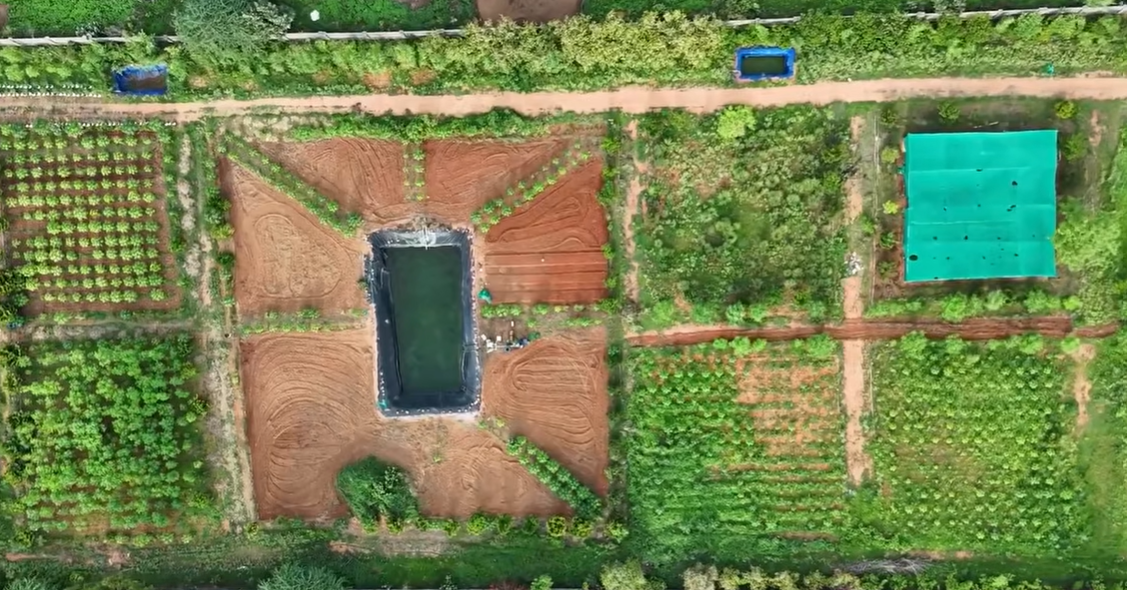
Gratitude Farms undertakes transformative farmland development projects where barren and unused lands, previously unfit for cultivation, are converted into fertile, carbon-rich, and microbially active ecosystems. These projects generally take 6 to 12 months, during which the soil's carbon content is increased from below 0.5% to over 3%.
Ancestral Techniques, Modern Discipline
This is achieved through the application of traditional Indian agricultural methods passed down through generations — Navadhanya (the practice of sowing nine different types of seeds), the creation of Amrit Mitti beds (a nutrient-rich soil mixture), and the extensive use of locally produced biochar, made on the farm, to improve soil fertility and microbial richness. To enhance the microbial content further, inputs such as Jeevamritham, Panchagavya, and a variety of cow-derived products like cow dung and cow urine are used, integrated with composting and bacteria that enrich both macro and micronutrients — leading to a naturally fertile and biodiverse farming practice.
Built to Withstand Drought
A critical component of these farmland development projects is water conservation. Gratitude Farms incorporates a well-designed rainwater harvesting mechanism as an integral part of the development process, meticulously planned to align with the topography and layout of the land, capturing and storing rainwater for use during drier periods. This approach conserves water while supporting the overall health and productivity of the soil, creating a resilient agricultural environment that can thrive even under challenging climatic conditions.
Designed Per Square Foot
Gratitude Farms approaches land development with meticulous attention to detail, designing the farmland per square foot, even when dealing with large tracts spanning tens of acres. The philosophy: ensure no part of the land is wasted once the soil has been enriched and revitalized. The design process breaks the land into smaller blocks, which are then developed and replicated across the entire plot — standardizing design and simplifying unit economics, so crops, water flow, and other resources are utilized in the most effective way possible.
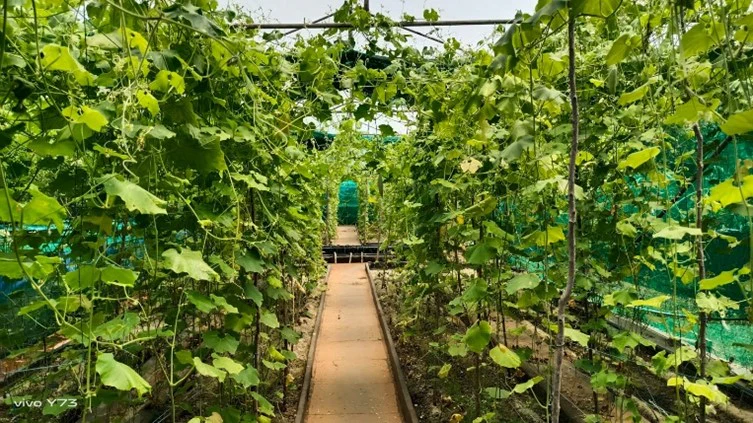
Gratitude Farms adopts a multi-cropping practice within these carefully designed blocks — planting a diverse combination of medicinal plants, trees, fruit trees, and flowers within each unit block, replicated across the entire farm. In every acre of land, around 5,000 medicinal plants, 200 medicinal trees, and 1,000 flowers and other plants are cultivated. The selection of medicinal trees is rooted in the ancient practice of Nakshatra Vanam, where specific trees are planted based on their astrological significance, while the principles of Vriksh Ayurveda guide water flow, routes, and Vastu components — blending ancient practices with modern sustainable farming to foster a deep connection with the natural world.
Development Roadmap
A structured, disciplined approach to establishing resilient agricultural ecosystems.
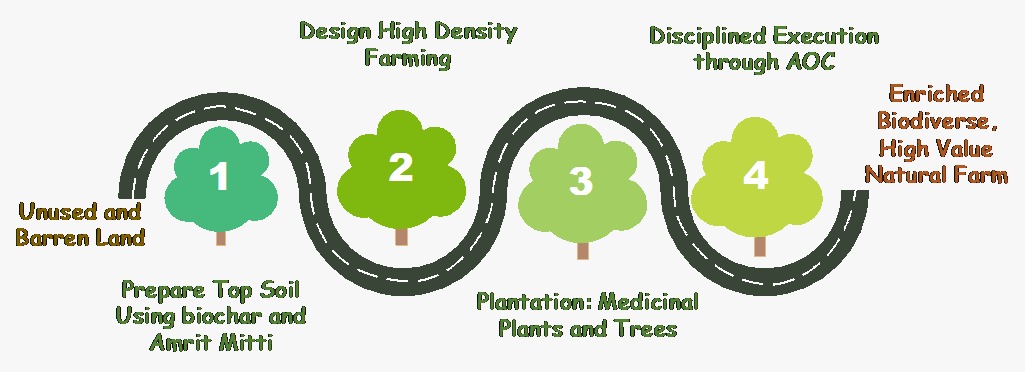
Land Assessment
Soil profiling & topographical surveys.
Infrastructure
Irrigation, fencing & core facilities.
Cultivation
Plantation drives & biodiversity mapping.
Harvest & Yield
Market linkage & carbon credit audits.
Develop Your Land With Us
Own barren or underutilized land? Partner with our ex-servicemen teams to turn it into a thriving, revenue-generating natural farm.